• Skip to main content
  • Skip to main content
Choose which site to search.
University of Arkansas for Medical Sciences Logo University of Arkansas for Medical Sciences
Medicine and Meaning
  • UAMS Health
  • Jobs
  • Giving
  • About Us
    • Submission Guidelines
  • Issues
  • Fiction
  • Non-fiction
  • Poetry
  • Conversations
  • Images
  • 55-Word Stories
  • History of Medicine
  1. University of Arkansas for Medical Sciences
  2. Medicine and Meaning
  3. Author: UAMS Online
  4. Page 6

UAMS Online

Hope Rising/Be Still

By Stephanie Trotter
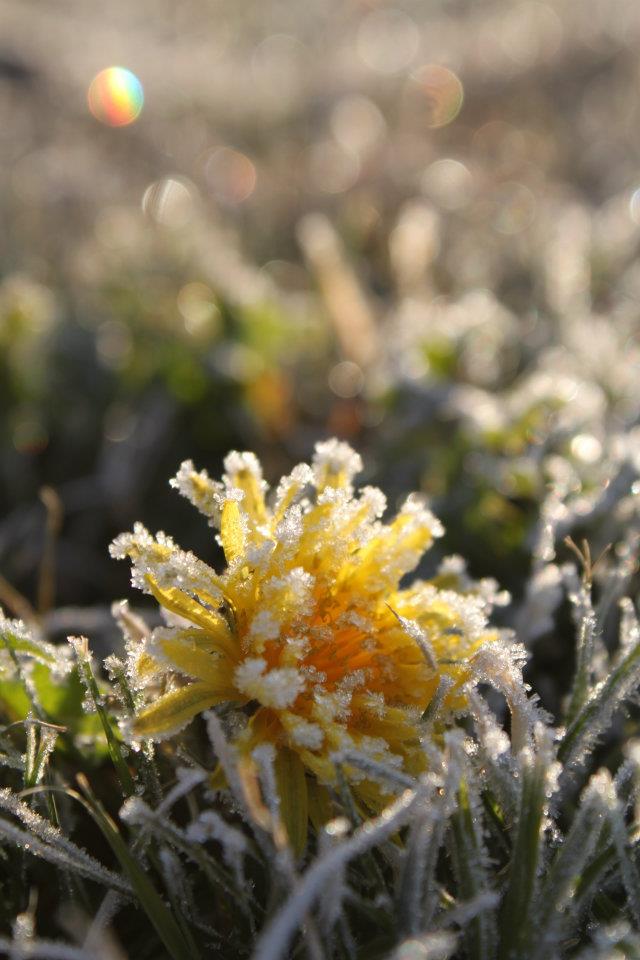
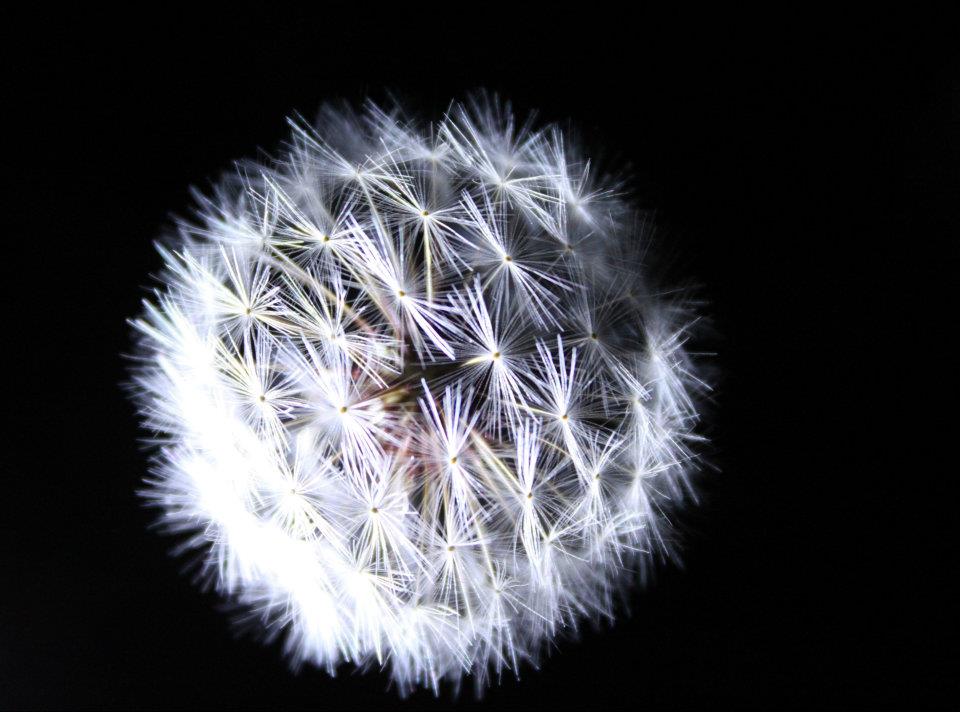
Image of frost covered flowers in the sunlight
Close up image of white dandelion seeds

These images capture the fragile balance of life—the trials and the triumphs. Life’s storms ebb and flow. The wind may blow, the frost may settle, but eventually the storms recede. To be still is to know there is beauty found even in the tenuousness. Hope rises with each new sunrise; life is restored with patience and perseverance.


Stephanie Trotter, Ph.D., RN, is a clinical assistant professor in the College of Nursing, UAMS, and enjoys photography in her spare time. 
Filed Under: 4 - Images

Connective Tissue

By John Graham-Pole

‘Your voice is his. Your gestures, too.’
So his fleshless ash lives on in me. 
After Dad’s Cremation, 1991

A month after I retired from the University of Florida in 2007, two letters came in the mail from England: my birth certificate (February 23, 1942), replacing the one I’d lost somewhere on my travels, and my final pension award from Newcastle-on-Tyne. Newcastle is not only home to the British Pension Office but also the city of my father’s recent death. This full life cycle, tucked into two envelopes resting one on the other in my mailbox, sent me off on a journey of reminiscence.

The author’s father
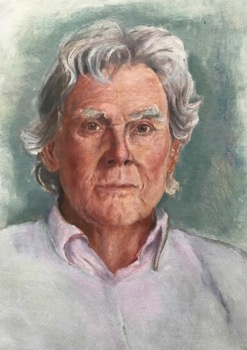
John Graham-Pole, self portrait

In October 1941, my mother turned up for her weekly Women’s Institute fitness class in the village church hall. Mummy looked all set to deliver me into the world, but she reassured her friend Christine who expressed concern about her doing Jumping Jacks so far along in her pregnancy: “The doctor says it’s fine. Might even move things along a bit—after all, this will be my fourth.” No further argument from Christine; after all, Mummy was the Women’s Institute’s president. Her doctor was my dad, aka Dick, whose word on any health issue was law in High Bickington and the surrounding Devonshire hamlets. 

I have this conversation on good authority, because I met up with Chris seventy years later on the eve of her hundredth birthday. Once she had figured out who I was, she recounted a favorite memory — that of me bouncing up and down inside Mummy at thirty-six weeks while Mummy herself bounced up and down to the rhythm of Run, Rabbit, Run, which was topping the 1941 hit parade. She came by her nickname in college, “Tigger,” honestly, a lively leader in everything.

I was born at term, so I calculate those two gametes that created my very first zygote came together on May 29, 1941, my sister Jane’s second birthday: Dick’s sprightly young sperm flying solo through Mummy’s fimbria folds to pierce a single blushing ovum. They say the conception is much more fun than the delivery, but I never got to ask either Mummy or Dick their opinion on that. 

They were living in my paternal grandmother’s house in Golders Green in North London at the time, while Dick finished his surgical internship under William Girling Ball, Dean of St. Bartholomew’s (Bart’s) medical school. I like to picture the two of them cozied up like canned sardines right underneath squadrons of dog-fighting Spitfires and Messerschmitts. So began my replication towards the thirty-seven-trillion-cell being I would become forty weeks on. Meanwhile I spent my first blissful months of life tuning into the soothing rhythms of Mummy’s placental blood-lullaby. 

By delivery time (a mercifully swift one for both Mummy and me), the thunderclap of bombs would have been replaced by the evening chorus of blackbirds and wood pigeons in the hawthorn hedges of rural Devon. Dick had bought a 300-square-mile practice in the village of High Bickington, a Saxon settlement dating from 700 AD sandwiched between Exmoor to the north and Dartmoor to the south, where Conan Doyle’s hellish Hound of the Baskervilles had been wont to roam and ravage. Our home sat astride two country lanes that converged to form a long hill up to the village. In time-honored English custom, the house had at some time been given a name—Dobbs—though the origin and significance of this are lost. The ancient pear tree in our back garden still bore fruit and the seventeenth-century well yielded its spring water year-round. 

I was born in my parents’ bed, with Dick and Nurse Lumney— an old flame from medical student days whom Dick brought down from Bart’s for all of Mummy’s confinements — in attendance. He may have looked approvingly upon his firstborn son after fathering three girls, but my first day was hardly without its trauma. Having no truck with paragraph five of the Hippocratic oath — I will not use the knife … but will withdraw in favor of such men as are engaged in this work — he circumcised me at one hour of my extrauterine life on our dining room table: a heavy slab of 1920s oak upon which I am right now leaning my elbows as I write, flinching at the very thought. 

He brought to this work a special mix of sangfroid and ritual, while probably paying more attention to Nurse Lumney than to the suffering willy on the end of his scalpel. Circumcisions were bread-and-butter stuff to him, and he tackled the task without benefit of local anesthetic. True to most doctors of the day, he thought of neonatal nerve endings — boy ones anyway — as too immature to feel the knife. We now know that all of a newborn’s senses are finely honed from well before birth: mothers are quick to sing lullabies to their beloveds as soon as they start stretching their limbs within their cozy bedchambers, to the palpable pleasure of both parties. 

Mummy slept through my bris blissfully unaware of my agony as I pined for the blessed balm of her nipple. A surgeon manqué, Dick used that sturdy oak table for many other less minor procedures, from setting eldest sister Elizabeth’s fractured radius, sustained when after crashing off her bike on Ebberley Hill as she was cycling up to the village, to injecting the newly available penicillin into the cerebrospinal fluid of a toddler Dick suspected of meningitis. He was the only person for miles about with a car — a racing green MG Midget that dated from the earliest 1936 prototype. The villagers spoke of him as a fine doctor but a devil of a driver. I think he kept the hood down through winter as well as summer. After completing his early-morning house calls in the surrounding villages, he would roar into the driveway fronting our house with a screech of brakes and a scattering of gravel, barely avoiding his lovingly tended boxwood hedge. He would stride into his morning clinic hauling off his massive leather driving gloves, where his patients would have been gathering for some hours through our back door, each time triggering a bell to peel throughout the rest of the house. Two rows of farmers and laborers would likely be perched with their wives and children on the benches under the windows awaiting his ministrations with either eagerness or dread. 

For carrying out his physical examinations, Dick had two curtains on casters that Mummy had no doubt sewn and assembled. But there can have been few secrets in the village’s butcher or baker shop because he never lowered his voice below a bark. One morning when I was around four years old, I succeeded in easing open the door to his clinic enough to get a clear view of the scene unfolding before me. Lo and behold, a sight worthy of undiminished memory: a comely fourteen-year-old girl seated naked to the waist on Dick’s examining table, while he recounted his store of home remedies for period and growing pains. Her mother was clearly struggling to keep up, while her daughter looked utterly at home with the attention, if a little chilled. Perhaps she’d grown accustomed to such early-morning exposure to her fatherly-seeming doctor.

Dick had constructed pine shelves on three of the clinic walls to hold his multitude of medicinals, giving loving attention to each perfectly tooled edge and elegantly engineered dowel. He stored his placebos in amber-colored jars, mounted with ground-glass stoppers and labeled in his calligraphic scroll with names like Nux vomica, Chlorina liquida, Gentiana spp., Camphora officianis, reminiscent of an eighteenth-century apothecary’s shop.  He dispensed these identical-looking white powders and poisonous-looking potions with a customary flourish, to the obvious awe of his clientele. He always insisted that they be consumed in wine glasses, though was this last injunction ever followed? I do wonder: it’s hard to imagine such unworldly country folk laying their hands on a single crystal goblet between them. 

But his awesome authority surely served as an even more potent placebo, whatever the presenting complaint — asthma or angina, chickenpox or collywobbles. In the memoir he wrote shortly before his death, there is a verbatim account of one grateful patient, the broad Devonshire brogue readily detectable: 

“You been very good to I, Doctor Pole. I brought a big fat duck for ’ee, Doctor Pole; look ’ee ’ere. Us ’ud like another bottle of that there red medicine, Doctor Pole, thank ’ee kindly. ’Ere be your ’alf-a-crown.” 

When I first read this line it took me irresistibly to a Monty Python sketch of John Cleese playing the BBC interviewer and Terry Jones as the “local yokel.” 

The clinic’s remaining wall space was adorned with watercolors and pen-and-ink sketches, for Dick was as skilled an artist as much as he was medical scientist. Not only was he adept with the paintbrush and fine-line marker, but also he could construct a three-story doll house, glue together the intricate parts of a fully working model engine, and perform magic tricks with impenetrable sleight-of-hand. His espaliers of roses and apple trees ranged along the garden walls in glorious symmetry, while his beehives won prizes every August at the Exmoor agricultural and livestock show. 

Somehow he also found time and opportunity to indulge his fleshly appetites, indulging in frequent brief trysts with our two maids. But his younger women patients were also far from immune from his advances. He eventually came a cropper after an apparently passionate affair with a mother of two whom I’ll call Erica. When Mummy demanded he break it off or she’d head home to Grandma with us four children, he made some effort to put an end to his philandering. Erica promptly threatened to report him to the General Medical Council unless he left Mummy and married her. This brought him within a hair’s breadth of losing his medical license, and after several trial separations Mummy divorced him and moved us children sixty miles up the west coast of England to Weston-super-Mare in the county of Somerset, where her parents lived on the edge of the Bristol Channel.

I was three years old, and I have no memory of his leaving our home nor any warning of his imminent departure, though I learned later Dick wasted no time after the divorce from Mummy in marrying Erica. For the next sixteen years there was not a shred of a connection between me and my father. His name was barely if ever mentioned at home during this time, and the only trace of him was a photo—“Dick and Doreen, October, 1933”—taken in a moment of honeymoon bliss. They are sitting close together in the heather of a Scottish Highlands hillside, he sporting a meerschaum pipe and Mummy nursing a picnic hamper. Did this bliss make it through to my conception? Or was I the offspring of a momentary reconciliation after more shenanigans—a brief blip in the downward spiral of a marriage already dead? 

And was the sixteen-year silence between him and me of Mummy’s choosing or of his? I never found out, but I have a strong hunch my grandmother’s acrimony towards Dick played a decisive part, given his minimal, if any, financial support of us four children and Mummy’s almost total financial dependence on Grandma throughout my childhood. One wonderful irony of this whole debacle was that I was awarded a full scholarship to Epsom College boys-only private school from aged twelve to eighteen. The college had been endowed in 1855 and began life as The Royal Medical Benevolent College, with the express goal of “providing the orphans of medical families with free housing, clothing and schooling.” The college’s medical foundation saw me as an abandoned child and essentially an orphan, so not only did I become a fully paid-up Foundationer’s, but when in my last year at Epsom I won a Classics scholarship to Bart’s medical school (Dick’s alma mater), the foundation went on to pay every penny of my six years of tuition there too. 

I had one other small but significant connection to Dick during my schooldays. Just before my first term at Epsom College, Mummy brought down a fairly battered trunk from the attic to ferry my possessions on the train from home to school and back. On it were two address labels, one with Dick’s address at University College in London, where he had obtained a B.Sc in Physiology, and the other bearing his subsequent address at Bart’s medical college. They became a talisman of sorts for me during those years.

The sixteen-year silence between us was finally broken during my third year at medical school by a three-minute phone call inviting me to celebrate my twenty-first birthday with him and his new family. So at 7:30 p.m. sharp on February 23, 1963, I shook hands with my father on the steps of the Odeon Cinema in Leicester Square. He was a man I had no reason to recognize, having no visual memory of him beyond that thirty-year-old honeymoon photo. There followed handshakes with Erica and my two step-siblings, after which we sat in the Grand Circle of this palace of a cinema and watched four hours of Lawrence of Arabia. The total silence between us seemed somehow longer than the decade and a half that had preceded it.

But now we were connected once more and I spent many weekends with him, with medicine being a natural bond between us. He would tell me tales of several other doctors in our family tree, none of whom I had ever heard of. Among my medical forebears was my great-grandfather, John Nicholson, who graduated from Edinburgh Medical College in the 1870s, then traveled as a ship’s surgeon from Penrith in Cumbria to Benalla in Victoria. He attended the notorious bush ranger and bank robber, Ned Kelly, and was alleged on one occasion to have removed nineteen bullets from various gang members while never revealing the gang’s whereabouts to the police.

I had always thought my decision to become a physician was inspired by Mummy’s early death from cancer, but perhaps there is a doctoring gene that gets passed down through the generations. On the face of it, I was ill-suited to my chosen profession, given my early passion for the humanities —an aptitude matched by an equally intense aversion towards the sciences. After Mummy’s death, I moved to my Uncle Ken’s home in Yorkshire. He was Mummy’s brother and another doctor, and he did his level best to talk me out of following him and Dick into the medical profession. 

As the sole doctor for 3,000 miners and their families in the coal mining district of Yorkshire, he was soured by a never-ending attendance at the deathbeds of these men, almost all victims in their thirties and forties to the “black lung” (as pneumoconiosis was popularly known). He would rouse me from my bed in the early hours to hold vigil with him, probably thinking of it as a deterrent to my misguided career ambitions. But looking back, I think it was these experiences that drew me late in my career to fulltime hospice work. 

Dick’s marriage to Erica ended in acrimony. She evicted him from the marital home one Christmas Eve and dumped his possessions on the doorstep of his clinic. She then took him to the High Court of Justice where it was decreed that “the marriage be dissolved by reason that the Respondent had treated the Petitioner with cruelty. The Commissioner orders the Respondent to pay the costs of his wife’s suit.” (Dick claimed to not have the means to do so). 

He worked on for several years in his single-handed practice in Guildford, the county town of Surrey in the heart of the stockbroker belt. To the bewilderment of his sassenach patients he would make his house calls wearing the kilt of his family clan—Graham of Menteith—complete with belt and buckle, horsehair sporran, dark kilt hose and garters and a prominently displayed dirk. He no longer conducted formal clinics and I rarely saw him field a phone call that called for his attendance. When I visited him we would mostly spend our weekends at Farnham Sailing Club or at Kempton Park racecourse placing lavish bets on losers.

In time he retired with his third wife, Frances, who had been Erica’s children’s nanny, to the village of Milburn in Cumbria in the heart of Wordsworth’s Lake District. He spent most of his time in thigh-high waders casting his elegant bamboo rods into the local tarn to hook many a delicious rainbow trout. For several years he joined me for New Year festivities while I was working at the Yorkhill Children’s Hospital in Glasgow. Hogmanay was celebrated in grand style, with long lines outside the liquor stores throughout New Year’s Eve. It was at one of these celebrations that I tried to get him to talk about his severing all connection with me throughout my childhood. We were both fairly liquored up by then, so our conversation quickly turned into what he saw as bitter recrimination on my part. He took off home next morning, and this proved to be a final severing of all links between us: the second time in my life he had left me without so much as a wave goodbye.

Having outlived Mummy by fifty years, he died quickly at eighty-seven from acute monoblastic leukemia—a rare illness in the old. He had himself admitted to the Freeman’s Hospital in Newcastle-on-Tyne, where he challenged the interns with tests of his own concoction. My sister Jane phoned me the next morning while I was working at Shands Hospital at the University of Florida, where I was the attending pediatric oncologist. The call came through to our bone marrow transplant unit while I was sitting at the bedside of a seventeen-year-old girl who was also dying after a failed transplant for her refractory leukemia. 

“They don’t give him long,” Jane told me, “maybe a few weeks. But he’s determined to get chemotherapy.” 

It was a measure of the distance that had opened between us that Dick had made no attempt to contact me after his diagnosis, though he knew all about my quarter-century of close acquaintance with the very illness that had beset him. I shuddered at the thought of my aging father suffering through the rigors of intensive chemotherapy, whose horrid toxicities —devastating even to the young — I witnessed every day. I put in my own call to his hospital ward, only to find that he had died six hours earlier, lulled in the arms of merciful narcosis. I found out later that he had changed his will the night before his death, removing the names of five of his offspring, including me, while naming as beneficiary only my sister Mary, who had kept in close touch with him during his declining years. 

I stood in the nurses’ station of our bone marrow transplant unit and wept for the unresolved issues between us, grieving the bitter way our patchwork fifty-year relationship had ended in one final burst of disconnection. Ayman, my Syrian fellow, wrapped his comforting arms around me, then took over my attending duties without a pause while I flew home to Cumbria for the funeral. The next day I visited the ward in the Freeman’s Hospital where my father had died, and Judith, his nurse for his last night on earth, talked to me with tears in her eyes: “He was hiding all his terror behind outbursts of belligerence, until I was finally able to lull him into slumber with a blessed infusion of morphine.” At his cremation I was reunited with three generations of my family, including my two eighty-plus-year-old paternal aunts, Peggy and David. Auntie Peggy, whom I had not seen for thirty years, told me: “Your voice is his. Your gestures too.” 

So his fleshless ash lives on in me, leaving me with a lasting sense of sadness and failure — that we two human beings, both of whom had chosen working lives committed to the healing of others, had so failed to heal the sad disconnection between our common tissue. But what is left of my feelings for my father himself, some eighteen years on from his death? I have much more compassion than anger towards him for his lifelong narcissism, his petty cruelties, his arrogance, and his depravity.  But can this amount to love? 

Mister Rogers was said to carry a note in his pocket that read: “You can love anyone if you know their story.” I could claim that I never really knew my father’s story. But I have pieced together as much as I need to have a strong sense of him as a deeply troubled man—one who could never face up to the hurts he had inflicted on his wives and children—and who knows how many others. 

Despite his abandoning me twice without a word, I know that deep down he wanted to have me in his life – to share times of fun and whoopee, of good food and drink, and of deep and often metaphysical dialogue. For my part, I can feel not only affection but also awe towards him for all his skills and accomplishments as a multifaceted artist as well as a medical scientist. Would C.S. Lewis have recognized such feelings as love? The Greek word, storge, fits for me, meaning the two-way affection between parents and offspring.  . 

But how did I avoid most of the pitfalls that ensnared Dick, devastating his own life and threatening to do the same to all those he professed to love? I know almost nothing about his early life and upbringing, so I can’t begin to judge how far they molded his personality and his moral values. I do know that it took me until I was thirty-six — a university professor, twelve years out from medical school, and the father of two adopted children who had just ended his first marriage — to recognize my own deep-seated emotional trauma. Trauma, I came to recognize, that was born primarily out of Dick’s abandonment and Mummy’s early death. It took two years of skilled and intensive psychotherapy for me to begin to feel the kind of lasting joy and purpose that has sustained me in my life ever since. 

To the best of my knowledge Dick never acknowledged the need for any kind of psychological help, but trans-generational trauma is now a widely accepted entity. Is there perhaps a parallel between my family history and the recent revelations of clinical psychologist Mary Trump, the niece of the former President? Dr. Trump has diagnosed her Uncle Donald as suffering from malignant narcissism and a profound lack of empathy, which she attributes to the ruthless code of his “high-functioning psychopath” of a father. 

The hardest question to reflect on is this: what of Dick’s fleshless ash lives on in me? I too have had a lifelong desire for knowledge and a strong creative streak (I pushed myself against the odds to rise high in my profession as a medical researcher, then late in my career came to champion the arts over the medical sciences). I too am an extrovert, sometimes to the point of eccentricity (I used to run regular “play shops” for medical students and peers where we all dressed in silly costumes and played children’s party games). I too can admit to a potent sexuality expressing itself in a lifelong hunger for intimacy and gratification (more than fulfilled in my marriage to Dorothy after a lifetime of searching). 

Dick said to me on his eightieth birthday: “The biggest mistake I made in my life was to fail profoundly in my marriage to your mother.” He followed this up soon after by writing in his memoir that “she was kindly and compassionate toward all with whom she came in contact … greatly loved, I would say revered … a wonderful wife and mother.”  So whenever I feel anger toward my father for the largely self-inflicted screw-up he made of his life, these two affirmations — too little too late though they may be — free in me feelings for him that are as closely akin to love as I know how.


John Graham-Pole, M.D., is a retired professor of pediatrics and the co-founder of the Center for Arts in Medicine at the University of Florida. An author of numerous books, he lives in Nova Scotia, Canada with his wife Dorothy Lander. 

Filed Under: 4 - Non-Fiction

Time Reveals All Truth

By Metu Osele

Part 1 — First Do No Harm

Ikenna stared longingly at his wife. It has been what now? Eight months. Not even a touch. He kicked his feet aimlessly in a failed attempt to release the tension welling between his legs.

Think of anything else. Anything but this.

“How is the current situation at the clinic?” he inquired across their 400-square-foot contemporary-styled living room. He knew that her answer could only be worse news than yesterday’s.

Although they were practicing social distancing and slept in separate rooms, they still afforded themselves the luxury of seeing each other once a day. The Centers for Disease Control and Prevention (CDC) had already announced that the virus could not be transmitted over 30 feet but strongly dissuaded sharing anyspace given that the virus could linger in air molecules for over 72 hours.

Ngozi let out a primal wail. It had been the worst day at the hospital. For eight dreary months, she had had to announce to lovers that they would be returning home alone, to parents that their kids were no more, and to children that they had just been orphaned. And today, her spirit was wrecked because her hospital had just lost ten of its frontline workers to the disease. This was the first day she ever considered quitting as a doctor. Although with no formal announcement to support, today’s tragedy had proven that frontlineworkers had a higher fatality rate for the lenovirus. The instantaneous death of her colleagues confirmed that an increased inoculating dose indeed led to a deadlier disease. Her husband’s question caused the internal turmoil of her day to pour out like a fiery storm. Her pain crippled her and buckled her knees as she fell to the floor.

During her drive home, thoughts of going home and never returning to the hospital burdened her. Her ride down Broadway was a sour reminder that the U.S. economy had been completely shut down. She played back the extremely hard decision she had to make at the hospital between saving a one-year-old baby, an 80-year-old woman, and another 40-year-old colleague with the last ventilator left in her ward. She quickly brushed this thought off because she still was not sure if she made the best call. First, do no harm. For an inexplicable reason, this phrase from the Hippocratic oath she had once proclaimed with pride at Tolu Odugbemi Hall at the University of Lagos came to mind.

“What about harm to doctors?” she retorted in a self-directed cross-examination. “What about harm to my family? What about harm to my mental health?” She was not sure at whom her anger was directed. She was livid and exhausted.

I am not a quitter. This is my life’s work, she concluded in defeat, turning up the radio volume to a distractinghip-hop tune.

Seeing his wife in a tumultuous state made Ikenna self-conscious about his earlier eroticism. As a nurse practitioner, he knew the terrors of working on a regular day, let alone during a pandemic. This was a virus unheard of in centuries, and the U.S. was clearly not braced for a war against this form of infection. Luckily, he thought, they had decided to hold off on children another year after moving to the United States from Canada. All their lives, they had been moving — Nigeria to Europe because that was the easiest visa they could get, Europe to Canada when they heard that Canada was easier to live in permanently, then to the United States when Ngozi was called to work as the Chief Epidemiologist for Mercy Hospital. The pay was irresistible. They had decided that they will finally settle in the United States to raise kids even though they often romanticized sending their kids to Nigeria to get a well-rounded upbringing.

“Achorom I machie ya nti owu na obido nzuzu (I want to slap him very well if he misbehaves),” Ngozi would often state as one of the reasons Nigeria sounded like a good option to raise a child. She believed that Americans were too lenient with their kids. Nonetheless, they knew in their hearts that moving again was not an option.

“Baby, talk to me.” Ikenna finally said. He still pronounced his words with a strong Igbo accent, Baybiiii. She loved it.

Ngozi’s mind raced back to the first time they met in front of Moremi’s Hall. He was escorting a friend who was dating her best friend at the time. Their conversation was short but deep. He was 6’2” with unbrushed hair. His smile was teasing, and his calm demeanor was inviting. She knew that that was not the last time she would be seeing him. She remembered finding it riveting that he was studying midwifery. Not a lot of men studied that. In fact, he was the first man she ever met that studied that. She could tell that he was not strung by his masculinity like most of the Igbo boys she knew. She thought he must be from a family that respected his decisions, or he was blatantly disobeying. Either way was attractive. Around that time, Nigeria had gotten the first few cases of the Ebola virus. She confided in him about her interest in volunteering with the The Nigeria Center for Disease Control (NCDC) to fight the disease, and she thought he would discourage her like every other person. But he cheered her on, stating that if his program would allow, he would have gone with her. She ended up not going because her parents would not sign the underage release form. But she knew that the moment she was out of her parents’ house, she will build a career on infectious disease. This is what led her to get an M.D./Ph.D. in epidemiology.

“Udo di,” she managed to finally sputter in response to Ikenna’s question.

It was always easier to talk about hard times in Igbo. English made it sound harsher, devoid of emotions,and less hopeful. As her mother tongue rolled out of her mouth, she felt the support of ancestors. Of kinsmen. Of her granddad who had lost his life in the Biafra war.

“Any deaths today?” Ikenna responded, immediately feeling stupid for asking.

She nodded, unable to explain the scene of a one-year-old baby dying while she stood there unable to administer any additional medical care.

Ikenna was unable to ask any more questions because he could see from his wife’s face that he was unraveling her. He chose to think of the day he met her. The day she told him she wanted to be at the frontline fighting Ebola. He married a warrior. At a time when everyone was running away from the disease, she was running toward it. He remembered telling her that he would have gone with her using his program as a cop-out, but he knew that was a lie. She made him want to be stronger. More fearless. But he never was. Not even now. He could not tell her that he quit his nursing career six months ago. He could not tell her that every day he stepped out of the house in scrubs, he walked right back in after she left and spent his day idling in the basement. She could not know that whenever he heard her drive into the compound, he ran to their designated meetup location poised as someone weary from a long day of work. He felt guilty for lying to her or for not being fearless enough to save lives or both. But this is not what he signed up for.

In fact, if there was any chance that she would listen to him, he would have made her quit too. There was no chance in hell she would. This is what she lived for and he knew it. He had known from the first day they met. He was always the weak one in the relationship. All his life, Ikenna had felt like he followed his wife with an air of insufficiency. He loved her, and she was his whole world. That is why he agreed to hop with her from country to country even though he was always okay with living in Nigeria. That is why he consented when she said a career as a nurse will be more rewarding for him in the United States. That is why he agreed to wait all these years to build a future before having children. He had always known without a doubt that she knew what was best for them, and he never felt a need to break free of her persistent chase for fulfillment until the virus hit. He believed her desire to continue working and savinglives was suicidal and although he knew she would accept his decision to quit, he did not want to disappoint her.

“Baby, do you think we should quit? No one will judge us. This thing is just very serious.”

“Nna I have thought about this in several ways, you know I can’t live with myself if I quit.”

“But why do you always …” he started to nag.

“We got this, baby. We will weather this storm as always,” he said instead.

Ngozi sighed and nodded. Now dry-eyed and soothed from her breakdown, she began to stand. She could not believe that he still thought she did not know who he was after 15 years of marriage. He did not know that she saw him come up from the basement every day or that she waited one minute at the door to give him time to get to his pretend position. He did not know that she knew every healthcare student was, in fact, qualified to volunteer with the NCDC during the Ebola crisis. He did not know that she saw him behind Sodeinde Hall giving all his tuition to the agberos—the gangbangers—that were disturbing her even though he lied about beating one of them up to ward them off. She could not believe that all their lives, he had kept up with the facade. For what? she asked herself, unable to find an answer. She also could not explain why she had always been okay with the lies. Maybe she wanted him to be the person he showed her that he was, so she accepted the lies until they began to feel true. She thought aboutconfronting him now, but she doubted his ego would survive years of the act that they were both accustomed to. “First do no harm,” she thought again and decided this meant allowing herself to believe that her husband stepped out with her every day to save lives. This was the only way she could save her marriage.

Part 2 — My Love Stays

I am not a weak man. No. I am Ikenna. The same blood that flowed through Nnamdi Azikiwe, Nigeria’s first president, flows through me. I come from a lineage of leaders. Abum Agu (I am a tiger), buru Odum (I am a lion), burukwa Eze (I am a king).

Trauma causes a person to question their whole existence. This is when the question “why me?” is heavy in the heart and lips of the traumatized. This was the position that Ikenna was in the first time Ngozi hit him. It was a blow that ringed in his ears long after it had landed on his face. But it was not the impact that startled him. It was the person that hit him that shocked him. It was the way she looked at him, the way one looks at a trash bag that houses rotten fish. It was the way she walked away, unapologetically, as if she had just given him a kiss. And it was his reaction that scared him the most. He had stood immobile for a long time before he opened his mouth and cried like a hungry infant. It was not the intensity of the punch that moved him to tears. It was that he, an Agu, had been slapped by his wife, and that he had stood there and taken it like a punching bag unresistant to a boxer’s blows.

But couldn’t it all be explained? Ikenna’s musings continued. She was experiencing a lot of pressure, more than he could ever know. The fatigue of working as the chief epidemiologist in a hotspot zone of the lenovirus could turn a pet to a predator.

Moreover, he thought, maybe he should have waited till this blew over before he told her. Or maybe it could have remained a secret. One of those death-bed secrets dying partners reveal like “Oh, and by the way, I did not ever travel for business all those years. I was always in Costa Rica with a lover. But I love you. You are the only one on my life insurance policy” or “Oh, you know Chimeke is not your child. He is Ebuka’s, your best friend’s. Please take him to meet his real father.” This secret was, however, one Ikenna could not keep any longer.

As usual, they were across each other in the living room to talk about their respective days. If she had good news, a smile would begin to form on her face and then disappear as if to say there isn’t much to smile about in a pandemic but enough for that initial crack of a smile. If her eyes dropped to the floor, or began to aimlessly survey the rooms, he would know that today held grimly stories — like the one she told him about how she let a one-year-old child die because she could not possibly save him and her colleague at the same time. His, of course, were tell-tales. If he planned to tell her a positive story, he would deepen his voice, move his arms around like a Met Opera choir master, and intermittently cough to give himself enough time to make sure his story on how many lives were saved under his watch was rational. Otherwise, he would rub his fingers vigorously on his septum, sniffling like someone who has a cold, and concoct a story of a patient who had lost his life due to limited medical supplies. But today, when she asked about his day, he felt a strong persuasion forcing his lips to speak the truth.

“I quit,” he had responded quickly. “Today?” she asked.

“No, a while ago,” he said.

“And I think you should quit too,” he added right after.

“You know, I thought about it, and I think it is a suicide mission to be …” He continued to speak because he was now emboldened by his incipient act of honesty.

He did not notice when she walked towards him, breaking their 30-feet social distancing rule, before smacking him right in the middle of his face.

Knowing his wife for as long as he did, this was the last response he expected. Ngozi was the girl who would give all her food away to a hungry classmate back in the university. She was the girl that threw her self in front of a Molue bus to pull a kid out of the road. This act earned her the limp she still carried to this day.

In her room, Ngozi sat on her bed livid. How dare he? she thought. She felt not even the slightest remorse for her actions. In fact, she felt relieved, like she had just released years of sufferance. All her life, she had pulled this man around like a bag of cement. Even their marriage was by her own doing. After five years of courtship, Ikenna still did not have the balls to ask her to be his wife. Not until she gave him an ultimatum. She remembered how she had said to him: “If you do not ask me to marry you before the end of this year, consider yourself single.” The next week, he proposed. This was the same way she had to force him to come to the U.S. with her, and even the same way she forced him to change his career. The only thing left, she thought, is for me to force him to clean his own crap. Now, he has the audacity to try and impose his impotency on me.

“Tufiakwa,” she said out loud whilst raising her hands over her head and snapping her fingers in the way Nigerian Igbos do to reject something of bad omen.

She was not only angry that he quit or that he wanted her to quit too. She was angry that he took away the only thing that allowed her to tolerate him. At least, in pretense, it was easier for her to ignore the fact that her husband was a disappointment. As her anger heightened, an unexpected image appeared in her subconscious: Dr. Johnathan. Dr. Johnathan was an attending physician at their hospital. She had caught herself throwing glances of admiration towards him and sometimes, she had even caught herself flirting. She imagined what her life with a man like Dr. Johnathan would have been like. Both working hand in hand to contain this deathly virus. Both sharing dreams of the future of healthcare they desired. Both… She had to cut herself from the rabbit hole these thoughts were leading her to. She had chosen Ikenna and would have to stand by her choices.

One would think that the first time would be the last time, but there is something about the feeling of unburdening that is addictive. Take for example, the first time a depressed person takes opioids. Such a person may have convinced themselves that this was just a one-time thing – just to see what it feels like. But after that initial feeling of peace that the drug affords them, the soul yearns ceaselessly for that thing that took the pain away.

But Ikenna did not know this. He believed that Ngozi had only made a mistake the first time and never brought that altercation up again. Now that he had divulged his lies, he did not need to escape into the basement everyday like he had done in the past to pretend like he was at work. He began a ritual of sitting in the front of the garage after his daily walk to clear his mind. On this day, he was engrossed in a peculiar matter: the origin of his name. He thought about how his parents had given all his siblings names that meant something. His first sister, Adaku, was born around the time his father had amassed wealth from his textile business. Adaku means “daughter of wealth.” His brother Binyelum, meaning “stay with me,” was born after his mother had already suffered three miscarriages before his birth.

His, Ikenna, is a tragicomic story. His father was a serial beater and serial cheater. After years of suffering the abuse, his mother decided to leave but that was when she found out that she was pregnant with Ikenna and chose to stay. In the days of his mother, bearing a child outside of one’s matrimonial home was synonymous with prostitution.

Ikenna, meaning “father’s power”, was his father’s evil way of telling his mother that she could never leave him. Although the validity of this story was questionable, Ikenna truly believed that he was the reason his mother remained in an abusive marriage. He had heard this story from his older brother, Binyelum, when they were young. During a fight, Binyelum had told him that he was the reason why their mother suffered and went further to prove his accusation by explaining to Ikenna the origin of his name. This recollection drove him into a state of melancholy that was cut short by the presence of his wife driving toward their home.

Ikenna could not believe how beautiful his wife still was after all these years. Her skin still shined like perfectly polished wood. And except for the dark eyebags that hung beneath her eyes, her face was unblemished. She was tall, slender, and if she were not a doctor, he knew she could have been a successful model. Well, maybe not a runway model, he thought, not with her crooked gait.

“Have you given any thought to what we discussed?” he said when she drew closer.

Ngozi ignored him. She dusted her feet over the welcome home mat and proceeded to unlock the door.

He stood up and followed her.

“Am I not talking to you?” he asked. “See, you cannot keep endangering my life.” “If you do not quit, I will leave,” he added, shocked at his utterance.

“You will leave?” she said and began to laugh. She laughed so hard that she toppled over the side table that lay too close to the door.

When Ikenna saw that she was about to fall, he placed his hands on her arms to help her regain balance.

This touch set off a rage in her. With the force of a disturbed Africanized bee, she turned around and landed her palm right in the center of his face in a way that caused her fingers to end up in his eyes. She kicked him between his legs which caused him to let out a sound that resembled a lion’s mating call, recoil in pain, and then land on the floor. She knelt over him and continued to lay punches on him. Realizing that her punches were not inflicting the level of pain she desired him to feel, she ran toward the kitchen and returned with a ceramic saucepan. Just as Ikenna was beginning to stand, she hit the saucepan on his groin: an act that forced him to roll into a ball like an armadillo. His capitulation gave her room to continue to hit him repeatedly with the saucepan until she felt her rage dissipate. She spat on him, gave him one last kick, and walked into her room again like nothing had just happened.

Either from shock or from pain or both, Ikenna laid immobile on the floor throughout the evening and into the night. He was still there when she left for work in the morning and even though he heard the jingle of her keys as she walked away, he pretended to be asleep. That was the last time Ikenna would hear from his wife for a while.

Ikenna was in bed when he heard someone walk into his room. Like abusees commonly do, he had isolated himself, neither answering phone nor door. The only time he stood from his bed was to get food, and even that was rare. And the only time he left his house was to search for an apartment as he already decided that he would leave Ngozi. He could not see who had walked into his room because he was turned away from the door, but he smelled her and then felt her hands graze his bare back. She did this for a while, not saying anything, before she placed a kiss on the back of his head. She stood up, but before leaving, she said the first sentence he had heard from her in two weeks.

“Obim,” a term that means “my heart” in Igbo. “I am pregnant.”

Ikenna let these words lay on his mind for a while. Slowly and unexpectedly he felt the tightness of his chest begin to loosen. He felt joy slowly begin to melt the cloud of darkness that enveloped him. He began to imagine himself as a father. Someone whom he could love, and someone who could love him back. Someone whom he could spend his idle days with. Someone who would help him cope with the depression that had taken over his life. The prospects of being a father excited Ikenna so much so that heforgot the requirement for conception.

Five days before the expected delivery date, Ikenna and Ngozi arrived at the hospital. This was a new rule set in place because of the virus. All patients and whomever wished to be there with the patient had to be isolated and observed for at least five days.

Because of his wife’s pregnancy, and especially because she was diagnosed with preeclampsia, Ikenna decided not to move into the new apartment he had already paid a deposit for. Yet, they lived like strangers, and only spoke to each other in dire circumstances. This child made it bearable for him to spend five idle days together in isolation with this woman he hated so much. This child stopped him every time he wished upon her death.

Now in the delivery room, Ikenna stood beside his wife’s bed ready to give her every support she needed. As a former nurse himself, he knew that the curse God placed on Eve followed all her descendants and that the pain of childbearing was formidable. At the final push, he watched with joyful expectation as the doctor gently cradled and pulled the head of his son from his wife’s expanded vagina. At this point, he thought he felt a change in atmosphere in the room – the type of change he was used to when a doctor was about to announce bad news. This scared him, but he could see that his child looked fine. His fear was abated when his son, the one God had sent to give him joy, let out a loud sorrowful cry in the way newborn babies do to protest being taken from the tranquility of the womb. Yet, there was a strangeness in the room – a deadpan silence between the nurses that was unusual for a successful birth. Ikenna looked at his son and saw the tanned whiteness of his son’s skin, the bright blueness of his eyes, and the curly blondness of his hair.

It was only then that Ikenna accepted it. That was not his child.


Metu Osele is a graduate student in the UAMS Department of Biomedical Informatics. She is currently working on her debut novel which she hopes to publish in 2023. She writes short stories on her blog – creativewritingbymetu.com – and ghostwrites non-fiction and fiction publications.  

Filed Under: 4 - Fiction

Practicing Medicine During the Pandemic

By Paulette Mehta

I sit in the back office seeing patients through a video camera, safe. My patient arrives. I ask him questions. I ask him to feel for enlarged lymph nodes, swelling, tenderness, and more. We reach a diagnosis and a plan. All is done but the human touch is missing. The pandemic has stolen this too.  


Dr. Paulette Mehta is Professor of Hematology/Oncology and Editor-in-Chief of Medicine and Meaning. She reads and writes poetry in her spare time.

Filed Under: 4 - 55 Words

Words Unsaid

By Katherine Wu

What if my grandma were still alive?

Perhaps our communication would be through a plexiglass wall.
My broken Chinese words trapped behind a mask.
Never the words “I love you”.

I didn’t yet understand that loved ones can vanish in an instant.
I had always assumed they would be with me forever.
I was wrong


Katherine Wu is a premedical student at Rice University and wrote this work as a reminder to cherish the loved ones around us.

Filed Under: 4 - 55 Words

If Only Coronaviruses Could Talk

By Eric Moorehead

I imagine myself visiting a lab. While there, I probed into the psyche – if there ever was one – of a coronavirus.

Speaking from the other side of the in vitro glass, I told it that your relatives infected three U.S. senators – one Republican, one Democrat, one Independent. 

Response? Either “Nonpartisan” or just silence – not sure.  


Eric Moorehead has been an administrator for the Institutional Review Board, Department of Research and Administration, since 2002. Like many others, he’s looking forward to a return to normal life in his adopted home state.  

Filed Under: 4 - 55 Words

A Spark in the Dark

By Barbara Weatherby

I am the rose in the desert,
withered for lack of  rain.

I am the shadow in the dark 
that yearns to be noticed. 

I am the heart longing to love,
drowning in lost dreams.

I am the waning ember of a flame 
that once brightened the night.

I am hope almost extinguished
due to paths leading nowhere.

I am the worn and weary traveler
who feels the burden of the years.

I am the dark cloud searching
for a rose to bless with rain.


Barbara Weatherby lived most of her life as a shy introvert and always had difficulty communicating with others. It was only when she and her husband and moved to the Ozarks of Arkansas that her life changed. She became so enchanted with the beauty of nature surrounding her that she wanted to express her feelings. She decided if she could not verbalize them, she would write. She then discovered that sharing her poetry was a pathway to connecting with people.

Filed Under: 4 - Poetry

40° out of 180 – Song of the Scapula

By LaDeana Mullinix

Not even a fourth of possible- that’s all
your arm and you will get without it- 
Forty degrees of forward.

Think of playing ball with the bat 
held level with your belly; 
Think of desperately knowing the answer
and waving your hand flush with your desk;
Think of combing the sides of your hair
only;
Think of cueing the cornets
with your baton not even
beyond the music stand.

But the scapula, like the wing of Gabriel,
glides along the ribs,  its glenoid fossa
cradling the humeral head, coaxing it outward.  
Then sublimely
the scapula swivels,  and bestows upon
the arm, the hand, the woman, the man
the wondrous gift of reach –  out and up.

Up to dunk the ball 
or whack it out of the park,
Up to toss tinsel on your Christmas tree,
Up to wave to your fella or your gal,

Up to comfort your child
or make a new one,

Up to somersault,
Up to dance hallelujah to your lord.

Be aware –  master the magic of the scapula- 
Be guided by the angel’s generosity: 
out then up.
Reaching up before reaching out
restrains your range, pinches your potential.

Reach out. then up 
and you might reach past 
what you thought possible.


LaDeana Mullinix is a Quaker, a retired occupational therapist, a native Kansan, a Master Gardener and a Master Naturalist. Her poetry and essays have been published in Friends Journal and Slant. Her poetry has been published in one anthology, and two were recently accepted in a forthcoming anthology featuring Ozarks poets, from the University of Arkansas Press.

Filed Under: 4 - Poetry

Appointment 4:10

By Emily Kocurek

She told me that she sat with him  
At the dining table.
They had bought some pills,
Had made a pact long ago.

Just one more day.
But you will never be ready.
Just one more day.
I’ll call the boys.

You’re smart; you’ll sort out the finances.
You’ll figure things out for yourself.
I have to go now. I cannot do this 
Any longer. Don’t touch the bottle.

She told me that she called a friend 
To stay the night with her.
She didn’t want to be alone
When he was finally gone. 

I can’t tell her what he’s done,
And even now she doesn’t know.
Though she sends me a gift
On my birthday every year.

I dried her eyes.
I could only thank her for sharing.
I went home and stroked my son’s hair,
Pressed my face to his cheek tightly.


Emily Kocurek, M.D., is an Assistant Professor in the Division of Pulmonary and Critical Care Medicine, Department of Internal Medicine. She divides her time at UAMS among her research projects, clinical duties in the medical intensive care unit and pulmonary clinic, and being an associate program director for the internal medicine residency. She is a Little Rock native.

Filed Under: 4 - Poetry

Noise

By Rachel Armes

My mind is noise today.

My daughter went 
on her first school trip.
I wrote my number in her shirt 
and keep thinking of her lost 
and asking for help,
for people to read the tag.

My mind is noise today.

A building collapsed
hundreds of miles away.
The news article mentioned
small fingers reaching for help
in the early morning dawn
near the beach.

My mind is noise today.

I think of the girl
who was stolen when
I was five and she was six.
Almost in my backyard.
Blonde hair, blue eyes, 
ballpark. Gone.

My mind is noise today.               

I think of how I lost track
of my daughter at the park
and how she was so lucky
to have not disappeared
when she ducked into the tunnel 
as my back was briefly turned.

My mind is noise today.
At five, my daughter can’t swim. 
She slipped underwater
at the pool, and I jumped in.
Split second, little fingers
reaching for air.
I pulled her out. She’s fine.

My mind is noise today.


Rachel Armes is a grant writer with the UAMS Institute for Digital Health & Innovation. She graduated summa cum laude from UALR with a degree in Professional and Technical Writing. She is thankful for the role writing plays in both her professional and personal life. Apart from writing, she enjoys reading, gardening, singing, and spending time with her two favorite people: her daughter, Isabelle, and her boyfriend, Jack. Rachel has been writing poetry for 20 years.

­

Filed Under: 4 - Poetry

  • «Previous Page
  • Page 1
  • Interim pages omitted …
  • Page 4
  • Page 5
  • Page 6
  • Page 7
  • Page 8
  • Interim pages omitted …
  • Page 16
  • Next Page»
University of Arkansas for Medical Sciences LogoUniversity of Arkansas for Medical SciencesUniversity of Arkansas for Medical Sciences
Mailing Address: 4301 West Markham Street, Little Rock, AR 72205
Phone: (501) 686-7000
  • Facebook
  • X
  • Instagram
  • YouTube
  • LinkedIn
  • Disclaimer
  • Terms of Use
  • Privacy Statement
  • Legal Notices

© 2026 University of Arkansas for Medical Sciences