• Skip to main content
  • Skip to main content
Choose which site to search.
University of Arkansas for Medical Sciences Logo University of Arkansas for Medical Sciences
Medicine and Meaning
  • UAMS Health
  • Jobs
  • Giving
  • About Us
    • Submission Guidelines
  • Issues
  • Fiction
  • Non-fiction
  • Poetry
  • Conversations
  • Images
  • 55-Word Stories
  • History of Medicine
  1. University of Arkansas for Medical Sciences
  2. Medicine and Meaning
  3. Author: UAMS Online
  4. Page 5

UAMS Online

The Story of One

By Margot Cameron

On top of the overgrown milkweed, a single monarch
butterfly searches for a bloom, or nibbles on the leaf, or
perhaps deposits one egg.
Seeing the butterfly gives me hope.
One butterfly, one scraggly milkweed, one egg, one
caterpillar becoming one more butterfly to float on the wind
and begin again and again and again.


Margot Cameron, a retired psychiatric nurse, finds joy in the simple miracles right outside her window.
Filed Under: 4 - 55 Words

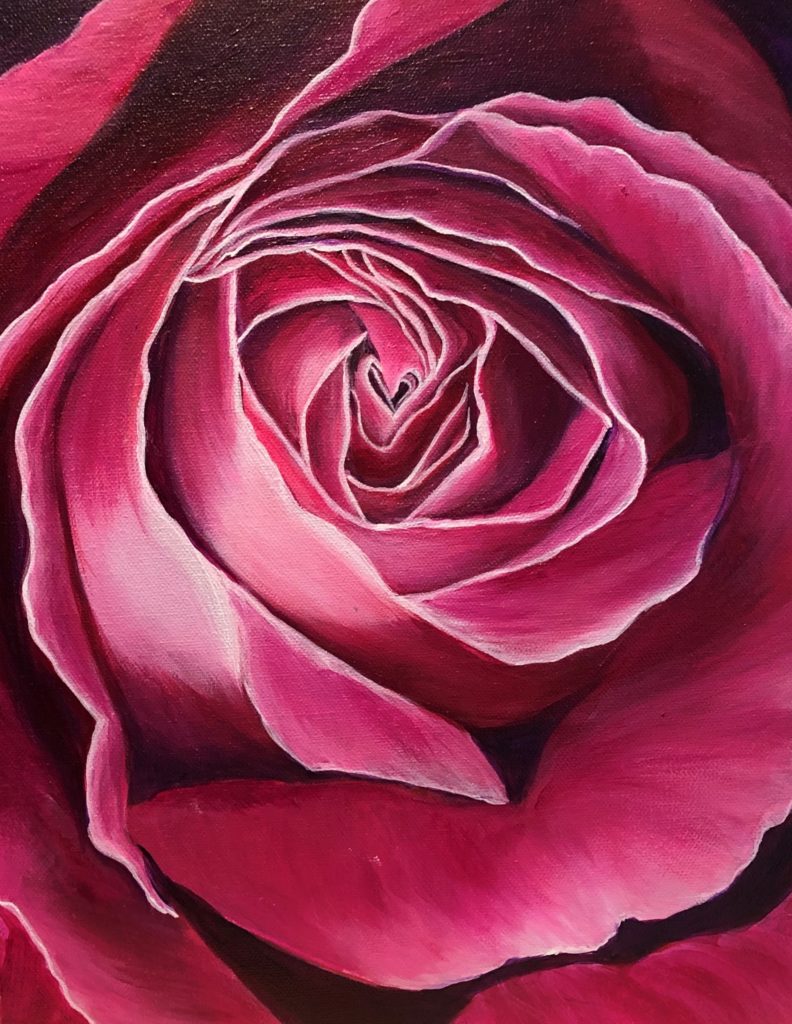
Heart of Love

By Manjusha Kota

I paint flowers and landscapes to bring beauty into my world and into the lives of my patients.


Manjusha Kota, M.D., is a Medical Oncologist-Hematologist who practices at the Kota Cancer Clinic in Hot Springs, Arkansas.

Filed Under: 4 - Images

Emergence

My wife is a Master Naturalist who has planted milkweed from seed for the last few years. This was the first year that we had a Monarch come and lay her eggs on the plants! I spotted 12 little caterpillars munching out like little machines, getting bigger and bigger with their instars. At their final stage, we put them in an enclosure outside to keep them safe from birds and wasps. If you have never witnessed that final stage of caterpillar becoming chrysalis, just whoa. Whoa. Talk about transformation. They attached themselves to the sturdy thin bamboo and to the underside of leaves, hung in their telltale J and started shaking, looking like a wiggly dance troupe. Then, like magic, they started to shrink and smooth into the jade green wondrous cocoon, topped with literal golden crowns and flecks of gold on the outer casing. Jewels of the natural world. 

We counted to make sure they had all safely transformed into their safe hang outs, a perfect glowing dozen. And we waited. And we watched. Eleven days later, the first chrysalis changed from green to black, transparent. I could SEE the wings through the shell of the chrysalis. We moved each of them carefully and tenderly to a bigger enclosure, a bright green pop-up tent we take camping, which looked like a giant chrysalis, too, now that I think about it. The tent would give them room to dry and spread their wings. We put late blooming flowers in there with them so when they emerged, they would have some nectar to drink before their long journey South to Mexico. I sat in the tent with them for hours watching each metamorphic miracle emerge finally, drop, and slowly open its wings. Over the hours, their wings dried and expanded— another dance. They practiced their flapping and fluttering in the safety of the tent, and the next morning, all twelve of the beautiful kings and queens lifted off from our fingertips to the open blue sky. I wanted to share this experience of cultivating a monarchy with you, in case you have never seen this miracle up close. This was my first time, too. 

Plant milkweed! Protect the pollinators! 


Kai Coggin was named “Best Poet in Arkansas” by the Arkansas Times and won the 2021 Governor’s Arts Award for Arts in Education. She lives in Hot Springs with her wife and their two sweet dogs.

Filed Under: 4 - Video Image

Conversation with Dr. Susan Smyth, the College of Medicine’s New Dean and UAMS Executive Vice Chancellor

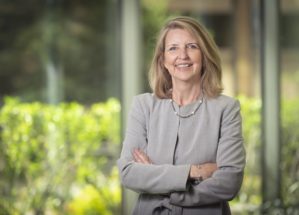
Image of Dr. Susan Smyth
Susan Smyth, M.D., Ph.D., began serving as executive vice chancellor of UAMS and dean of the College of Medicine on June 1, 2021.

By Tamara Robinson

UAMS welcomed Susan Smyth, M.D., Ph.D., as executive vice chancellor and dean of the College of Medicine on June 1. We sat down with Dr. Smyth for a Q&A to help team members and friends of the College of Medicine get to know this new leader of medicine in Arkansas. Our conversation ranged from Dr. Smyth’s insights on the college’s evolving role in improving health in Arkansas, to her path to becoming a highly regarded cardiologist and researcher, to how she enjoys spending her free time.

What is the most pressing challenge for health and health care in Arkansas, and what will be the College of Medicine’s role in addressing it?

Our most urgent challenge is to turn the tide on COVID-19 and do everything we can to protect our patients, students, colleagues and loved ones. The more highly contagious Delta variant of the virus is rapidly gaining ground in Arkansas, and this strain is making more unvaccinated people severely ill. I urge our team members and their families who aren’t vaccinated to get vaccinated right away. And all of us must remain vigilant about wearing our mask in public and when we’re around others at UAMS. It is important to follow established safety protocols. We cannot become complacent.

Aside from COVID-19, I think the most pressing and longer-term challenge for our state is the issue of health equity, and particularly the large health disparities we have in rural and underserved communities. It is imperative for us to ensure the best possible health and equitable access to excellent health care for every Arkansan.

Health equity crosses all health issues and diseases, and our college’s role in solving these complex issues is multifactorial. First and foremost, we have an essential role in educating and training physicians for Arkansas, and that means individuals who are well prepared to address these challenges and to work with communities to eliminate health inequities.

With health equity as an important focus, how will our work as educators, clinicians and scientists in academic medicine change?

Part of this is will mean training our students – and training all of us – to look at health and disease prevention through a slightly different lens. Historically, physicians have been incredibly well trained to take care of individuals, and that needs to continue. We will always be committed to looking at how we can best meet the needs of each patient.

However, we must also become adept in thinking about how to best meet the needs of the population and communities. Consider the analogies between caring for the individual and caring for the population. We are accustomed to hearing from an individual patient and collecting data – vital signs, clinical laboratory data, imaging data – and having a conversation with the patient about their various issues and options for care, and then coming together around a treatment plan.

We need to be able to do the same thing at a community level. And when we say ‘community,’ we can mean people in a certain area, or patients with similar health conditions and risks, demographics and so on. From the clinical, scholarly and educational perspectives, population health and addressing social determinants of health will become increasingly important in our work.

What are the challenges of this newer approach to improving health?

Some of the key questions are how do we collect, interpret, share and utilize health information about a community? Increasingly, there are data resources available to tell us about populations. Armed with this information, it is important to engage with the community and have conversations around their values. What do they see as important? As with caring for an individual patient, it is very important to come to shared decision-making that leads to a healthier community and population.

To do this effectively for communities, we need to train and educate ourselves differently. We must support more research that helps us better understand the best options and strategies for improving health at the community level, and how to effectively implement solutions. We also must continue to develop partnerships and relationships with our communities that allow us to have those conversations, much as we build our relationships with individual patients. Our partners will include community groups, churches, hospitals, other health care organizations, civic groups and many others. It will take the entirety of the infrastructure to tackle some of these challenges.

So, this is what I see as the future of health care, and really, what I believe is the future of our college – to prepare all of us to take on that role.

As you have met team members and learned more about the College of Medicine and UAMS in your initial weeks here, what has surprised or impressed you the most?

I have been impressed with the caliber of our faculty and staff and excellence in all mission areas – education, research and clinical care. The collegiality and kindness at UAMS has really struck me, as well as the dedication of individuals and the institution as a whole to the people of Arkansas. I had a sense of that from the interviews prior to my appointment, and frankly, that’s why I’m here. Hook, line and sinker, I am all in for making our core vision of a healthier Arkansas a reality.

I earned my medical degree and my doctorate in pharmacology at the University of North Carolina in Chapel Hill, and later began my career in academic medicine there. I am tremendously grateful to my home state for everything it did for me during my career, and I greatly appreciate the unique role a public, state university has. The opportunity to impact lives across a state is incredibly powerful and really what we at public academic medical centers have a mission and a calling to do.

Team UAMS is living up to this calling for the state of Arkansas. The commitment to solving health and equity issues, to giving back to the state of Arkansas, is clear and compelling. I am thrilled to work with everyone in the College of Medicine and UAMS in this pursuit.

When did you know you wanted to become a doctor – and a physician-scientist?

I’m not entirely sure how I came to the decision to become a doctor, but I can say that sometime in my senior year of high school, I decided that I was going to be a physician-scientist. I loved my biology class, and I entered college with the goal of preparing myself to be an M.D./Ph.D. Interestingly, there was not another doctor in my family at the time, and I did not personally know an M.D./Ph.D. My grandparents were both teachers, my mom was an elementary school teacher, and my dad was a philosophy professor.

What drew you to your clinical specialty of cardiology and your research focusing on arterial and venous thrombosis?

Like many physician-scientists, I enjoy a whole bunch of different things. While in medical school, I really liked my rotations in different clinical areas, and it took me a while to come to the decision to do my residency in internal medicine.

During residency, I was struggling to narrow down my future to one specialty. Then, the blood thinner ReoPro (abciximab) received FDA approval for use in patients undergoing coronary stent implantation. ReoPro is a monoclonal antibody that works against a major platelet receptor, and I had worked with that antibody while researching blood clotting as a graduate student. I remember working in the coronary care unit and giving ReoPro to a patient. I recall thinking, if I want to merge my scientific interests in preventing thrombosis with clinical care, the place to do this in in cardiology. It was really the development of that drug that made me see the connection between my scientific and clinical interests. Cardiology is a great specialty for me because we cover many facets of care and I have had the chance to have long-term relationships with patients as well as manage critical illness.

Later, as a cardiology fellow at Mount Sinai Medical School in New York, I had the opportunity to work with the physician who developed ReoPro, Dr. Barry Coller. Dr. Coller is world-renowned and an incredibly compassionate physician, and he became one of my key mentors. The drug he developed, and that class of therapeutics, has saved hundreds of thousands, perhaps a million, lives. The opportunity to work with such a person – it changed my career and my life.

Switching gears on questions now. You and your husband, Andrew Morris, Ph.D., a renowned lipid metabolism and signaling researcher, aren’t the only family members joining us at UAMS.

Right! Our English labs, Carmine and Selah, have had distinguished careers as therapy dogs at the University of Kentucky, and we can hardly wait to introduce them and put them to work at UAMS. They have their own Facebook pages, so our Arkansas friends can start to meet Selah and Carmine if they would like.

Carmine is part of a mobility team, so he walks with patients. He encourages patients, for example, to get up and sit in a chair, and then to move from the chair. We have had patients who weren’t out of bed for months, and Carmine enticed them first to get to the chair, and then to get up and walk with him. Carmine is the most laid-back dog you can imagine.

Selah, on the other hand, is very engaging. In Kentucky, she worked with stroke patients on motor skills by bouncing a ball back and forth with them. She’ll jump onto their bed and let them brush her to work on hand and arm movements. She will step up and down on platforms to demonstrate movements.

We also have a Maine Coon cat, Bernadette, who rules the house and keeps both dogs in place.

What do you like to do in your spare time? Have you had a chance to explore some of Arkansas yet?

I love to read and enjoy cooking and gardening. Of course, we do frequent walks with the dogs. We are very excited about moving them to our new neighborhood in Little Rock and have been counting all the other dogs we see on our neighborhood walks. We had a great time in Hot Springs recently and are really looking forward to seeing the rest of Arkansas.

OK, here are some quick and quirky questions. What was the latest TV show you watched?

“Mare of Easttown.” My show watching is a bit eclectic. I love Jane Austen, period dramas and “Masterpiece Theatre,” HGTV, and am a huge fan of the Marvel Cinematic Universe (MCU) and “Game of Thrones.”

What makes you laugh?

My husband, Andrew, and our two sons. They all have different personalities and senses of humor. Andrew is one of the best satirists that I know.

What would surprise people about you?

I am really into P!nk – how she empowers women and encourages folks to color outside the lines really resonates with me. And, wow, can she sing.

Who would be your guests (anyone living or deceased) for a cup of tea and conversation?

Goodness gracious. There are so many choices. Abraham Lincoln. Einstein. Martin Luther King Jr. I would love to talk to Mary Lyon, the founder of my undergraduate college, Mount Holyoke, which was the first institution of higher education for women in the country. I would love to hear her passion, first hand, about education for women. Probably Madame Curie, as a female scientist. Those are some of the folks I would love to sit down and talk with.


This interview was previously published on the UAMS College of Medicine website. Used with permission.

Filed Under: 4 - Conversations at UAMS

Hope Rising/Be Still

By Stephanie Trotter

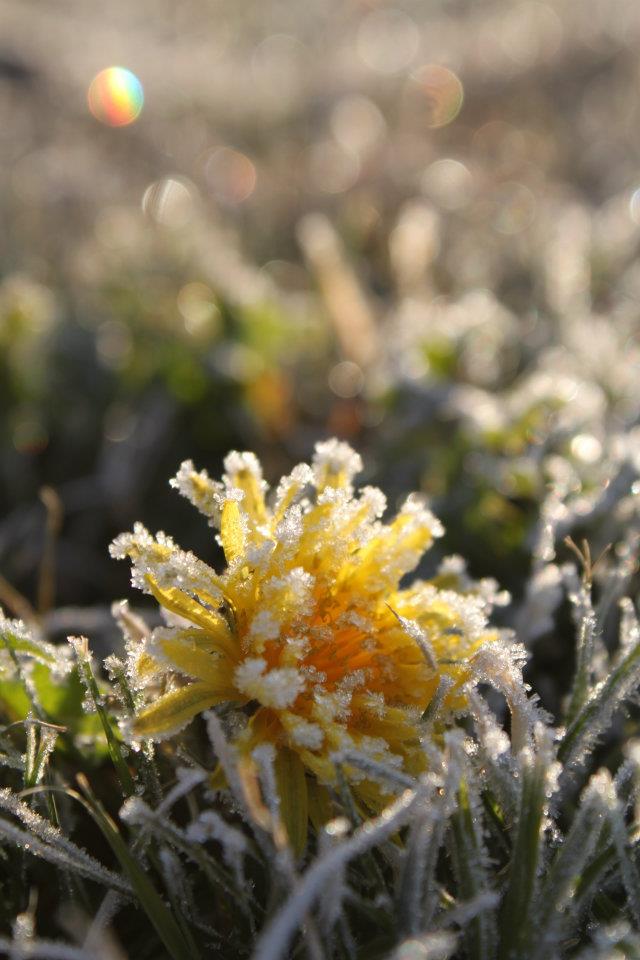
Image of frost covered flowers in the sunlight
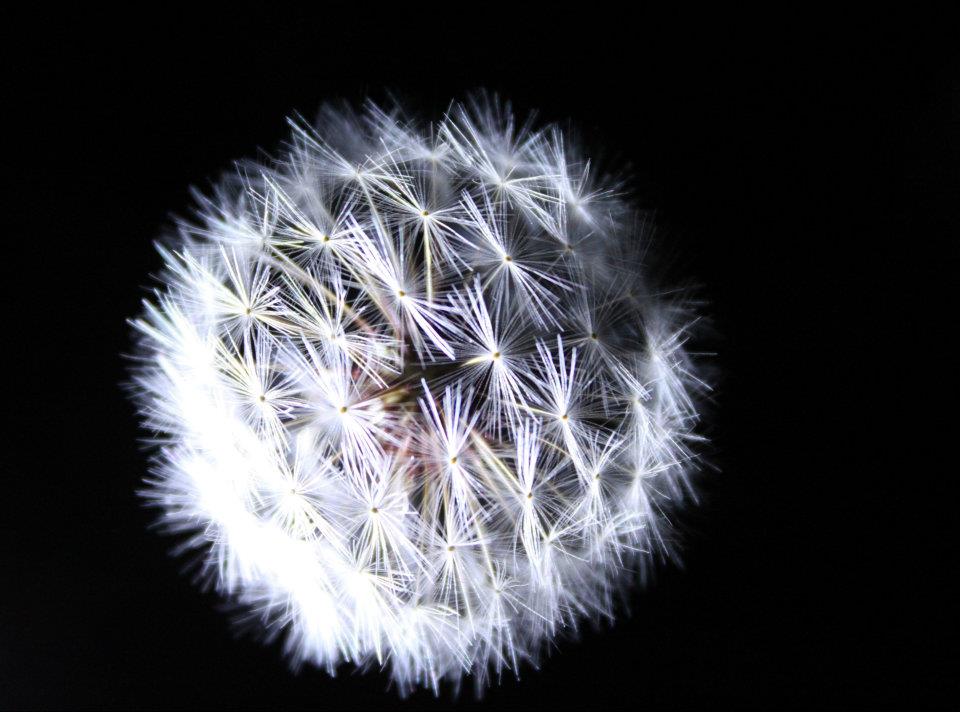
Close up image of white dandelion seeds

These images capture the fragile balance of life—the trials and the triumphs. Life’s storms ebb and flow. The wind may blow, the frost may settle, but eventually the storms recede. To be still is to know there is beauty found even in the tenuousness. Hope rises with each new sunrise; life is restored with patience and perseverance.


Stephanie Trotter, Ph.D., RN, is a clinical assistant professor in the College of Nursing, UAMS, and enjoys photography in her spare time. 

Filed Under: 4 - Images

Light in the Dark

By Sharmilan Thanendrarajan

picture of a cavern with sunlight streaming in

I made this photo in the War Eagle Cavern on Beaver Lake in Northwest Arkansas during our family vacation in 2020. It is one of the most beautiful caverns in Arkansas and providing access to a dark, mysterious and bizarre underworld and habitat. When our tour guide once switched off all the torchlights and illuminant resources in the cavern, it was completely dark. That was a stunning moment and indeed the darkest places I have ever been. The spot depicted on the photo is revealing a small place in the cavern where light accesses the cavern minimally and I thought in that moment, “you may find even in the darkest places some light.” Confidence and happiness can be found sometimes in the most desperate and hopeless situations.


Dr. Thanendrarajan is an Associate Profession of Internal Medicine, Division of Hematology and Oncology. He works in the Myeloma Center at UAMS. 

Filed Under: 4 - Images

My 2020

By Denise B. Graves

January 2020 biopsy

What’s the verdict?

You have CANCER

We don’t have cancer in our family!

What’s next

GynOnc will call

March 4th Hysterectomy

Lymph node metastasis!

Covid-19 pandemic

CT Scan

Chemotherapy

You need to be EXTRA careful

Radiation Therapy

More Chemotherapy

Another CT Scan

November – You’re NED – for now

See you in three months


Denise Graves is a Research Assistant at UAMS and has dabbled in poetry from time to time.

Filed Under: 4 - 55 Words

Untitled Acrylic Paintings

By Rushita Bagchi

This artwork is a mix of pour painting and acrylic multilayer painting. 

image of acrylic paint on a canvas

Rushita Bagchi, Ph.D., was born and raised in India, obtained her doctorate degree in Physiology and Pathophysiology from the University of Manitoba in Canada, and is currently a postdoctoral fellow at the University of Colorado Anschutz Medical Campus in Denver, Colorado, USA.

Filed Under: 4 - Images

The “C” Word

By Nadja Maril

Coach said “no excuses.” And what was he going to say anyway when no one wants to hear the word “cancer”?

His father has the “C” word, and no one wants to talk about it. It is 1972 and lasting cures for prostate cancer are few. His sister avoids the topic completely by saying stuff like, “Dad is sick. Maybe he’ll get better.” But who is she kidding? 

And Mom, she avoids his questions by taking on an extra job teaching summer school and coming home just as the dinner dishes are being dried and put away. Mark knows someone has to pay the bills. He is too young to get a job, so he is the one assigned to stay home.

Watch Dad. Sit with Dad. Bring him a glass of water. Make him a sandwich. Boil water for tea. Initially he’d volunteered. This was his opportunity to spend time with his father. He said, “Sure, I’ll do it.”

Before the cancer, Dad’s schedule had been crowded with classes and projects. “It’s an unstable time for engineers,” Dad had explained. He’d been laid off several times, the family forced to rely on Mom’s salary.

To insulate himself from future job losses, Mark’s father had forged a new path by earning a teaching certificate. “A steady paycheck is worth its weight in gold,” he liked to say.

Maybe, if his father started feeling better, they’d go out in the back yard and rebuild the old shed, like they’d planned, and Dad would jabber on about the right way to pound a nail or line up a corner. Or maybe, Dad will get well enough to attend one of Mark’s track meets and see how fast he can run. Now he barely speaks.

In another hour Mom will be up, getting ready to leave for work. The house will remain quiet until his older sister Debbie wakes and self-importantly bustles back and forth from her bedroom to the bathroom, primping for her day job at Mr. Kent’s law office.


Debbie checks to see if the red dots on the top of her electric rollers have turned from red to black. If she is lucky, her light brown hair will easily wrap around the heated rollers. She’ll leave them in for two minutes and the bottom of her hair will curl and the curls will hold and she’ll look like Marlo Thomas. Boys will take a second look and forget she is smart.

She’ll look as pretty as Sally, another sales clerk who is always getting compliments. Not that Sally has much of anything going on inside her head, but she knows the right lipstick and nail polish to wear. Sally says boys don’t like smart girls and she is probably right, because Sally has lots of boyfriends and Debbie has none.

Debbie wants to wear nail polish, but she doesn’t have time to labor over a manicure. She uses her hands too much and the polish will chip.

As she fixes her hair she wonders, is Dad awake? Does he need the bathroom? She prefers using the bathroom because it has better lighting and a large mirror. Dad has a potty chair, what Mom calls a commode, to use if he is too weak to make it across the hall. Anyway, he is probably asleep. She hasn’t heard any sounds coming from his room.

Debbie stares at her reflection and thinks of Mom’s younger sister, Aunt Beverly, who is always saying, “Keep your chin up.” The first time she heard those words, she thought her aunt was worrying about the predilection in the family for double chins. But no, she is talking about something else because she uses that exact same expression every week when she telephones. “Keep your chin up, even if your neck is dirty, and everything will be fine.”  

“Easy enough for her to dole out advice about carrying on despite your troubles,” Mother says, “When she gets a month-long summer vacation.” 

Aunt Beverly, who has two little boys of her own, hasn’t visited in two months. Mom, who sits up with Dad at night, is gone during the day. Sometimes Debbie takes her father to his doctor’s appointments, but she has her two jobs.

It’s not fair. Her friends are off on camping trips and going to the beach with their families, but Debbie doesn’t get to enjoy her summer.

“Think you could do some laundry?” Mom says. “Clothes don’t wash themselves.” With Dad stuck in bed, there are all those sheets to do, and Mark, just a year and a half her junior, doesn’t even keep up with washing his dishes. Barely lifts a finger. It is Deb’s job to keep the place clean.

If she fills her mind with worries, such as whether the Pinto will run out of gas and whether the dress she bought for her first day of classes is going to shrink, there is no room left in her mind to think about her father.

She is going to Notre Dame in the fall. She’s been awarded a scholarship for academic achievement. Dad said, “I always knew you were a smart cookie,” when she opened the acceptance letter.

She is the one who gets good grades (unlike her lazy brother), but she worries that choosing a school so far from home has been a mistake and that college will be harder than anticipated. “Don’t worry about it,” Mom says, “You think too much.”

The black dots in the center of her rollers indicate they are ready to use. She concentrates on not burning the tips of her fingers as she wraps the strands of hair around the hard plastic.

Oh, she is going to look beautiful, if only the pimple on her chin would come to a head. She heats up the water to soak a washrag. Mom suggests hot compresses when something is inflamed.

“You going to spend the whole morning in there?” Her brother is rapping on the door.

She opens the door a crack. “Relax twerp, I’ll be out in a few minutes.” 

What does her brother do while she’s at work? He probably lounges around the house reading comic books. Yet as the youngest and the boy in the family, he is Dad’s favorite.

He can wait. Mark has nowhere special to go.

She starts unraveling her hair, and it looks perfect. When she arrives for her shift at the department store, she is going to impress her supervisor with how professional she looks. The old dried-out people who work at the law office barely notice her appearance, but the people who come into the Jordan Marsh department store will notice. Maybe she’ll earn a 25-cent per hour raise before summer is over.

In the fall, she is off to college, and she’ll be spending the money she’s earned buying new clothes and knick-knacks for her dorm room. She’s even started a hope chest, so when she does meet Mr. Right, she’ll have some of the things she’ll need to set up their household. It’s nice to dream.


Debbie is eating her breakfast, toast spread with cream cheese and jam, when Mark enters the kitchen. He rifles through the cupboards looking for a box of cereal.

“We’re out,” she says. “You’ll have to wait until Mom goes to the store again or walk there yourself.”

Mark starts to ask his sister why she can’t go to the store for the family but doesn’t because he needs to ask for a favor. “Deb, what time do you get back from your receptionist job?”

“Time?” she drums her fingers on the Formica surface of the table. “You want to know what time? Why the interest in my schedule?”

“I need a ride to track practice,” he says. “You get home about three o’clock don’t you? My practice starts at four.”

“Well, I don’t always get home at three. Sometimes, they need me to stay longer, and then I have to get ready to head over to Jordan Marsh.”

“I thought your shift didn’t start until five?” Mark says.

“Jeez. I’m not a machine that works non-stop. I need time to eat dinner and freshen up.”

 “You need almost two hours to eat and wash your face?” he says. “Come on.” Demonic Deborah, he almost says.

“Don’t you have any teammates who might give you a ride?’ Debbie asks. “Some juniors or seniors with driver’s licenses?”

Mark walks towards his sister and leans over her, his face a few inches from her own.

“Yuck. Get out of my space you creep and stop breathing on my food. “

“Didn’t Aunt Beverly give you that deal on her Pinto with the caveat that you help with running errands, shopping, and taking Dad to the doctor? Wouldn’t part of helping the family be to give your brother a ride?”

“Using big words, are you? I didn’t know you even knew what caveat means.”

“Caveat emptor, let the buyer beware. Miss Brilliant you are not the only one in this family to take Latin.”

Debbie looks down at her wristwatch “Rats, it’s getting late. Okay twerp,” she says while heading for the stairs. “Be ready at 3:30 sharp.”


During the day Mark feels alone as he struggles with his father’s care. His sister is no help. Yes, Debbie drives Dad to a doctor’s appointment now and then. Yes, she does some laundry. But she isn’t the daily caregiver, and she isn’t responsible for giving Dad his injections.

In the beginning, the doctors prescribed Percocet to ease Dad’s pain, but the pills stopped working. Now, the only way the pain can be endured is with morphine shots. They need to be administered every four hours.

It was Mom’s idea to have Mark give the injections. “I know I can rely on you,” she said. The responsibility made him feel important.

Dr. Milton agreed with the plan. “You’re almost a man. You say you’re interested in science,” he said. “Maybe one day you’ll be a doctor yourself or work in a lab and find a cure.”

Mark practiced on an orange. With a steady hand, you slowly pierce the skin and then the flesh.

The injections become Mark’s responsibility, a tangible way to show his love. Mark wants to make Dad feel better. His father is in such agony some afternoons that he begs, with a slight grimace in his face and terror in his eyes, for the next shot. He can’t wait four hours. Addicted to the morphine, his father’s body craves for more.

Mark watches the clock and acquiesces by carefully drawing the morphine into the syringe thirty minutes ahead of schedule. He flicks at the glass vial with his finger to make certain there are no air bubbles. “Be certain. It is a matter of life and death. No air bubbles in the syringe,” Dr. Milton said.

Mark knows that tomorrow he will have to wean his father back to waiting longer for the injections. By evening, Dad will be twitching, and he’ll start asking for an injection every three hours. Too much morphine and his father dies. In the morning, his father will have to wait a full five hours between shots, cold turkey, until the cycle begins again.

His father’s arms, once strong enough to lift a heavy beam and hoist it into place, have lost their muscle. In order for Mark to find a spot to inject the morphine, he gathers and squeezes together a section of flesh. He swabs the chosen spot with alcohol and recalls his own fear as a child in the doctor’s office bracing for the stab of the needle. He doesn’t want to inflict pain on someone he loves, but no one in the family wants the job. His mother wakes him in the night telling him Dad needs another shot and looks away. Mark doesn’t want to see his father suffer, grows to hate the smell of the rubbing alcohol, but the responsibility of administering the morphine has become his burden.

While he waits for the drug to take hold, he reads a scary Steven King novel or a classic adventure tale like Jules Verne’s Twenty Thousand Leagues Under the Sea. Some days he tries his hand at telling Dad a few jokes, trying his best to make him laugh. He reproduces a skit he’s seen on the Red Skelton Show, and sometimes is rewarded when his father pats his hand and says, “You’re a fart smeller, I mean a smart fella,” once the drug has taken hold.

Joining the cross-country and track teams his freshman year was a good decision. He’s a rising sophomore and already he’s earned two varsity letters.

The feeling of exhilaration, breeze blowing against his hair and face as he speeds along the trail, clears his mind. The sound of his feet pounding the ground establishes a comforting rhythm. There is no need to think of anything except the placement of one foot ahead of the next. Grass, trees, buildings, cars, people are left behind, as he propels his body forward, mile after mile.

At practice, he forgets about everything else in his life and focuses on Coach’s instructions. Running five to eight miles each day has become part of Mark’s schedule. He can feel himself improve. Each time he runs, he gets stronger.

As fatigue starts to set in, he thinks of his father. He pictures his drawn haggard face wincing in agony, refusing to let go, and Mark pushes himself harder. It doesn’t matter if his feet ache, legs burn, and throat feel dry; he keeps up with the other runners until he reaches the front of the pack.


The passenger side of Debbie’s Pinto is littered with papers and magazines. As concerned as she is about cleanliness inside their home, Debbie doesn’t take pride in her car. Mark transfers the clutter to the back, sits down, and readjusts the seat to make room for his legs. “Thanks again, Sis, for the ride,” he says.

Debbie shakes her head and rolls her eyes. “Sure thing. I’m just a chauffeur service. I just live my life to drive my little brother around.”

“Last time I checked, I was taller than you,” Mark says.

“Little as in little mind,” Debbie says, “And worth even less. Not that you are capable of earning any money. I had to spend 20 minutes scrubbing the ink off my hands. Mrs. Solomon, the office manager, made me run 100 copies of papers off on the mimeograph machine today when I’m supposed to be a receptionist. Why couldn’t she do it herself?”

“Poor Deb. Your hands must be so chapped,” he says.

“Ha, like you know anything about hands and skin,” she says.

Mark thinks of his father’s skin turned sallow and all the dark purple and yellow bruises on his arms. Has his sister even noticed? He studies her profile as she drives. Is she attempting a new hairstyle? The ends of her hair are curled. He doesn’t want to say anything because she might take offense. Her driving is painfully slow. One foot hovers over the brake. She doesn’t deserve a car.

Up ahead, two bicyclists hug the edge of the road. Mark admires their racing bikes equipped with multiple gears and hand brakes. He’d been dreaming of taking a weekend bike excursion with his friends this summer, but there hasn’t been any time to get away. The woman’s blonde hair blows in the breeze. She is pretty.

Debbie sharply turns the steering wheel and slams on the brakes, almost hitting a tree.

“What are you doing?” he says, trying not to raise his voice.

“Avoiding the cyclists, you idiot. They were in the way. I could have hit them.”

“They were on the side of the road. Maybe you need glasses,” he says.

“I need glasses? Like you’re the medical expert. My vision is perfect, ungrateful jerk. I’m giving you a ride and you’re criticizing my driving. I should kick you out of the car right now.”

“Please. I don’t want to get in trouble with the Coach. I’m an important member of the team, and I’m supposed to be there on time,” he says.

“Important member of the team! You’re only a sophomore. What are you talking about?”

He thinks about the Mid State Regional Track Meet three months earlier, riding on the yellow bus to Springfield with his teammates. He’d qualified for the two-mile race.

“Don’t be concerned,” Coach had told Mark “After the first mile there’ll be plenty who fall behind. Just keep and establish your pace.”

Around the track stood parents, siblings, coaches, and students ready to call out words of encouragement to their teammates and friends. Mark paced, waiting for his event. He felt queasy. Twelve other boys were competing against him. How fast could they run?

The bang of the starting pistol propelled him forward to claim a place in the center of the pack. He jockeyed to take a position where he would not be vulnerable to the stabs of his competitors’ spikes. He kept running to hold his position and fell into a trance. His mind became detached from his body. He focused on one thing—passing every runner. By the time he’d completed the first four laps, there were only four runners ahead of him.

Some of the runners, who’d started off with a fast burst of energy, appeared to be slowing their pace. Had they encountered the feared brick wall? Mark’s teammates were always talking about “the wall”, the enemy of the runner who runs out of energy too early in a long race. They talked about legs growing heavier with each stride.

The stabs of pain in his calves, the burn in his thighs kept building, but he ran faster and faster, his father’s face before him. He passed one, two, three runners until first place was within his grasp. And then he heard the cheers. The whistles. The shouts. He pushed harder, until he was in front by more than ten yards.

All his teammates and their parents were shouting, “Go Mark Go!” Every cell in his body had been tingling. He’d felt invincible.

His eyes welled up with tears when they’d placed the first-place medal around his neck. He’d won the race. It was the biggest accomplishment of his life.

It wasn’t something he wanted to share with his jealous sister. He’d tried to tell his mother and his father about the race, but they hadn’t been listening.

“What I’m talking about,” he says to Debbie, “is I run the fastest two-mile on my team, “

“Well they’re in trouble if you’re one of their best runners. Must be a bunch of losers,” she says and reaches for a cartridge to push into the eight-track player.

The last few miles, they listen to Simon and Garfunkel. Debbie carefully rotates the steering wheel of her Pinto to turn into the school driveway and turns the engine off.

“Well, we’re here. I hope you’re grateful because I’m probably going to be late to work, just so you can go to that stupid practice of yours.”

Mark thinks of Dad and the way his eyes look while waiting for his mid- afternoon injection. Too weak to talk, miserable and in pain. How much longer can he hold on to life?

“I’ll be back in two and a half hours,” Mark had told his father before he left. “Mom will stop by around 5:30 before she goes out to teach her class. You’re all set. Should I turn the radio back on?” Dad shook his head and shut his eyes.

Running, all he has to do is focus on putting one foot in front of each other. It isn’t easy to talk about what he is feeling, but when he ran fast and broke the school record, and everyone yelled his name and he won the trophy, that was his reward.

How dare his sister try to shame him? How dare she call his practice stupid? It is the only good thing he has. He slams the door with his anger. Crash. The glass in the door breaks and shatters. The small fragments scatter to the ground.

He looks down at the broken pieces, amazed by his strength. He looks at the small blue car with his sister sitting inside.

“What did you do?” Debbie screams, “What did you do? You broke my window.”

Mark shrugs his shoulders. He feels numb. The team on the field is warming up.

“You’ll have to get this fixed,” she hollers. “You’ll have to pay.”

Mark looks at the fragments of glass scattered across the ground. He thinks of his mother and sister never home. He thinks of the nights and days he’s spent caring for his father.

“I already did,” he says.


Nadja Maril is a former magazine editor and journalist living in Annapolis, Maryland. She has an MFA in Creative Writing from the Stonecoast Program at the University of Southern Maine and her short stories, portions of her novel in progress, and essays have been published in a number of small literary magazines including Change Seven, Lunch Ticket, Thin Air and Defunkt Magazine. She blogs weekly at Nadjamaril.com and is the author of two reference books on American Antique Lighting as well as two children’s books. Follow her on Twitter at SN Maril.                          

Filed Under: 4 - Fiction

Oh COVID-19 , why don’t you just go away!

Well, it has been since January 2020 that we have been talking about COVID-19. It was December 2019 when first cases of infection were described in China, or maybe when the first case appeared in these United States on the West Coast.

The disease or the pandemic as it is called now has affected several million folks in the U.S., India, Brazil and other countries. It has killed almost four million people. Some say the count is lower than in reality because we are not testing everyone, and others say we are overcounting as the hospitals are labeling many cardiac and pulmonary deaths as COVID-19 deaths to get higher reimbursement. 

The disease is affecting mostly elderly men, blacks and Hispanics, and those with heart disease, lung disease, kidney disease, immunosuppression, and others with diabetes and hypertension and smoking history. This is what our study in the American Journal of Cardiology showed.

There was much scare initially in Europe, and now all these countries are facing a second or third or even fourth spike. These countries have had lockdowns to contain the disease, and then intermittent opening of the economy – how long can they keep large number of people, young and old and in-between, in their homes? The schools and businesses are opening and closing and opening again. And then the teachers do not show up. What good is the opening of schools and businesses?

The incidence of lonesomeness and unhappiness is rising because people must stay home. The dynamics of interpersonal relationships between spouse and children have become strained as people are on each other’s faces all the time. No wonder the divorces are at all-time high, as is crime. The number of suicides is up, even among children, particularly among Blacks. Has anyone figured out why the suicides are much higher among Blacks?

We are animals that like to wander around, and go to the countryside, jungles, oceans, and skies, and visit our friends near and afar. We like to go to art galleries, symphonies, movies and take part in or just watch sports – which are all or mostly closed, or “on-line.” On-line stuff whether be educational or entertainment is not the real enchilada.

Despite an initial setback, the stock markets around the world keep setting new highs. I guess people have lots of cash that must be put to use somewhere. And playing in the stock market gives a sports-like high.

In February and March 2020 when the disease attracted everyone’s attention, I thought it would disappear by summer, and I was nonchalant about it even though I personally had almost all the risk factors. I used to help others think that it was a short-lived, mild problem that would just “go away.” Some believed me, most did not.

We had planned trips to places near and afar, including Florida, Montreal, Boston and Europe. We did not go to any restaurants, but I kept going to Kroger and Walmart and Sam’s, and occasionally to the mall, more for getting my walking steps than for shopping. Everywhere we went, we had a mask on. It was no fun.

We had visits from our children and even one from my then 9-year-old grandson Jasper who took his first solo trip ever. The visit was brief and pleasant, but I had some mixed feelings because we had to be ever so careful.

Now the summer or 2020 is gone, and so has fall, and it began to get wintery cold, and then came the spring and summer of 2021. Some days in Little Rock in winter were colder than in Boston. The year 2021 is more than half gone. We are still talking about COVID and new variants – Delta that originated in India and rapidly spread around the world. In Arkansas, the Delta variant is the primary cause of a new wave of COVID hospitalizations and deaths.

I guess a new reality has set in. I am not seeing new patients – just follow-ups, mostly by phone.

Even the patients I see in my clinic appear bored. Many come for a visit to get out of their house. Some like talking on the phone, but there is no personal connection, and whatever is there appears artificial.

The hospitals lost money for lack of patient visits and the “procedures” that were in any case meant to generate revenue and on the side “help” patients. Hospital revenue began to pick up around the winter of 2020. Patients in the hospitals were allowed minimal visitors to keep the bug away. But then as COVID-19 was controlled in the U.S., clinics and operating rooms and cath labs were opened, and all was back to “normal” around February and March 2021, and the healthcare industry started all its money-making operations.

Restaurants that closed for months began to open on a limited basis around the beginning of 2021. Even those that were open had to enforce social distancing and use of masks. So, you eat with your mouths closed!! Gyms were by and large closed and are now open, but people still manage to eat out, go out to establishments and use gyms. No wonder we have second and even third spikes of COVID-19.  Perhaps it is time we call it COVID-20 or COVID-21?

People felt lonesome stuck at home. Children were staying at home as schools were closed or open intermittently, studying at home on Zoom, and going berserk, as were parents, many of whom never had the experience of having children at home for spring, summer and fall and winter as they forgot about the on-line education. Even my daughter Asha moved with her family to Florida where schools were open and the weather was warm.

I had an interesting interaction with a patient. I mentioned it to Paulette and she wrote it up for me. In essence, one of my patients who was taking care of an elderly man was very upset not because she was let go from taking care of the elderly subject by his family, but more so because the man died of loneliness, not because of COVID-19, but from lack of his only contact. 

We expected one or more vaccines to be available to protect us from Corona virus, but the virus keeps changing initially into type A and B, or D614 and G614, and now it has mutated in Denmark in sheep. It will now affect mink prices since the government there has ordered culling of millions of sheep. So, the vaccine may not be effective, or only partially protective. And of course, the Delta variant which started in India and spread worldwide. More variations will come.

The vaccines came, initially from Pfizer-Biotech, then Moderna, and AstraZeneca and Jensen, and of course from China, India and Russia. 

The U.S. elections came and went (not really!); the Trump team did not believe the results. I will remember these elections forever. Very few people voted in person, yet more votes were cast than ever before – by mail because of the Corona fear. The former President is still contesting the election with fights in courts. Can anyone deny that (mis)management of COVID-19 cost him the election as POTUS? He claimed we will have the vaccine before the election; it never did happen. He himself had COVID-19. He got better enough to campaign mightily, but that was not enough. 

Well, Joe Biden is now the President. He has mobilized COVID vaccinations and almost 55 percent of the population is vaccinated, but COVID infections continue to soar in the U.S., India and many other countries, a result of people becoming more used to COVID and not following precautions. India until recently the world’s supplier of vaccines had a shortage of vaccines and oxygen for their patients; it is asking Germany and other countries for the gas generating plants.

There are now Indian variants, UK variants and South African variants. Vaccines may or may not be effective against the variants. And before I forget, the AstraZeneca vaccine has been associated with unusual thrombosis in the cerebrovenous sinuses and the hepatic veins, a picture mimicking TTP. I wrote a paper with Peppino in Italy and Pier Paolo in Ireland.

I am afraid I will get COVID and die of it, although they say that vaccinated individuals are unlikely to get serious infection and less likely to die, but with poor lung and CV situations, who knows? 

Oh, COVID, don’t be so proud. We will get used to you, or you will just disappear – after killing millions, a price to pay to pacify you.


Jay Mehta, M.D., Ph.D., served as the Director of the Division of Cardiovascular Medicine at UAMS. Currently, he serves as Distinguished Professor of Medicine, Physiology and Cell Biology, and Pharmacology and Toxicology.

Filed Under: 4 - Non-Fiction

  • «Previous Page
  • Page 1
  • Interim pages omitted …
  • Page 3
  • Page 4
  • Page 5
  • Page 6
  • Page 7
  • Interim pages omitted …
  • Page 16
  • Next Page»
University of Arkansas for Medical Sciences LogoUniversity of Arkansas for Medical SciencesUniversity of Arkansas for Medical Sciences
Mailing Address: 4301 West Markham Street, Little Rock, AR 72205
Phone: (501) 686-7000
  • Facebook
  • X
  • Instagram
  • YouTube
  • LinkedIn
  • Disclaimer
  • Terms of Use
  • Privacy Statement
  • Legal Notices

© 2026 University of Arkansas for Medical Sciences