• Skip to main content
  • Skip to main content
Choose which site to search.
University of Arkansas for Medical Sciences Logo University of Arkansas for Medical Sciences
Medicine and Meaning
  • UAMS Health
  • Jobs
  • Giving
  • About Us
    • Submission Guidelines
  • Issues
  • Fiction
  • Non-fiction
  • Poetry
  • Conversations
  • Images
  • 55-Word Stories
  • History of Medicine
  1. University of Arkansas for Medical Sciences
  2. Medicine and Meaning
  3. Author: UAMS Online
  4. Page 10

UAMS Online

Quarantine and the Bears

by Paulette Mehta M.D., M.P.H.               

Before COVID-19, I had a daily routine: Leave for the hospital at 7:00 AM,  return home at 9:00 PM or later. Days were filled with treating cancer patients, writing academic papers and proposing projects. Evenings were filled with meetings, potlucks, restaurants, and workouts at the gym.  

Everything changed when the pandemic arrived in Little Rock, Arkansas.  Restaurants, gyms, clubs, and theaters closed. Even the mall, where I often did a nighttime run, closed. The city was deserted. People were told to socially distance and not to go near each other. The mayor of our little city imposed a 9:00 PM curfew. The only way I kept up connections was at the hospital. There, I talked to patients and colleagues, albeit from six feet away.  

Until the quarantine. 

I had spiked a fever to 100.6 degrees but I had not been exposed to anyone with the COVID-19 infection yet, as far as I knew. I wasn’t able to be tested because there were not enough tests to go around yet. I had been exposed to many sick cancer patients, I therefore decided to be extra careful and self-quarantine for 14 days. 

What would I do alone at home for 14 days? I wondered. I could play the piano.

That was always a refuge when I felt sad. I could choose songs of hope, solace and love. I had often soothed myself from pain on my grand piano, the one we had bought for our daughter when she turned five so many years before. Then I remembered, I had sent the piano to her for my grandson’s fifth birthday, an heirloom they could both enjoy.  

What else could I do? I could paint. 

My mother had been a wonderful artist who stirred me to draw and paint. I could do landscapes inspired by the beautiful rolling hills just outside my house where daffodils and dogwoods were beginning to bloom, indifferent to the virus. But then as I searched my house, I realized I didn’t have canvas, paints, or paintbrushes. Despite these items being essential for me for my healthy living, they were not officially considered essential and therefore not available for sale. 

 What else could I do?

Alas, I could simply just walk the perimeter of my house, back and forth, over and over, careful to stay at least 10 feet away from anyone else. There were endless pathways outside my house at the 12th hole of the Pleasant Valley Golf Club, but I decided to just loop around the perimeter of my house again and again until I reached 10,000 steps.     

One day, I saw my neighbor Fred across the street. I called out, “Hi Fred, how are you doing?”

“Not so good,” he answered.

 “Why not?” I inquired.

 “Well you know, my wife, she isn’t getting any better.”

 “What’s wrong?” I asked.

 “You remember, when she had that stroke, well she never recovered,”  he said, his voice trailing off as he started walking away. 

 I kept walking, feeling bad I hadn’t followed up with them, my closest neighbors. as I would have done had she been my patient. 

As I continued walking, a lady stopped her car and yelled, “How are you, darling?  I haven’t seen you in so long!” 

 “Fine,” I answered, not at first remembering who she was. 

 “How is everything?” I asked. 

 “It’s hard,” she admitted, “The schools are closed. My kids are all over the place and I have run out of things to do.”

Then I heard myself saying “Well, you need a village to raise a child, maybe we can do something together for the children since there must be so many kids with nothing to do.”

 She laughed, “What are you thinking? A bear hunt?”

I heard myself answering, “Yes, that would be a good idea. We could each put our teddy bears in our front windows and let the children look for and count the bears. The one who finds the most bears wins. We could change the bears every day.”

She answered, “Yes, and that way they would get exercise and they would get to know the neighbors.”

Finally, she asked me: “Let’s talk about it, let’s work on it, are you free this time every day to walk together?” 

 “Yes,” I say surprising myself, then I remembered the quarantine. “Well no, not really, can we text instead? “

That night I got a text from her. “Let’s announce the bear hunt through the neighborhood app. The first hunt could be next Monday, that will give everyone a chance to get ready.”

“Yes,” I answered, “I already found my teddy bears!”  The bears were lying in the attic they were old, ragged, and torn.  It’d been more than 30 years since my children were young enough to play with them and I had kept them at their insistence. They were attached to their childhood toys and wanted to show them to their children when and if that opportunity would arise.  

My neighbor wrote back: “Let’s tell the neighbors to add a ribbon if they need help.  They could tie a red ribbon if they need help urgently; a blue ribbon if it can wait a day or so.”  

Meanwhile, I continued my walks, occasionally waving hello to people driving by or speaking to those who stopped to see why I was home.  I noticed  bright yellow daisies and daffodils in the back yard. I had never seen them before. I found rocks on the ground and arranged them into sculptures. I picked up sticks and put them in piles. I fertilized my garden. I planted rosemary and thyme. I was beginning to feel one with nature. I was feeling peaceful and soulful.  

Fourteen days passed and I was well enough to return to work. I wore a surgical mask and parked in an auxiliary parking lot. The main lot was now a make-shift fly-by-night field hospital. I  walked through endless yellow tents designed to keep people distanced from each other.  I walked through the lobby where chairs had been rearranged to be six feet from each other and where people were walking in masks and gowns. I hurried to the cancer ward, seeing my patients one by one, using the one and only N95 mask assigned to me. 

Patients confided their fear of getting COVID-19. One patient said she had  finally found something worse than having cancer. Messages from 21 patients had stacked up: afraid of the virus, they wanted to be treated by phone.  

This was a different country than the one where I had just spent my quarantine. This country was a busy, bustling war zone for the sick and weary. The other the French Riviera for the rich and leisured. Here were the halls of hell with people crying and scared; there there were serene, ghostlike streets of people with nothing to do. Here, I was working to the bone, thinking of intravenous chemo and blood; there, I was convalescing and dreaming of teddy bears and ribbons.  

As I entered my home that first night after returning back to work, I noticed a box on my front porch. I opened the box and saw three teddy bears in white, brown, and black, all completely brand new and each one wearing a  ribbon around his neck. Inside the box was a note written in a child’s handwriting which read: THANK YOU FOR  STARTING THE TEDDY BEAR  HUNT.  I picked up the teddy bears and hugged each of them. Then, I put one of them aside to bring to work the next day hoping to finally integrate my two worlds together.


Paulette Mehta, M.D., M.P.H., is a professor in the division of Hematology – Oncology in the Department of Internal Medicine at UAMS.
Filed Under: 2 - Fiction

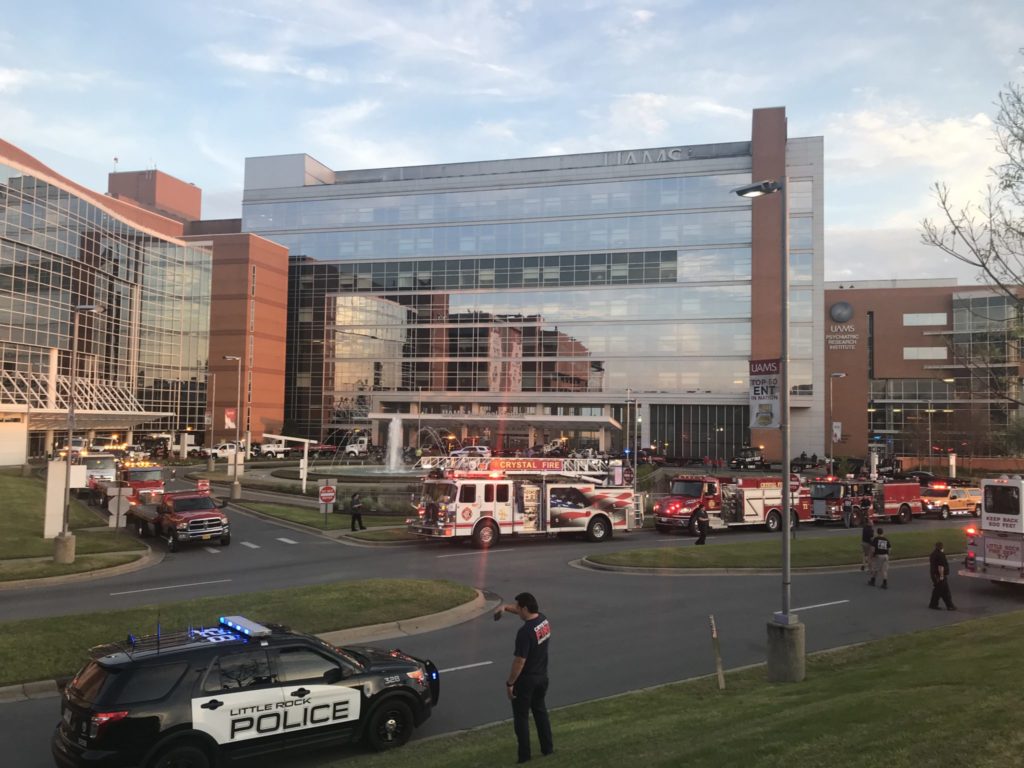
First Responders Supporting UAMS

Photo of first responder vehicles parked with lights on outside the UAMS Medical Center

Taken at dusk after leaving a busy day working in the medical intensive care unit. I was overwhelmed by the support of our first responders, and watched quietly with one of our MICU nurses. It’s one of those moments that stands out like a bookmark in a chapter of one’s life.


Michael S. Cross, M.D., is a Chief Resident and Clinical Instructor in the Department of Internal Medicine at UAMS.
Filed Under: 2 - Images

A Seemingly Simple Smile

By Meera Mohan, M.D., M.S.

On a beautiful Friday morning in the spring of 2020, Mr. B awaited his first dose of pembrolizumab in the chemotherapy infusion room. By this time he wrestled with cancer for about three years and underwent several lines of treatment, yet he was so resilient that that he continued weight training at home. He said, “It was still worth a try, if this could buy me some more time with my family.” After all, all bridges are built to be crossed. Like many cancer patients, his treatment was delayed as we tried to juggle our way through the current pandemic. It never ceases to amaze me how Mr. B always wore that big smile every single time I saw him. He says, “Smile makes me and people around me feel good; it is like an emotional contagion.” He was a true hero, navigating uncharted terrains, fighting this rare cancer for the past three years. He exemplified how an optimistic stance could negate even the most formidable conditions in life.

I met Mr. B for the first time three years ago as a very inquisitive first-year fellow. “We need help with a new patient in the walk-in clinic” announced the chief fellow, Dr. R. I volunteered myself. 

Mr. B had “aggressive anaplastic thyroid cancer,” a rare cancer that sounded even rarer to a first-year fellow. He was recovering from recent pneumonectomy two weeks ago but what was so “striking” was the glowing smile on his face. I scribbled down his age – 60s — as I assessed the “performance status.” He was in his best physical shape ever and ran six miles per day.  He had papillary thyroid cancer diagnosed at age 40 and now had recurrence in the lung with aggressive anaplastic thyroid cancer. He had smoked five cigarettes in his life, a noteworthy and precise remembrance. 

During the first visit, we went through the customary discussion of cancer diagnosis and work-up and set out a possible treatment plan. Just before he departed, he asked, “Doc, how does this cancer behave? How much time do I have?” These very questions were ones I tried to avoid with all the speculations overcrowding my mind. After a moment of silence, I looked into his eyes and said, “This is an unusual cancer which can outsmart us, but I can reassure you … I’ll do everything possible to help you.” He echoed how he appreciated the truth upfront and how the truth would help him prepare for rational expectations of his life ahead.

He started chemotherapy around Thanksgiving Day 2017, but by the end of the second cycle he suffered from cardiac toxicity and treatment was halted. He was taken off all treatment by January 2018 and we pursued active surveillance. I told him, “Perhaps we will need to see you often as there is no real consensus on optimal follow-up of anaplastic thyroid cancer”. Living in rural America, he navigated 190 miles to make it to those frequent appointments and scans, but he never missed a single appointment in 3 years. He was often accompanied by his wife, Mrs. B.  
 One day I noticed a look of disquietude in her face. I took a leap. “Mrs. B, is everything all right?” She answered promptly that she was being worked up for cancer. This was an incredibly challenging time in their lives, yet he was ever so optimistic as he expressed, “There is always hope in the days ahead.” Perhaps, this ingrained hope of the best possible outcome is the strong force that leads our lives as oncologists. During these visits, I learned about his family with three daughters and how proud he was of their accomplishments; how he and his siblings had been a caregiver to his father and later to his mother during their last months of life. At one time we discussed the benevolence and affection that enriched his life as he said, “Everyone is born with love in their heart.” The support of his close-knit family and religious congregation always uplifted him during these tough times. 

Eight months passed and on a Friday morning he came for a routine clinic visit. For the past two weeks he reported some heaviness in his tongue, his eating and articulation proving difficult. Being a young oncologist in training, I was still apprehensive in “breaking bad news” to my patients, but I gathered myself and told him that we might be dealing with a cancer relapse. Getting an MRI scan was tricky with Mr. B’s claustrophobia, but he insisted he would give it a fair try. As we feared, the tumor encroached upon his hypoglossal canals and caused compressive symptoms. By this time, he had lost twenty pounds and was unable to meet his nutritional needs. We discussed about percutaneous endoscopic gastrostomy (PEG) tube placement, but he disliked the idea. He received palliative local radiation and started on lenvatinib. Slowly, with the recovery of his neurological function, he started re-gaining weight. Life was again as normal as it could be except for the frequent Friday clinic visits. 

On one Friday clinic visit in July 2019, Mr. B came in for routine follow-up. I noticed his limping as he walked in. He had been hurting for the past three weeks and had issues keeping up with his usual 3-mile run. My heart sank. By this time I was maturing as I was learning to maintain an optimistic body language while still having doubts in my mind. Unfortunately, the scans reported a new left femoral lesion with cortical destruction and concerns for impending fracture. Again, we were faced with the dilemma of choosing a treatment for his rare challenging cancer. He went on to have orthopedic surgery followed by local radiation therapy. He completed physical therapy and was able to ambulate without any support. Fortunately, we started him on targeted therapy with larotrectinib that was approved for NTRK fusion mutation agnostic of tumor type. During this time, he turned down the options of referral to centers with clinical trials for this rare cancer. He stated he was a “homebody” and the logistics of travelling back and forth were too complicated. 

The ensuing eight months were mostly “uneventful” in our day-to-day lives and during this time he spent Christmas holidays with his family. Several weeks later in February 2020, we were confronted yet again with another glitch — disease progression in his lone lung threatening to cut off the bronchi. The ongoing battle had almost depleted our arsenal, but we searched deep for the slimmest ray of hope. Physical and psychological challenges during this journey got tougher — even brisk walking balancing out the risk of another fracture. By this time, he walked less than a mile a day. 

Mr. B was the last patient on the last day of my fellow’s continuity clinic in May 2020, at the throes of COVID-19. During the past 12 weeks, most clinical appointments were cancelled or rescheduled in keeping with best-practice guidance during this pandemic. With forbidden hugging and handshakes this time, he said, “I know your work is done here. Each of us have an intended role to play in a given time of our lives and then we have to get ready for the next chapter. All we can do is play our part well.” Indeed, our patients are part of our lives as much as we are theirs. Mr. B walked out with the same high-spirited smile that he wore the first time I had seen him. I realized the secret behind the smile is not to accept cancer as an ill fate and drown in sorrow, but to uplift each other and he did this with his “smile.” 

How a “seemingly simple smile” could leave behind an enduring impression in our lives.


Meera Mohan, M.D., M.S., was a fellow in the Division of Hematology/Oncology at UAMS.

Filed Under: 2 - Non-fiction

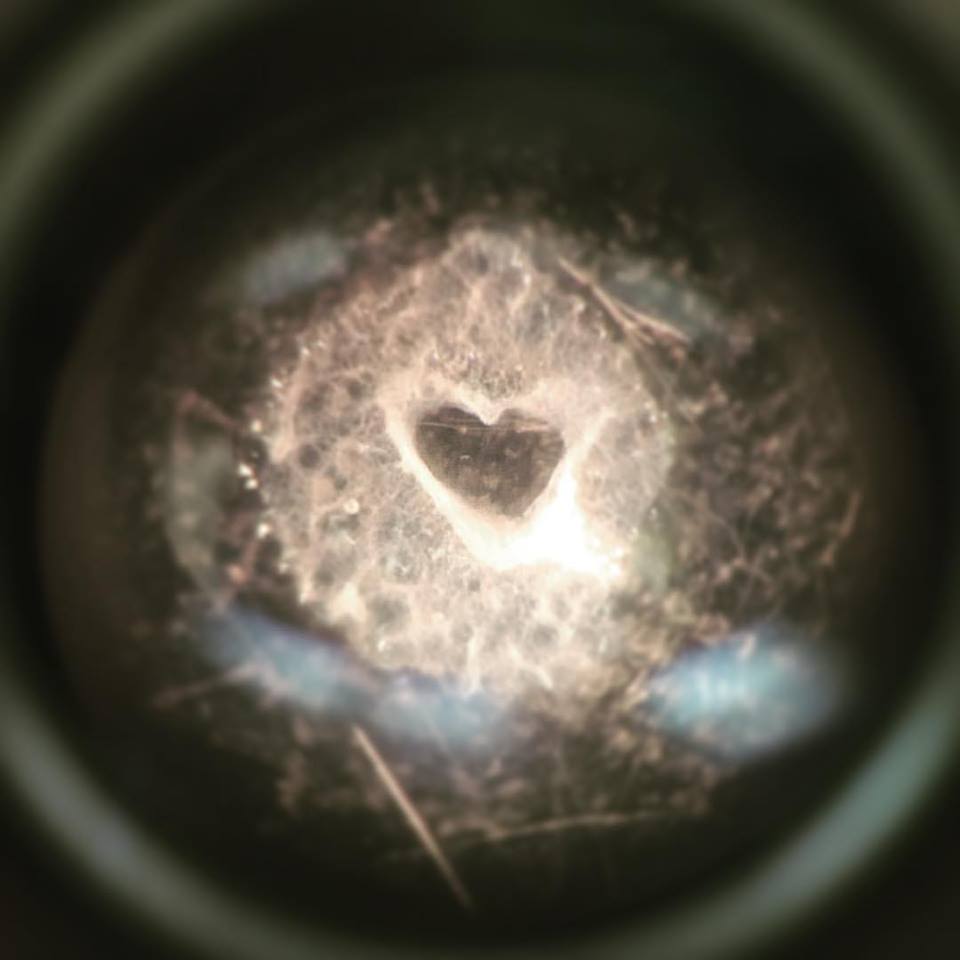
Love in an Airway

By Suzanne House

scope image of a heart shape in a human airway

“I am among those who think that science has great beauty.”  Marie Curie

This image was taken looking through the eyepiece of a dissecting microscope using an iPhone.  It shows a thin section of human precision cut lung slice (PCLS) with an airway that is bifurcating and resembles a heart.


Suzanne House is a Research Associate in the Department of Pediatrics.

Filed Under: 2 - Images

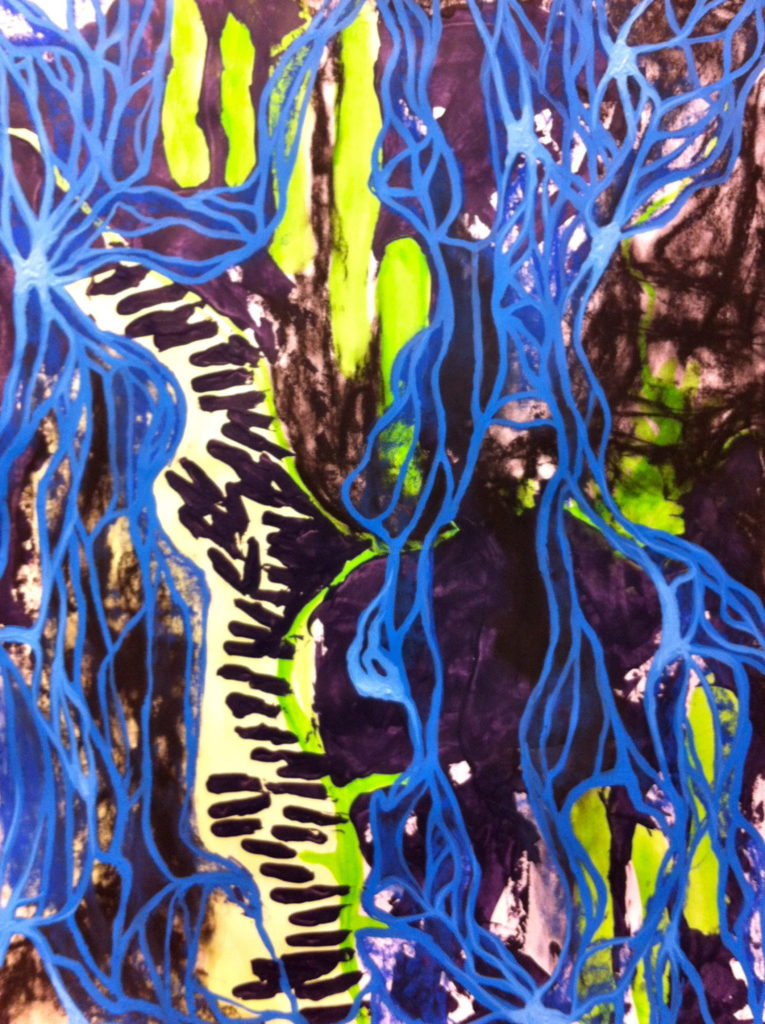
Aura

By Marissa A. Miller

Mixed media artwork demonstrating a migrane aura

Mixed media on paper

I enjoy sharing my art with others, especially my abstract pieces. Hearing the different interpretations of my art fulfill my desire to share with others. It seems that no two interpretations are exactly the same and that sparks a fire inside of me to continue to create, even when I am trying to express something that I struggle with. 

This piece is meant to be a representation of what I see when I have a migraine aura. The vein-like structures represent firing neurons and sensitivity to light, while the darkness and random composition represent the chaos that is to follow. The dark, moving background creates a sense of anxiety and panic that is associated with a migraine aura. The bright greens, blues and whites are flashes of pain and the dark, soft, repetitive brush strokes are the throbbing or pounding sensation felt after the aura dissolves. The high contrast of the colors in this piece represent the battle for restorative sleep while enduring the pain of a migraine.

The irony of this painting is that although it was inspired by pain and darkness, the migraine aura is actually quite beautiful and interesting to see. Clouded vision, flashes of light, blurred squiggle lines, black flashing, and decreased depth perception are all ways to describe a visual aura, but no two are the same and no two people will give the exact same description. 

The texture and dimension of this piece was achieved by layering contrasting gauche and acrylic on top of pastel, chalk and watercolor.


Marissa A. Miller, PA-S, is an alumna of the Physician Assistant program at UAMS.

Filed Under: 2 - Images

Light After the Storm

By Molly Gathright, M.D.

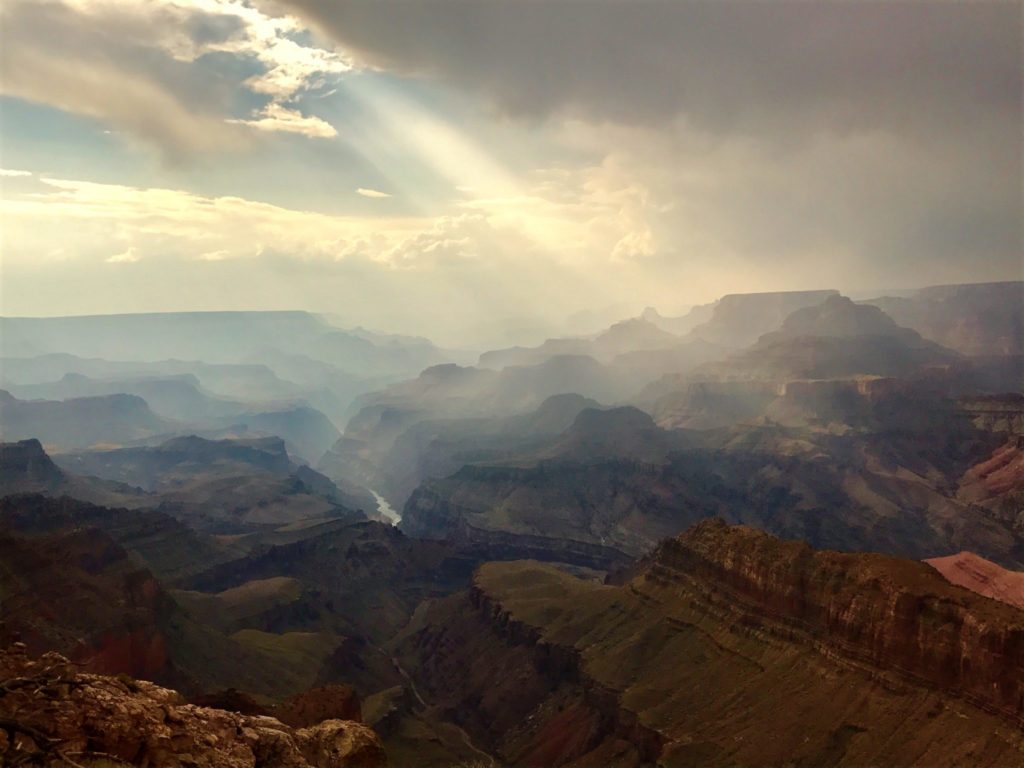
image of the Grand Canyon with a beam of sunlight coming out of the clouds

I took this photo, now almost four years ago, on a trip to the Grand Canyon, and I call it “Light after the Storm.”  During a morning hike in the Canyon, a very large and unexpected thunderstorm suddenly appeared and caught us by surprise. We waited out the storm while sheltering under a rock overhang.  As soon as the storm had passed, the amazing light shining through the clouds captivated us. That light brought beauty and color to everything around us, providing yet another perspective of the splendor of the Canyon.  

Over the past four years there have been numerous times that this photo has come to mind–each time when reflecting on a “storm” I was facing—whether personal or professional.  So, not surprising while recently reflecting on the “storm” that we all have been facing with the public health crisis of a pandemic, this photo, once again, came to mind.  For me, it personifies hope. It reminds me to continue with watchful waiting for the light that will appear after this storm, and it serves as a reminder to pause and take time to notice the glimpses of light every day in the work that each of us are doing. My hope is that others can be inspired and encouraged by that light and will take the time to pause and find their own glimpses of light in each day.  I am grateful for the light that others often share with me, and because of that, I know the sun will continue to break through the clouds and shine.  

“The Heavens declare the glory of GOD, and the sky above proclaims His handiwork.” –Psalm 19:1


Molly Gathright, M.D., is the Associate Dean for Graduate Medical Education in the College of Medicine at UAMS.

Filed Under: 2 - Images

Future

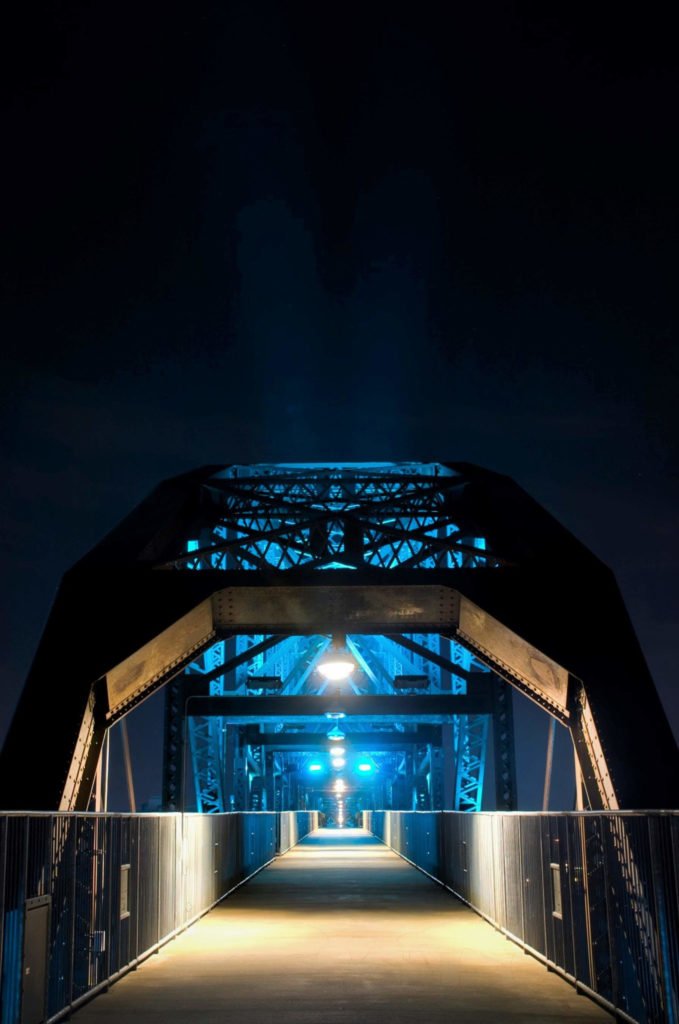
Night time shot of a pedestrian bridge
Clinton Bridge in Little Rock at night. f/9, ISO 100, 5 second exposure. 

I have always liked photographing paths. It is embarrassingly sappy and cliché of course, but when I see one, I think how it is symbolic of life’s paths. Some shots, like those that often accompany “The Road Not Taken,” show two or more paths diverging, which could represent options and big decisions. This is the shot after the decision. You have settled on something, and you have a general idea where you will go. You may be feeling hopeful. The first part of the journey is bright, but you cannot see what lies in wait further ahead. You take the first steps…


Mitchell R. McGill, Ph.D., is an Assistant Professor in the Fay W. Boozman College of Public Health.

Filed Under: 2 - Images

Second Author

By Luann Racher

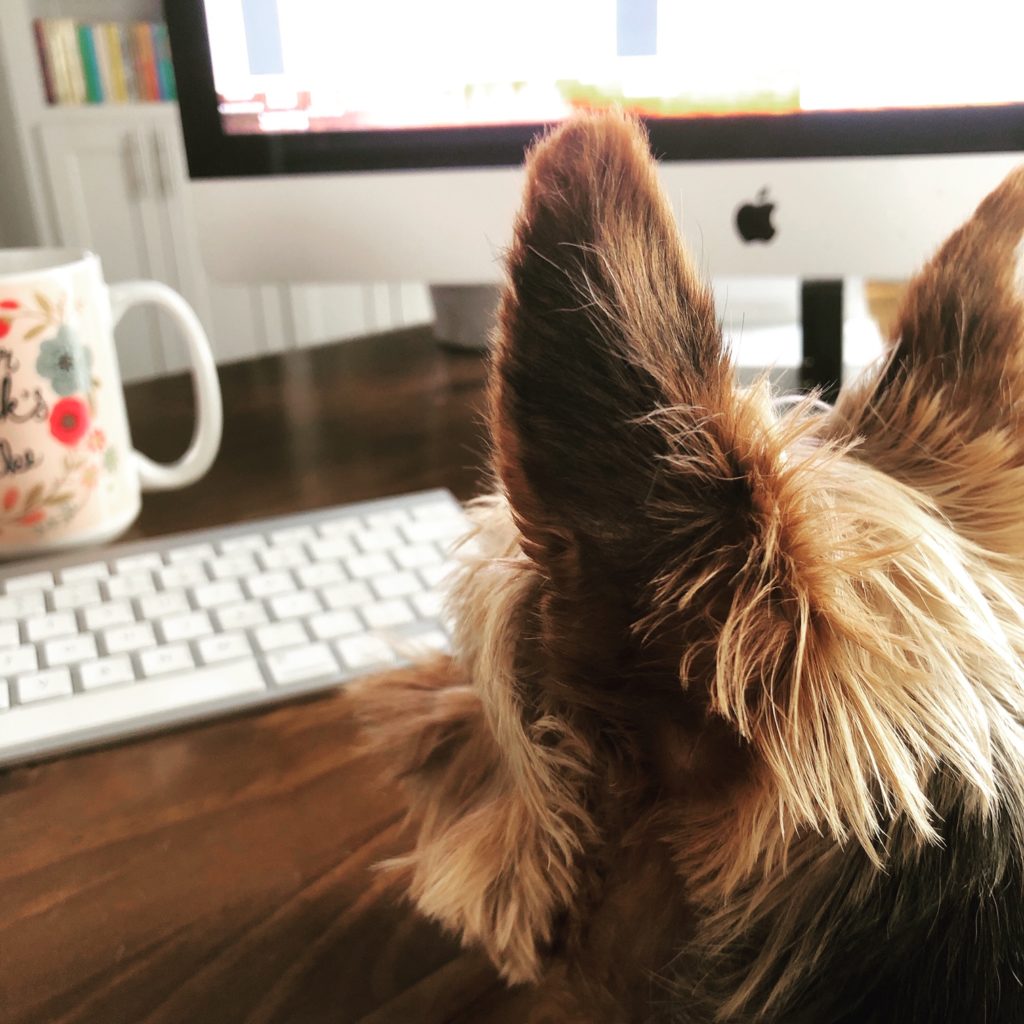
Image of a small dog seen from behind looking at an Apple iMac, keyboard, and coffee mug

My 10 year old Yorkie, Max, offers support as I finish the final draft of an article.


Mary Luann Racher, M.D., is an Assistant Professor in the Department of Obstetrics and Gynecology at UAMS. 

Filed Under: 2 - Images

East and West – Cultural Contrasts in Social Interacting and Physical Distancing

By Manish Joshi, M.D., FCCP and Thaddeus Bartter, M.D., FCCP

Before I (MJ) moved to the United States from India almost two decades ago, my usual way to greet people was namaste — a Sanskrit word referring to a gesture widely used throughout the Indian subcontinent as a respectful form of greeting, acknowledging, and welcoming a relative, a guest, or stranger. Handshaking was not part of my culture and only occasionally performed on special occasions — receiving a college degree on a podium, getting a sports trophy or a medal, or perhaps reconciling after a fight with a friend. Yet I distinctly remember shaking hands as a child with foreign tourists, mainly Europeans, in my visits to “the pink city,” Jaipur, where I grew up. In my 28 years of living in India, I don’t remember getting a hug other than from my own very close family members — and even that wasn’t in public. There was no culture of hugging in public except in rare instances such as to console a sad/crying person on the death of their loved one. 

Life changes. When I moved to the United States, the handshake became an integral facet of social interaction. I shook hands many times a day as I greeted colleagues and patients at social meetings. I also observed that hugging was a common form of greeting. The transition to handshaking felt reasonably natural for me, but it was not easy for me to assimilate into hugging; I always was (and am) uncomfortable and always feel that I am encroaching on somebody’s personal space and vice versa. Does this mean that I don’t hug my wonderful wife or two beautiful children? Absolutely not. But those are my immediate family members with whom I share personal space on an intimate and daily basis.

Life has changed again. With the COVID-19 pandemic, “social distancing” has become a household concept. As per the US Centers for Disease Control and Prevention, social distancing, also called “physical distancing,” means keeping space between yourself and other people outside of your home. (1)  Handshaking and hugging appear to have faded underneath the scourge of this pandemic. Dr. Anthony S. Fauci, who has led the United States through this pandemic, is now in the national forefront advising against handshakes during this COVID-19 pandemic and even during influenza season in order to prevent transmission of these respiratory viruses. (2) As I have listened to him, the normal customs of interaction in India and many other Asian and African countries have come to mind. Does namaste, a non-contact greeting, represent a greeting style which has evolved to decrease transmission of communicable diseases? Very likely. India has one of the highest population densities in the world; physical distancing can be difficult, and the community health implications of a disease that can spread by human-human contact are prodigious. Perhaps over millennia, the Indian subcontinent, one of the oldest civilizations in the world, adopted “physical distancing” without compromising “social interacting” as a means of protecting against communicable diseases that holds true in the 21stCentury. 

Does the present scenario with social distancing mean that we should negate or eliminate the very humble gesture of acknowledging other human beings? I believe that genuine social greeting (with physical distancing) is more important now, as the entire world grapples with this apocalyptic crisis, than at any other point in modern history. I am a critical care physician, and have watched the teamwork demanded by this pandemic – between ICU nurses, respiratory therapists, physicians, housekeeping personnel, and many others working behind the scenes. I have watched commitment, a “can do” attitude, and collegiality prevail despite feelings of anxiety and frustration as this disease causes disruption of routine, changing guidelines almost daily, and risky shortages. Ironically, in this time of “social distancing” we depend on each other and need to work together more than ever. Namaste came back to me naturally with the loss of handshaking – it’s an art that greets, respects, and acknowledges that we are part of something larger than ourselves. I do feel a genuine expression of gratitude for all my colleagues when I say “Namaste” to them. And I get the same genuine feeling back from them. 

I (TB) was born and raised in the United States, although I could be called first generation. My mother was from a “distinguished” family with deep American roots, but my father had come to the U.S. alone as a teenager from the Philippines, where his British father was a missionary. My upbringing could best be described as Victorian. The handshake, accompanied by a look straight in the eyes, was the standard greeting. Caring was expressed sparingly, most often between a mother and her children. Expressions of intimacy between a man and his children were less common, and least common was any warm physical greeting between male friends. As I grew older and left my “cultural niche,” I watched the French hug and the Italians kiss friends (gender irrelevant) on the cheek. I preferred these expressions of warmth and companionship to the reserved constraint of my childhood. I felt that expressions of appreciation, caring, and even need for others represented a more open, honest, vulnerable, and rewarding approach to my relationships with those around me. I incorporated hugging for friendship (and occasionally consolation) into my lifestyle. 

As we enter the world according to Covid, things change. The need to protect ourselves with physical distance does not negate our needs for community, for collaboration, for recognition. And now my friend greets me with namaste, a word — and sometimes a gesture — with ancient roots embodying the elements of a handshake or a hug without physical contact, a word meaning acknowledgement, appreciation, and belonging. 

Physical distancing, a practice we all must follow, is vital to fight this pandemic which knows no cultural boundaries. As we transition to Covid, we also should transition not to “social isolation” but to human bonding and greetings such as namaste.

References

1. Social Distancing. Centers for Disease Control and Prevention.
https://www.cdc.gov/coronavirus/2019-ncov/prevent-getting-sick/social-distancing.html. (Accessed 5/8/2020)

2. Fauci: ‘In a perfect world’ Americans would stop shaking hands. ABC News. https://abcnews.go.com/Politics/fauci-perfect-world-americans-stop-shaking-hands/story?id=70062797  (Accessed 5/8/2020)


Manish Joshi, M.D., FCCP is a Professor of Medicine in the Pulmonary and Critical Care Division of the Department of Internal Medicine at UAMS and the Central Arkansas Veteran’s Healthcare System.

Thaddeus Bartter, M.D., FCCP, is a Professor of Medicine in the Pulmonary and Critical Care Division of the Department of Internal Medicine at UAMS and the Central Arkansas Veteran’s Healthcare System.

Filed Under: 2 - Non-fiction

When God Speaks to Me

By Savanna Winsted

The Holy Spirit spoke to me as I sauntered past a hill of wildflowers along the pathway to my car. 

Look at the flowers. View the beauty in the chaos. All the different flowers, grasses, and entanglements of green. See, the world looks at this from the human perspective as weeds and messiness that instead should be plucked and manicured for straight lines and perfection. You destroy the very creation I call beautiful. God placed that wild arrangement there with purpose and destiny. I feed my grass; I grow my flowers; I lay them exactly where they were meant to be. See the beauty in how I care for my creation when it follows my will. 

Then He reminded me of the landscaped flowers and bushes I pass everyday on my way to work. He then tells me… 

Something greater planted these flowers and bushes. Man places the plants yet the rain and wind destroy them in an instant. It was never their purpose to be in that place. Though they are beautiful and appealing to human standards, they cannot thrive outside the spiritual realm. Human condition and human ideas fail and fall every day because they do not follow my will. You can only thrive where you were meant to be planted; you can only grow when you are led by the Spirit. The world sees my creation as wild weeds and a nuisance, but I find joy as they flourish, grow and spread as designed to do. As they obey my voice, they prosper to no end. This is what love does. This is the desire I have for my people — my creations. For too long you have done things beyond my will. You have searched for external beauty and perfection in appearances and placement. People have plans for their lives, but my purpose prevails. I have longed for my people to return to glory, to search their hearts, and understand the beauty that is already within. That beauty is concealed by expectations, false truths, and lies from the enemy. This is the time for my creation to return to its proper place, to understand its purpose, to know the truth. Hear my voice, and obey my commands. As you draw near to me, I will draw near to you. This is where love is found, in my arms and in my will. 


Savanna Winstead is a Patient Services Coordinator in the Care Management Department at UAMS.

Filed Under: 2 - Non-fiction

  • «Previous Page
  • Page 1
  • Interim pages omitted …
  • Page 8
  • Page 9
  • Page 10
  • Page 11
  • Page 12
  • Interim pages omitted …
  • Page 16
  • Next Page»
University of Arkansas for Medical Sciences LogoUniversity of Arkansas for Medical SciencesUniversity of Arkansas for Medical Sciences
Mailing Address: 4301 West Markham Street, Little Rock, AR 72205
Phone: (501) 686-7000
  • Facebook
  • X
  • Instagram
  • YouTube
  • LinkedIn
  • Disclaimer
  • Terms of Use
  • Privacy Statement
  • Legal Notices

© 2026 University of Arkansas for Medical Sciences