• Skip to main content
  • Skip to main content
Choose which site to search.
University of Arkansas for Medical Sciences Logo University of Arkansas for Medical Sciences
Medicine and Meaning
  • UAMS Health
  • Jobs
  • Giving
  • About Us
    • Submission Guidelines
  • Issues
  • Fiction
  • Non-fiction
  • Poetry
  • Conversations
  • Images
  • 55-Word Stories
  • History of Medicine
  1. University of Arkansas for Medical Sciences
  2. Medicine and Meaning
  3. Author: Chris Lesher
  4. Page 26

Chris Lesher

Welcome

By Stephanie Gardner, Pharm.D., Ed.D.

This speech was delivered at the Mehta Awards event.
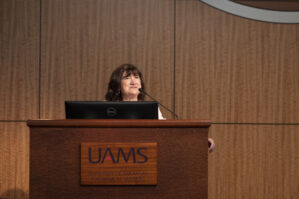
Dr. Gardner speaking at the Mehta Awards

Good afternoon – I am pleased to welcome you to the awards ceremony for the Drs. Paulette and Jay Mehta Awards in Creative Writing. 

This is the second year for these awards, made possible by the generosity of the Mehtas and their love of the arts. These awards speak to their belief in the ability of creativity and the arts to nourish our spirit, to cultivate lifelong learning, and to guide us to becoming better health care providers. 

As we find more ways to integrate the arts into health professions education – whether it’s the written word, visual art or music – I believe we are equipping our learners with a powerful tool to help them form deeper connections with patients, maintain joy in medicine and develop empathy and resiliency. 

Personally, I love to read. I read for pleasure and to learn. I also enjoy talking about what I am reading and currently belong to two book clubs – including the Provost’s Book Club that I started six years ago. The book club promotes collegiality on campus as we discuss books related to personal and professional development, along with patient care, education or research.

The Mehtas have been avid participants in the annual book club since the start. This year the club read In Shock, by Dr. Rana Awdish, a physician who suffered a catastrophic medical emergency seven months into her first pregnancy that resulted in the death of her unborn child and left her fighting for her own life through massive internal bleeding, septic shock and stroke. She survived the long ordeal but was moved to share her journey due to multiple episodes during her treatment and subsequent return to work where she experienced or observed a shocking callousness or lack of empathy by health providers or colleagues – such as when a nurse tried to guilt her into holding her unborn child’s lifeless body. Through this, she believes it is important for a physician or health provider to acknowledge and empathize with a patient’s pain and experience and that it is possible to do without depleting yourself or clouding professional judgement. 

She writes: “When we allow our human channels to remain open, we better understand emotion because we’ve bravely confronted our own. Only then we can see where we are needed and the spaces we must move to fill. Only then can we help each other pass through the storm intact. Only then can we understand the value of our presence in the storm.”

When we encourage our learners to read a story like this, we introduce them to examples of the moral choices and dilemmas they may encounter as clinicians in a way strengthens empathy and allows reflection and productive discussion. We also are encouraging them to share their own ideas and experiences, much like Dr. Awdish did, so that we all may benefit from their creativity and perspective. 

Using the arts as a medium for growth, emotion and the exchange of ideas goes right to the heart of humanity and of these awards. 

Paulette, Jay – thank you for creating these awards.
Filed Under: Mehta Awards 2022

Life Outside the Cell

By Samuel Byrd

Poetry winner, 2022 Mehta Awards

Down to the cellular properties of summer,
light is absorbed and fuels our mother Earth
and what’s left over is what we call color.

Take the grasshopper, the feeble, small jumper
whose legs, filled with spark, never reach dearth
down to the cellular properties of summer.

The flowers in fields bloom as a wonder
are relics of leaves who evolved to give birth
and what’s left over is what we call color.

In the flowering fields lurks the serpent under
hunting, corners a mouse and gains girth
down to the cellular properties of summer.

A man tills the field, hoping to discover
if it’s working in life that gives him his worth
and what’s left over is what we call color.

As we search deeper in nature to uncover,
we may define exactly what we unearth
down to the cellular properties of summer
and what’s left over is what we’ll call color.


Samuel Byrd is a medical student at UAMS.

Filed Under: Mehta 2022 Winners

Why Do Doctors Write?

By Paulette Mehta, M.D.

Dr. Mehta delivered this speech at the 2022 Mehta Awards ceremony.

We’re glad to see so many friends in the audience and in the video stream, all of whom have come to celebrate creative writing and medicine and the Mehta creative writing award contest.

Doctors have a long tradition of writing and some of the most famous writers are doctors; for example,  Sir Conan Arthur Doyle, creator of Sherlock Holmes; Somerset Maugham, the English author; Anton Chekhov, the Russian playwright, William Carlos Williams, American poet; Viktor Frankel, the German concentration camp survivor who wrote Man’s Search for Meaning, Robin Cook, creator of adventure stories; Michael Crichton, creator of Jurassic Park and many other doctors.

Why do doctors write? There are probably as many reasons as there are doctor-writers but I believe there are three main reasons: they write because they can; they write to understand their relationships with their patients and their worlds; and they write to heal themselves and give meaning to their life.

Let me explain.

First, they write because they can. They are privy to and present at the most sacred and intimate moments of life from the moment of birth to the moment of death and everything in between including disease, pain, suffering,  treatment, and hopefully resolution, remission,  cure, often all within a single day.

They are there…in those intimate moments, in the center of the drama, witnesses to the human condition and the vicissitudes of life. 

Physicians and other healthcare providers also write to understand their patients and the worlds in which they live which may be very different than their own. Patients come to us, their doctors, with diseases for which we have many medicines but they also come with stories: the stories of their lives, of their struggles, of their journeys. They expect us to hear their stories, to interpret their stories, to share their stories, to give meaning to their stories and thereby to help them heal.

But we also write to heal ourselves and give meaning to our own lives.  Many of us healthcare workers  suffer from burnout and related distress, often without even knowing it. Burnout relates to proximity to pain and suffering, death and dying, hopelessness and helplessness as well as long hours, hard work, pressure to perform, lots of typing, and sometimes insomnia from work, stress and worry.

In studies done here at UAMS, 50% of doctors, nurses and scientists were shown to have evidence of burnout. This is similar to data from other centers.

But in the UAMS studies, Messias and others found an antidote. 

The single most important protective factor against burnout was meaning in one’s work. 

Creative writing is one way to find meaning by exploring issues — by getting them out of your head and onto the paper where you can look at them, interpret them, and give them meaning. 

I suspect that people who do creative writing or any creative work for that matter have happier and healthier lives but I have no proof.

The practice of creative writing, story hearing and storytelling is one component of narrative medicine which can be practiced side by side with biological medicine.  It adds to biological medicine by reconnecting medicine with humanism and reintegrating art and science in the practice of medicine.

We created this award to help healthcare providers write for whatever the reason they choose. We hope that it will stimulate creative writing and give meaning – and joy – to healthcare providers and to their patients and their colleagues alike. 

We are delighted to see that we have already fostered so much interest with so many submissions last year and again this year. We applaud all of the people who submitted work and we congratulate those who have won first place and honorable mention prizes for their submissions and look forward to the readings. 

Please know that the work of all of the winners will be published in this special summer supplement to Medicine and Meaning, the UAMS literary journal. Please watch for the announcement for that issue, please enjoy tonight’s program, and please stay for the reception.

Thank you all for being here.

Filed Under: Mehta Awards 2022

Bright Blessed Day, Dark Sacred Night

By William Cass

To my dismay, I found I had high blood pressure shortly after I retired as an elementary school principal at the age of sixty-three. My doctor put me on a hypertension med, a no-sodium diet, and told me to exercise regularly. I immediately made a vigorous daily walk part of my afternoon routine. I started with a half-hour, wandering through neighborhood streets, and gradually increased that over the course of several months to an hour. This eventually brought me along the outskirts of town where the houses were backed by patches of woods. 

A tiny, old woman lived in one of the houses furthest out. I saw her from time to time shuffling to or from her mailbox where it met the sidewalk at the end of her driveway. Regardless of the day’s temperature, she was always dressed in the same flowered housecoat and blue cardigan sweater, which she clutched to her chest with one fist. She had small rimless glasses, white hair like a cotton-candy cap, and was bent a little in the middle. When I tried to greet her with a raised hand or nod, she made absolutely no response. She reminded me of my mother, who would have also been in her mid-eighties if she were still alive. A thin tabby cat always followed her, tittering a few feet behind.

I initially noticed her during the early spring and nothing changed at her place until later that summer when a tray table suddenly appeared next to her mailbox. A basket of green apples sat in its center with an index card taped to its front that read: Help yourself. The first time I came upon it, a mailman had just finished with her mailbox and was selecting an apple from the basket.

I stopped next to him and asked, “What’s this all about?”

He looked at me evenly. “A neighbor told me this old lady’s cat was struck by lightning.”  He gestured with his chin. “In her backyard. She lives alone and was watching through her kitchen window when it happened.”  He pointed to the basket. “She started putting these out right afterwards.”

I glanced up at the small, trim house with its maple tree to the side, then back to him. “No kidding.”

“So I’m told.”

It was a hot day, and a bead of sweat trickled down the side of his face. He shrugged, pocketed the apple he was holding, and said, “Well, better get back at it.”

I watched him pass me and start up the sidewalk the way I’d come. I studied the front of the old woman’s house and her maple tree for another few moments before continuing my walk in the other direction.

***

I’d retired as soon as I’d acquired the needed elements for maximum benefits in the State Teachers’ Retirement System, which essentially involved at least thirty years of service and reaching age sixty-two and a half. I’d spent most of those years teaching fourth and fifth grade, but got my admin credential shortly before my wife left, then lucked into the assistant principal’s opening a few months later at the large school where I taught. I was transferred to my principal’s position at a much smaller school in the district when my divorce became final a year later and finished my career there a decade after that. There was really no pressing reason to retire; I still found most of the work meaningful and satisfying, but just felt the time was right. I wanted to concentrate more on my woodworking – a store downtown had begun selling some of the toys I made – and I was relieved to put behind me the stressful elements of the job. I also had a vague desire to get out while my health was still good, but then, of course, got the ironic news about my blood pressure right afterwards. I had no real desire to travel, no new woman to spend time with, no family to visit or help. But I enjoyed the long, uninterrupted mornings in my garage workshop, the stack of weekly books and British mystery DVD’s I checked out of the library, and my afternoon walks. So, I was content with my decision. More time on my hands meant more time to realize how alone I was, but the lack of responsibilities and expectations superseded that.

***

A couple of weeks after first seeing the old woman’s tray table offering, something else appeared on the grass next to it: a large metal bowl of water and a Tupperware container of dog biscuits. I stopped on my walk to regard both, as well as the front of her house again. Her curtains were open at all the windows, and various pieces of furniture were visible through most, but I saw no movement inside. I wondered what she’d done with her dead cat. I wondered how long she’d had it and what life was like for her without its companionship. She hadn’t appeared particularly interested in the cat when it was trailing behind her, but she must have craved its physical affection; why else would she have had it?  I thought of her sitting by herself now, perhaps on a couch watching television, with her hands folded empty in her lap instead of stroking the cat’s warm body where it lay curled against her thigh. Another beating heart that had been beside her there, gone. Replaced by these new odd gestures. Why? I squinted in concentration before continuing on my way.

***

My wife wrote me a note when she left; I found it on the kitchen counter. It said simply that she didn’t love me anymore, had found someone new, had a right to be happy, and was leaving. I hadn’t seen a thing coming. It was true that we’d grown more distant since our severely-disabled/medically-fragile son, Ben, had died the previous year, but I’d explained that away to myself as simply due to each of us dealing separately with our own grief. After I found the note, she refused to reply in any way to my attempts to contact her. I wasn’t even sure where she’d moved to until I was served with divorce papers while on bus duty in front of my school one afternoon a month or so later.

Aside from whatever she’d packed in her small suitcase I found missing, she hadn’t taken any belongings. I’d left every item of hers exactly where it had been, down to her hairbrush on our bureau and our wedding photograph on her nightstand. I’m embarrassed to admit that it wasn’t until a couple of years later that I stopped going into our bedroom closet, closing the door, and inhaling her scent that managed to linger on her clothes.

***

Several more weeks of my daily walks passed before a plaid blanket was added to the assortment at the edge of the old woman’s front lawn. There was a large cardboard box of books on it, as well as some knick-knacks: porcelain figurines, tarnished silverware, a snow globe, a small clay vase that looked like it could have been fashioned by a child, a birdhouse with fresh seed on its perch. I bent down and looked through the books, which were a combination of classic literary novels and poetry, all hardback and well-worn. I flipped through one of the volumes of poetry and found a number of verses underlined in pencil with words scribbled in the margins like “This!” and “Yes!”. I straightened back up and looked over at the basket of apples on the tray table, the metal bowl, the Tupperware container, and saw that they had all been recently refilled. I wished I’d been there to see the old woman do that, to note the expression she wore as she did, to observe any change in the cadence of her steps when she went back inside.

Her house stood as silent as always. I’d taken to gazing at it as soon as it appeared on my walks and looking after it until it disappeared completely from my view. A robin, orange-breasted, swooped down onto the blanket, surprising me. I watched it dip its head and peck at the birdseed, scattering some onto the blanket and lawn. Its head twitched in my direction, our eyes met briefly, then it flew away over the old woman’s house and beyond where the trees had just begun to turn color with fall’s early advance.

***

My wife and I had met during graduate school where I’d returned to get my teaching credential after a few years of trying my hand as a custom cabinetmaker; she was finishing an MFA with an emphasis on technical illustration. We got married soon after I’d found my first teaching job nearby in the same district where I eventually retired; she worked from home doing illustrations for a large textbook company. After my third year of teaching, we scraped together the down payment on the little house I still lived in and spent a lot of our free time together fixing it up. We had no plans to start a family at the time. In fact, it wasn’t until we were both in our mid-thirties that I began bringing up the subject of having a child. She remained reluctant, but I pressed her on it, reminding her of the ticking clock of age, until she finally agreed to try.

Ben was born just before we both turned forty. He spent six weeks in the NICU and another dozen in the children’s convalescent wing before we could bring him home. The dysmorphologist who treated him after birth told us Ben had an undiagnosed genetic syndrome that included symptoms associated with cerebral palsy and a weakened immune system. He had no sucking or swallowing impulse, so the insertion of a feeding tube was his first surgery. He also had trouble clearing his secretions and frequent bouts of what was termed “failure to thrive,” so a tracheostomy was his second.

When my wife first asked the dysmorphologist about developmental and life expectations for Ben, he pursed his lips and paused. “Well,” he finally said, “developmentally, probably not more than that of a six-month-old. And kids like Ben rarely live longer than a handful of years…their weakened immune systems and declining resistance to available antibiotics make new pneumonias more frequent and problematic. That’s what usually does them in.”  He showed his palms. “I’m afraid it’s often a cruel and unfortunate geometry. But there’s no way to say for certain that will be the case for your son.”

Ben relied on adult care for all of his basic living needs, and we were able to arrange home nursing during our work hours and for most overnights to help with those. We learned otherwise to manage his various pulmonary and anti-seizure medications, treatment procedures, and medical equipment – the sat monitor, oxygenator, feeding pump, suction machine, mister, nebulizer, vibrating vest, hospital bed, wheelchair, and the rest. Our devotion to him was constant and shared, and that, I believe, contributed to him making it to age ten before passing away, doubling the estimate the dysmorphologist had given us after his birth.

***

Not long after coming upon the old woman’s blanket, I caught a lingering flu that curtailed my daily walks for nearly a month.  By the time I next entered her street and saw the familiar items in the distance at the edge of her sidewalk, the neighborhood’s deciduous trees were in full fall splendor. It wasn’t until I was almost upon her lawn that I realized the metal bowl, Tupperware container, and apple basket were empty. Most of the things on the blanket were gone, too; only a few books lay scattered on the bottom of the cardboard box. I looked up at her house. None of the furniture I’d seen through the windows was there. A “for sale” sign perched at a slant under the blazing maple tree. I felt something fall inside me, and a slow chill crawled up my back.

I became aware of a young woman approaching on the sidewalk with a large dog on a leash. She stopped next to me, looked up at the house, too, and said, “Sad, isn’t it?”

“Do you know what happened to her?”

“Heard she moved herself into a nursing home in Cloverdale and was put almost immediately into hospice care. Stomach cancer, and she’s declining treatment.”

My eyes widened as I looked at her. She kept hers on the house and shook her head. At my feet, her dog nosed at the empty bowl and Tupperware container and gave a small whine.

I asked, “Did you know her well?”

“No. Just to say hi to. She kept pretty much to herself.”

I looked past her at the mailbox and noticed for the first time the name stenciled on it in small black letters: Gertrude Hayes.

“Come on, big guy.”  The young woman gave a tug on the dog’s leash. “Let’s go finish your business.”

I watched the dog pull her away, sniffing at the grass along the sidewalk as he did. I returned my gaze to the empty house and took a turn shaking my own head. A few minutes later, I went around the side of the house into the backyard, which bordered woods. I glanced at what I assumed to be Gertrude’s kitchen window. The patch of grass wasn’t very big, so the cat must have been near where I stood when the lightning had struck. Her apple tree, crooked with age, stood in one of the corners, rotting windfall around its base. An empty bird birth sat still in the opposite corner. Along the far side, a rectangular mound of weed-riddled earth was surrounded by a chicken wire fence; it wasn’t unlike the raised garden my wife used to tend in our backyard. I found myself blinking rapidly. It was so quiet I could hear my own breathing.

I didn’t continue that walk. I went home instead, took a bottle of wine out onto the back patio, sat in one of the pair of Adirondack chairs there, and sipped from it. As the gloaming descended, sprinklers hissed on in a neighbor’s yard, then ended abruptly a little while later. A small breeze gently clacked the windchimes my wife had hung from the eaves outside the kitchen window: sand dollars suspended on fishing line. As I listened to them, I wondered, as I often did, what she was doing at that moment. I wondered again what had gone wrong and if it could have been made right if she’d only spoken to me about her discontent. A train passed in the distance across town. 

It had become fully dark before I went back inside and down the hall into Ben’s old bedroom. I opened the door, flicked on the light, and looked around. I hadn’t been in his room since just after he’d died. We’d returned his rented hospital bed and medical equipment and donated his wheelchair, but the rocking chair where we used to snuggle him was still there in its spot. So was the music box with its spinning hippo ballerina on the shelf above where his pillow used to be. Suddenly, I remembered my wife lowering him into his crib the night we were first able to bring him home from the convalescent wing, tucking the blankets around him, kissing his forehead, then folding herself into my embrace and weeping silently. I took a long pull from the wine bottle and thought about those things we can control and those we can’t. I thought about irretrievable opportunities and the fleeting time I had left myself. 

***

It didn’t take me long to find Gertrude’s nursing home. There were only two in Cloverdale, and she was in the second I stopped at that next afternoon. The receptionist gave me a visitor’s sticker and directed me to her room. 

As I was applying the sticker, she smiled at me and said, “It will be nice for Gertrude to have a visitor.”

I felt my eyebrows raise, then turned and headed down the long hallway. Several residents sitting in wheelchairs or leaning on walkers outside open doorways stared at me grimly as I passed. Gertrude’s room was the last on the right. The bed on the far side of the room was empty, stripped bare. Gertrude lay sleeping on her back in the closer one, propped up on pillows, hooked up to wires and probes leading to a pole next to her. She looked even tinier and frailer than I’d remembered her. I recognized the sat monitor attached to the pole with its quiet beeps and shifting numbers; Ben’s had been a smaller version. An IV bag was also suspended from the pole that made a slow drip into the tube leading to Gertrude’s wrist. She was snoring softly, her mouth agape, her glasses askew. The only thing on the bedside table was a lidded plastic cup with a bent straw – no cards or flowers. I pulled a straight-backed chair over next to her and sat down. A smell like camphor wafted on the air. An elderly voice down the hall gave a long wail. 

I watched Gertrude sleep for twenty minutes or so before a heavy-set woman in maroon scrubs and clogs came into the room. Her eyes were weary but attentive. She regarded Gertrude for a long moment before pushing some buttons on the sat monitor and checking the IV bag. She straightened Gertrude’s glasses and smoothed the hair on her forehead. 

I said, “Are you the hospice nurse?”

She seemed to study me for a moment before she said, “Yes.”

“How is she?”

Her shoulders made a small shrug. “Oh, about as well as can be expected. She hasn’t eaten now for eight days. We took her off oxygen this morning in accordance to her Advanced Care Directive.”  She paused. “It won’t be too much longer now.”

I blew out a breath. She cocked her head, then said, “I’m glad she has a loved one with her.”

I didn’t correct her. I just watched her give Gertrude’s ankle a pat and walk back out into the hallway. I waited a few moments before reaching over and taking Gertrude’s hand. It was dry, brittle, almost weightless.  Aside from the few items and bits of information I’d come across at her house, I knew nothing about her. But she’d lived a long life, and I imagined it was a full one, as well. I believed, like all of us, she’d done her best, had tried in earnest to make sense of things. In fact, I was sure she had. Very gently, I squeezed her hand.

Perhaps another twenty minutes passed, the light in the room dimming, before Gertrude’s eyes suddenly opened. I gave her hand another slight squeeze. She frowned for a moment, glanced down at her hand in mine, then looked at me. I wasn’t sure if it involved me, her circumstances, or both, but slowly, recognition filled her eyes. 

“Hi,” I said quietly. “How you doing?”

Her eyes changed but stayed on me. She seemed to be searching for something. Her lips began trembling, her chin quivered. Finally, she whispered, “I’m frightened.”

A shadow that had become a more recent and regular companion passed inside me. I nodded and said, “I know.”  

I tried my best to make my eyes offer a small smile, and she seemed to make a similar attempt. In that moment, though, there was the hint of something else in hers, something that I hadn’t noticed before and found startling. Something like tenderness or kindness, or maybe the remainder of both. When I next squeezed her hand, she squeezed back. Then, as quickly as she’d awakened, she was asleep again, her mouth in that small “O,” and her hand went limp once more in mine. 

Over the next few minutes, Gertrude’s soft snores seemed to grow shallower. The shadow passed inside me again; I’d been at Ben’s side when he passed and I didn’t think I could do that again, so I started to raise myself off the chair. But as I did, her hand clutched mine weakly once more. Another wail came from the hallway; I turned my head towards it, then sat back down. Even though she appeared to still be sleeping, I gave her hand another soft squeeze. There was no response, but that didn’t matter. It didn’t matter at all. I knew then I wasn’t going anywhere. I’d hold her hand for as long as she had left so she’d know she wasn’t alone until she went to that place we’d all be going in the end.


William Cass has published over 250 short stories in a variety of literary magazines such as december, Briar Cliff Review, Blood & Thunder, and Intima: A Journal of Narrative Medicine. He was a finalist in short fiction and novella competitions at Glimmer Train and Black Hill Press and won writing contests at Terrain.org and The Examined Life Journal. He has also received one Best Small Fictions nomination, three Pushcart nominations, and his short story collection, Something Like Hope & Other Stories, was recently released by Wising Up Press.

Filed Under: 5 - Fiction

Inspiration in Sunsets

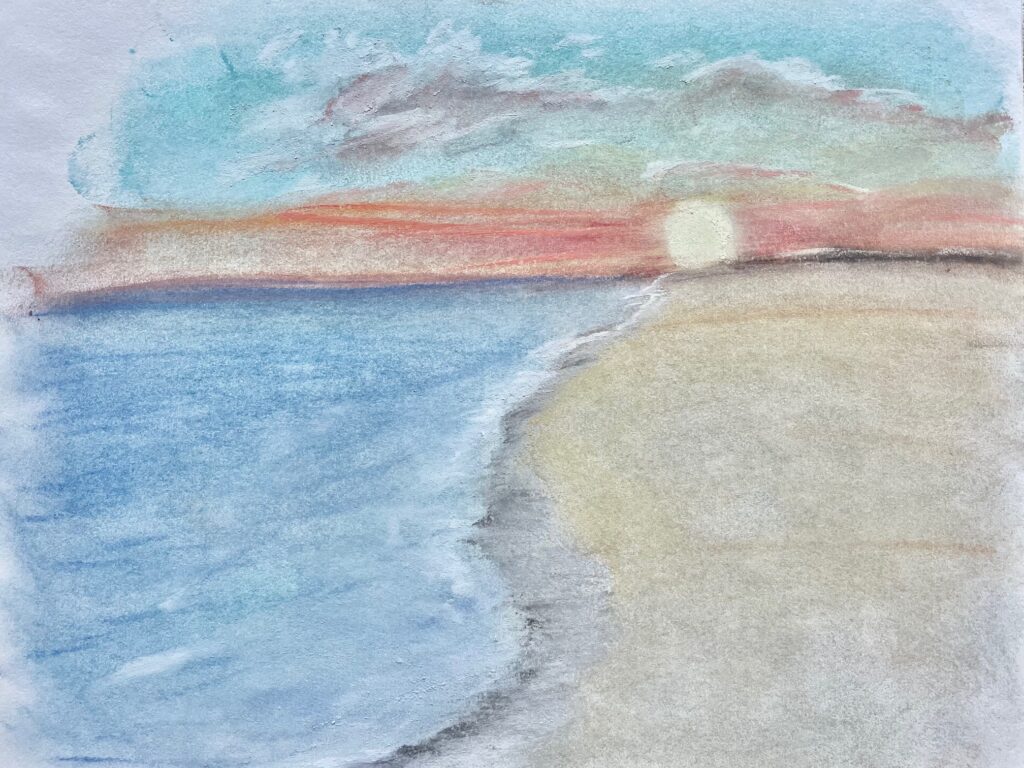
painting showing sunset on a beach

Sunset in Cherry Grove

This is a chalk pastel inspired by the many sunsets I have had the fortune to experience in Fire Island, New York.

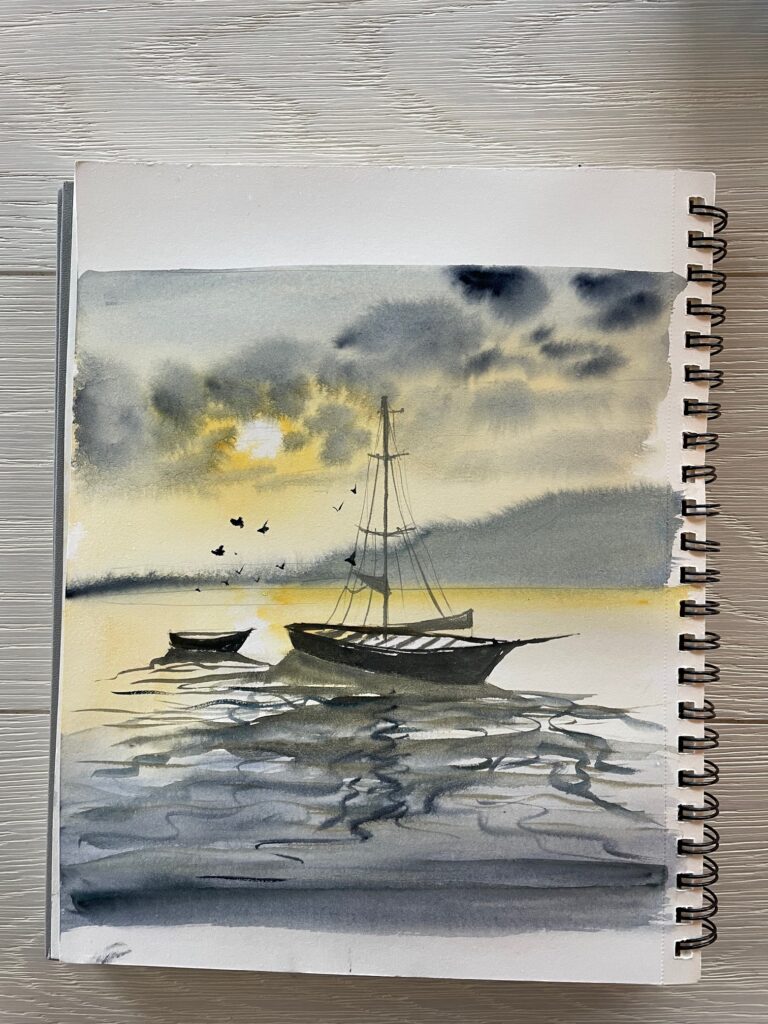
painting showing boats on still water, sunset in the background

Still

Still is a watercolor that serves as a reminder that in the middle of my daily chaos, there’s stillness somewhere. I tap into that when things are particularly hectic.


Tina Chandna lives and works in New York City with her wife and two children, where she adds balance to her life by dabbling in the arts.

Filed Under: 5 - Images

Birds in Nature

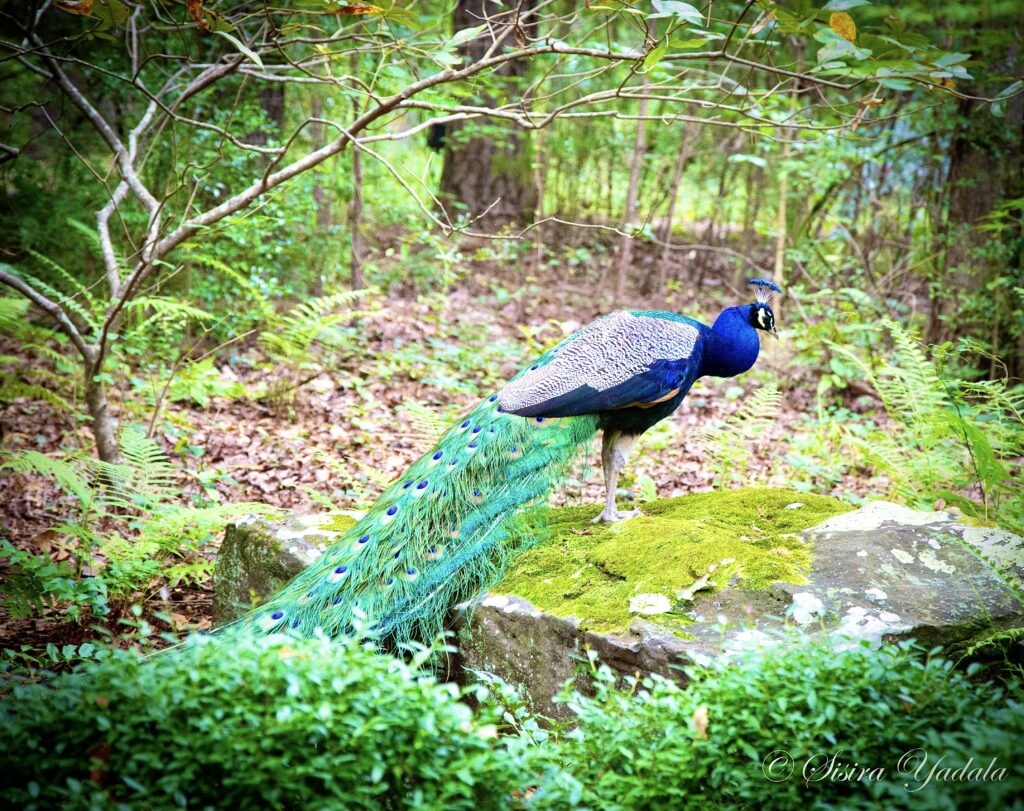
a peacock stands on a large rock in a wooded area

Peacocks are considered to be sacred symbols of healing, regrowth and rejuvenation in various faiths. I got an opportunity to be mesmerized and photograph this majestic and beautiful bird at the University of Arkansas Botanical Gardens in Hot Springs, Arkansas.

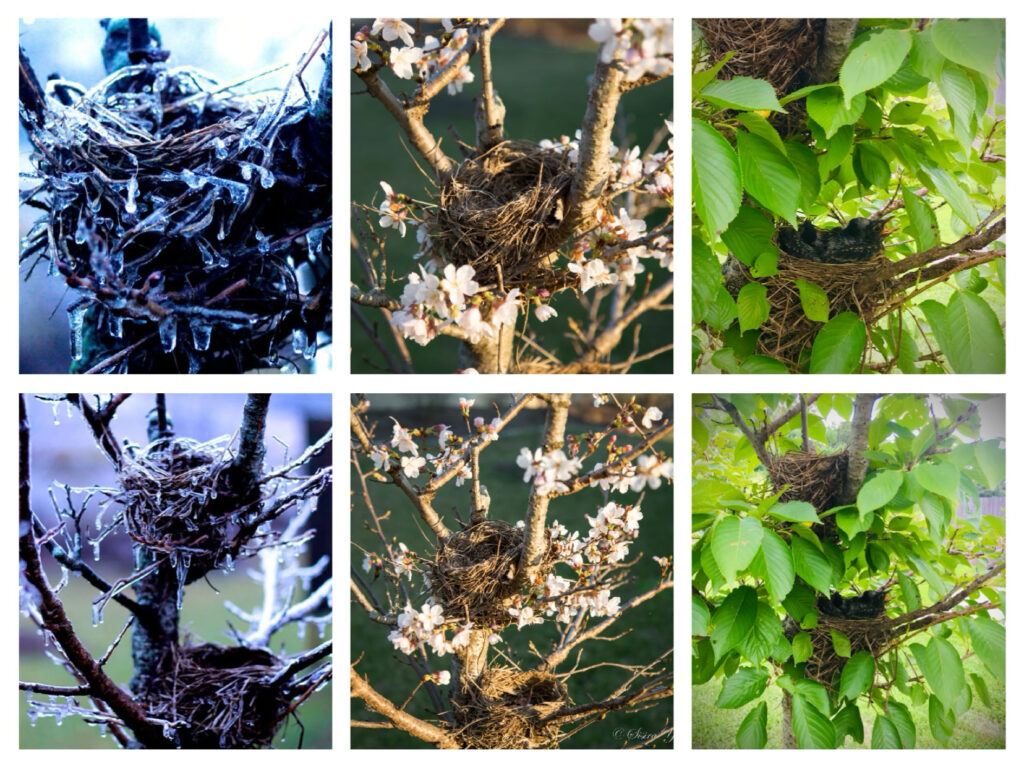
a collage of bird nests taken in different seasons

Same two nests, different seasons! Frozen nests in winter to being surrounded by beautiful flowers in spring to becoming homes to little chicks in the summer. I took these pictures at various time points between 2016 and 2019. I was very inspired by these nests as I found them to be a representation of the cycle of life – it’s not just the seasons but everything in our lives runs in cycles. The highs and lows of our lives leading to happiness and sorrow and happiness once again!

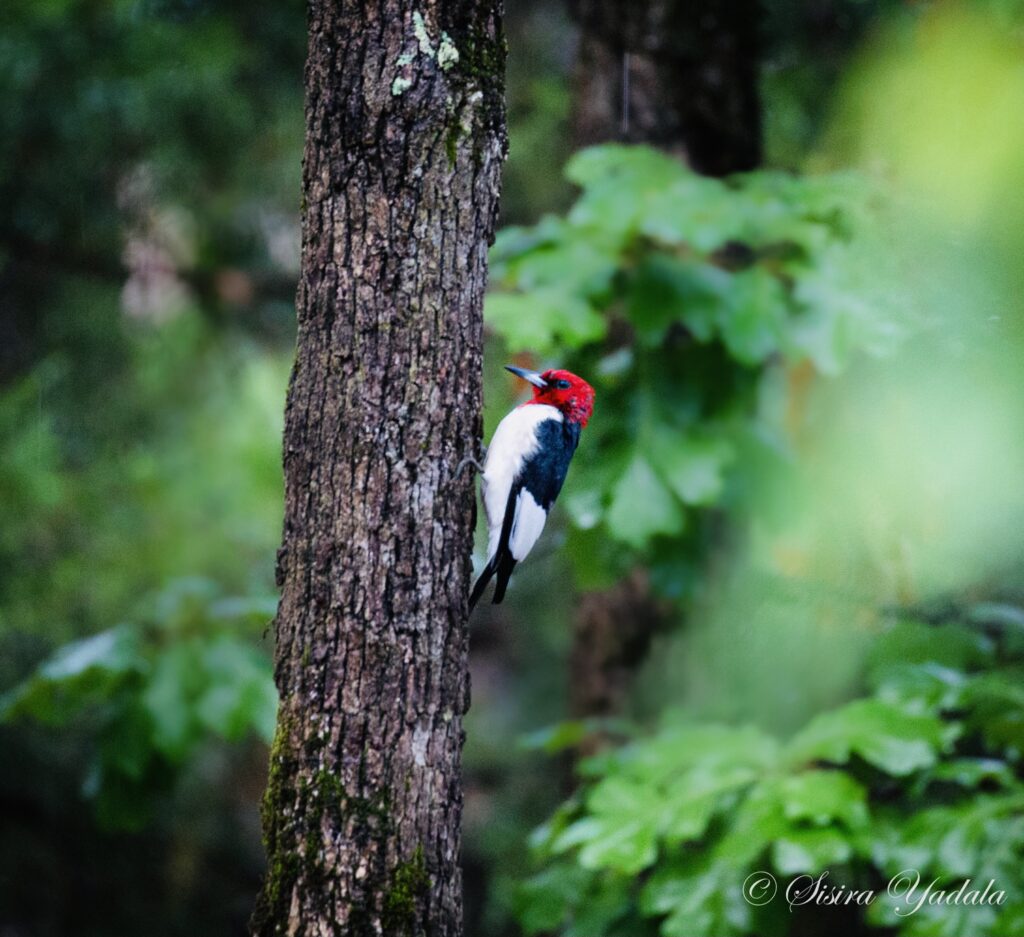
a woodpecker clings to the side of a tree in a wooded area

The Red Headed Woodpecker, photographed in our backyard in Little Rock.

The dazzling contrasting colors of this bird against the green backdrop is such a delight to eyes! Isn’t nature the best artist? 


Sisira Yadala, M.D., is an assistant professor and director of the Division of Epilepsy in the Department of Neurology at UAMS.

Filed Under: 5 - Images

In the Dark

By Duane Anderson

They turned off the lights
in the hallway and area where I was seated.
The maintenance man was working
on some problem he
was having with the lights,
so there I was,
in the dark,
once again,
like I had been my whole life.
Go ahead; just ask some of the people
I used to work with
or ask my brother or my wife.
It was nothing new.

Each morning I read the newspaper
and watch the news on television
several times each day
trying to stay current with what is
going on in the world,
though some things I will never understand.
It was just meant to be.

The lights come back on
then go back off two more times.
Maybe on the third try
he will get the lights fixed,
after all, isn’t the third time is the charm,
but as I wait for the next donor,
here I am,
once again,
forever in the dark
in more ways than one.


Duane Anderson lives in La Vista, NE. He is retired after working 37 years at Union Pacific Railroad, and now volunteers as a Donor Ambassador with the American Red Cross on their blood drives, usually volunteering once a week. He has had poems published in The Pangolin Review, Fine Lines, Cholla Needles, Tipton Poetry Journal, Poesis Literary Journal, and several other publications. He is the author of Yes, I Must Admit We Are Neighbors, On the Corner of Walk and Don’t Walk, and The Blood Drives: One Pint Down.

Filed Under: 5 - Poetry

Elegy for Eight Words

By LaDeana Mullinix

The barricade was built on my car 
dashboard during my daily drive, 
petit Gavroche shot
in the forty-fourth CD.

I left the battlefield of 1832 spinning, 
my eyes dampened by Hugo’s words: 
The sound of the child hitting the pavement. 

Heart-pierced,
I crossed the hospital parking lot
to confront the work day.

Like a giant touching the earth,
Hugo’s phrase distorted my orbit of ordinary – 
Now

every door slammed, 
every box dropped,
every heavy footfall
and the child fell again.

Against propriety, I touched
a gentleman’s face in our therapy room.
I stared in a baby’s eyes 
and briefly forgot where I was.

I adjusted the magnet holding Dave’s youngest,
secured the photo to his locker,

and told him twice
on this day of great battle that his boy is beautiful.


LaDeana Mullinix is a Quaker, a retired occupational therapist, a native Kansan, a Master Gardener and a Master Naturalist. Her poetry and essays have been published in Friends Journal and Slant. Her poetry has been published in one anthology, and two were recently accepted in a forthcoming anthology featuring Ozarks poets, from the University of Arkansas Press.      

Filed Under: 5 - Poetry

Cutting Out Paper Stars

By John McPherson

So now she cuts out paper stars,
stenciled onto construction paper.
Bent fetal-like on her hospice supplied recliner,
no longer even able to sit up in a wheel chair,
fingers feeble with age
barely able to maneuver the safety scissors.

Short time ago she crocheted butterflies to give away, 
led Bible study groups, counseled other residents.
Now, failing feet wrapped in bandages, 
she strives to keep fingers and mind active
in the only way left to her—
cutting out paper stars.

Facsimiles perhaps of those—
in a near future crown


John McPherson is the current president of Poets’ Roundtable of Arkansas, president of Gin Creek Poets, and past president of White County Creative Writers. He writes poems, short stories, and letters to the editor, Arkansas Democrat-Gazette.

Filed Under: 5 - Poetry

COVID Eyes

By Nick Zaller

Light refracted to reveal our thoughts and fears
Perhaps too much so.
We are naked to one another’s stares
As if we can no longer conceal the vulnerabilities within.
A glance becomes a whisper,
A gaze a scream
Daring one another to look away.
I can see within you the same fears
That I thought I buried from the world long ago.
We walk past one another as shadows in the night
Fixing our gaze on the reality that lies ahead.

I cannot see the unseen
Though I feel it calling my name.
Look up, the distant voice calls
For me to open my eyes wider
To take in the light I cannot see.
Will you meet me there,
In that place where our souls lack comfort?
Or will you look away, and leave me
To stumble in the darkness?
If I could only summon the courage
I might look a little longer.

Life and death all around us
Blinding us like a thousand suns.
Points of light darkening our vision
Of who is standing right beside us.
Our mouths muted while we
Bow to the deafening roar 
Of words unspoken.
I cannot touch you
But I know you are there.
Reaching across both time and space
I grasp for the star twinkling in the distance.

The beauty of what I see
Defies my other senses.
Windows that cannot be closed
Revealing hidden mysteries within.
I cannot help but look
Into the places I am not supposed to see.
Waiting for a sign that it is ok
To linger at the precipice of knowing.
An invitation to come inside and rest.
But I am only given a warning
That I am not ready to see.


Dr. Zaller is a Professor at the University of Arkansas for Medical Sciences Fay W. Boozman College of Public Health. His research focus has been on the overlap between behavioral health disorders, including addiction and mental illness, infectious diseases and incarceration both in the United States and internationally. Dr. Zaller earned his bachelor’s degree in microbiology and East Asian Studies from Kansas University in 1999. After graduation, he lived in China for a year as a Fulbright Scholar before completing a doctorate in public health at the Johns Hopkins Bloomberg School of Public Health in 2004.  

Filed Under: 5 - Poetry

  • «Previous Page
  • Page 1
  • Interim pages omitted …
  • Page 24
  • Page 25
  • Page 26
  • Page 27
  • Page 28
  • Interim pages omitted …
  • Page 30
  • Next Page»
University of Arkansas for Medical Sciences LogoUniversity of Arkansas for Medical SciencesUniversity of Arkansas for Medical Sciences
Mailing Address: 4301 West Markham Street, Little Rock, AR 72205
Phone: (501) 686-7000
  • Facebook
  • X
  • Instagram
  • YouTube
  • LinkedIn
  • Pinterest
  • Disclaimer
  • Terms of Use
  • Privacy Statement
  • Legal Notices

© 2025 University of Arkansas for Medical Sciences