• Skip to main content
  • Skip to main content
Choose which site to search.
University of Arkansas for Medical Sciences Logo University of Arkansas for Medical Sciences
Medicine and Meaning
  • UAMS Health
  • Jobs
  • Giving
  • About Us
    • Submission Guidelines
  • Issues
  • Fiction
  • Non-fiction
  • Poetry
  • Conversations
  • Images
  • 55-Word Stories
  • History of Medicine
  1. University of Arkansas for Medical Sciences
  2. Medicine and Meaning
  3. Author: Chris Lesher
  4. Page 28

Chris Lesher

What I Know

By Laine Derr

She ties a string around my shoe
to remind me what day it is, 
I try to hold on, 
knowing right from left – memories.

She ties a string around my shoe, 
bows it slightly, in a bow,
sometimes I’m not sure of my memories, 
today or yesterday. 

When looking down 

what I know 
is there’s a string 
tied to my shoe, 
tied to this earth,
tied to her love.


Laine Derr holds an MFA from Northern Arizona University and has published interviews with Carl Phillips, Ross Gay, Ted Kooser, and Robert Pinsky. Recent work has appeared or is forthcoming from Antithesis, ZYZZYVA, Portland Review, North Dakota Quarterly, Prairie Schooner, and elsewhere.

Filed Under: 5 - Poetry

Worn Soles

by Sean Young

Through long dog days of summer
Through sleepless winter nights
Through years of tireless care
Through sorrows and delights

Those shoes have traveled far
And borne their wearer well
To tend to newborn cries
And lift where others fell

They’ve willingly stepped in filth
When helping hands were asked
They’ve walked in solitude
At times they’ve even danced

The soles are wearing thin now
In places, the leather is peeling
The toes are rough and scuffed
From standing after kneeling

‘Ere long they’ll be replaced
Like those that came before
But for now they still serve well
At least a while more


Sean Young is a medical geographer and assistant professor in the College of Public Health, father of seven miscreants children, and burgeoning bard.

Filed Under: 5 - Poetry

Who Am I?

A positive diagnosis of HIV and I’m stripped of my identity. I’m no longer a person but a case, a number to be polled or studied, tracked by a system that doesn’t always have my back – a  system that speaks of double standards and hypocrisy. If called to question we will look over your rights of privacy because those three little letters carry more weight than it really should be – those three little letters that everyone is afraid to say despite not knowing the meaning, yet it’s better to know than not to.

Most people after an HIV diagnosis give up because Society has given up on them. Services, services, services … oh how they draw you in and never encourage you to get off your behind and dream to live another day. Yeah back in the day it was a death sentence but now it’s treated like high blood pressure. A pill a day can take the symptoms away and cause you to be undetectable. But what does that truly mean? A body under attack is fighting hard to keep the virus at bay using the meds to keep everyone I know safe every day. Any action I choose that would normally spread HIV is now something that doesn’t bother me.

But ohhhh that system that we oh so love – yeah – it’s one of hypocrisy and shame that doesn’t care and just looks for someone to blame. This society we live in is a glutton for punishment ESPECIALLY when people act out of fear, like not telling your partner your HIV status is punishable by up to 30 years even with transmission not being possible if you take your meds.

Why is society so quick to judge?

Did you hear me?  Why is society so quick to judge….

The unknown. How can we have so many dumb smart people in the world? We listen to others without doing our own research to know the truth for ourselves. Condemnation is much too swift if you ask the right questions to protect yourself. But why when we’re protecting you too. By our seeking treatment we should be given admiration and respect for protecting those around us, yet we’re ostracized and made fun of and brought before court like we’re villains in a movie because those three little letters that took over our life is now who society thinks we are. A case, a number, something to be followed because now society has stripped me of my rights. 

I am now HIV. But what does that truly mean? 

Get the facts. Know your status. Get tested. Seek treatment.   

Sincerely, 

1 of 8 of someone you know 


iSlay Movement is a researcher in the College of Medicine and a person living with HIV/AIDS. Her pseudonym is used to protect her identity.

Filed Under: 5 - Non-fiction

One Breath At a Time

By Barbara Joyce-Hawryluk

The phone trembled against my ear. “Can’t breathe…can’t breathe…water…need water.”

“Do as I say, ma’am, and you’ll be okay. Don’t drink anything. Get your prescription bottle, lie on the floor near the front door, and don’t move. Paramedics are on the way. I’ll be with you until they get there.” It was the 9-1-1 operator’s voice — driftwood in a raging sea.

With one tremored swipe, the Cephalosporin bottle was off the counter and in hand as I slid down onto the mat in the front foyer. My lungs, snared in anaphylaxis, sucked wisps of breath through swelling lips while thoughts dove deep through darkness to find a familiar light, one that had prepared me for a moment like this.

It happened more than two decades ago, and while the circumstances were not nearly as dire, it brought my life to a full and unwanted stop.

Antibiotics hadn’t cleared up what was thought to be a bladder infection. Urgency and frequency were sending me to the toilet every 20 minutes, bone and muscle consumed in throbbing ache.

Eventually I ended up in the hospital, sleep deprived half-thoughts winnowing the doctor’s words. “Chronic pain and fatigue. Mental confusion. Interstitial cystitis, fibromyalgia, and irritable bowel disease.”

“This can’t be happening!” My voice, clenched in a fist of denial, struck back after he’d finished shredding my future into useless strips. “I have kids and a job. I’m running my first marathon next month.”

What followed was a stretch of treatment and surgeries including drug therapy via catheter where I received a veterinary medicine used to treat osteoarthritis in horses. That’s right, Secretariat and I shopped the same pharmacy. Eventually, my nightly trysts with the toilet decreased from double to single digits. Still, the restorative NREM and REM sleep had abandoned me, eclipsed by auditory hallucinations looping inside my head like a Son of Sam message, directing me to take my life so my family could get on with theirs. My brain, hijacked by pain and insomnia, was steering me toward the off-ramp until my doctor, reading the signs, insisted I break my no drugs policy. “Just until you get enough sleep to think clearly,” he said.

A friend who’d survived breast cancer offered this – “I know you feel like you and your family have been thrown into a blender. But you’ll get through this and come away better for it.” She was right. Work and running were put on hold, expectations and responsibilities altered, coping strategies researched. Sounds straightforward, right? It wasn’t. Blenders have blades.

Two years later I laced up my running shoes. “One house, that’s all,” I told myself. “And it doesn’t have to be fast or look pretty.” The 60-meter hobble/run took me to the end of my neighbor’s yard where I celebrated a new bar for success. Over time, the effort became less leaden. With one house conquered, I upped the distance to two houses, then three, then four, until a year later I completed a five-kilometer run. There were setbacks. Fibromyalgia is a fickle running mate and short wallowing sessions became part of the training. A decade beyond that I completed my first half-marathon. And then ran three more, giving each of my children a finisher’s medal along with a schmaltzy stay-focused-and-disciplined-and-you-can-do-it spiel.

“Still with me?” It was the 9-1-1 operator. “Paramedics aren’t far away.”

“Yes…I’m here,” I wheezed. Drawing breath was like sucking from a straw with a hole on the side. “How far?”

“I can’t say for sure but not long now.”

Not reassuring. Not when your metric for life expectancy is measured in minutes. I was close to passing out, the foyer in a misty spin, head buzzing like a cage filled with angry flies.

God, how I wanted to run. Pounding pavement, my drug of choice, was calling me as stress hormones coiled like a rattlesnake inside a body fighting for survival. The operator must have read my mind. “I know you’re scared but if you stay still and take slow, shallow breaths along with me, you’ll be all right.”

I nodded as if she could see me. With throat damming up and hungry lungs hoarding precious little oxygen, speech would have to wait. My body shuddered against the hardwood floor. So hot. So cold. So scared.

One breath at a time. Just like one house at a time. Don’t think beyond that. Don’t feel. Cry later.

I heard it first, a wail in the distance. Then I saw it, a white snowbank on the corner of the cul-de-sac bleeding the most exquisite shade of red. Not one, but two ambulances with lights flashing as they rounded the corner. Four rescuers. One wrapping me in a warm blanket while checking the rash across my neck and chest. Another one, holding my quivering arm so her partner could insert an IV line, and a fourth offering reassurance.

“You’re having an allergic reaction to the antibiotics you took earlier. The IV is pushing epinephrine into your bloodstream to get you breathing properly again. The shaking will probably get worse before it gets better. That’s normal and nothing to worry about.”

As medication opened my throat and lungs, it also loosened my tongue, prompting a reflex for unfiltered chatter when I’m anxious or nervous. Crazy-scared had just been washed away with a “kidding — not yet” from the grim reaper, and then cranked-up with a double dose of epinephrine. “I know you from somewhere,” I said to the paramedic holding my hand.

A smile played on his lips. “Well, if this is how you spend your Saturday nights, then maybe we have met before.”

I prattled on, words gushing inside a riptide of tears and laughter. Terror, relief, gratitude — raging and finally ebbing into a slow and quiet pull of one breath deeply into my lungs. And then another. And then another.

“Thank you,” I whispered.


Barbara Joyce-Hawryluk, MSW, is an award-winning crime fiction and creative non-fiction author. She lives in Winnipeg, Manitoba, Canada with her husband, a psychologist, and their yellow Labrador retriever. When she’s not writing or reading, she can be found running with her children and grandchildren and challenging herself in distance races.

Filed Under: 5 - Non-fiction

You Will Know This As Love

By Michael Riordan

Sometimes things happen at just the right time. Serendipity? A blessing? It doesn’t matter what we call it. When it happens, we don’t care if it is a coincidence or a godsend. M. Scott Peck’s book, The Road Less Traveled, came to me in the mid-1980s. I was burdened with self-doubt and indecision about numerous personal and professional matters. Peck’s book somehow called to me from a bookstore display, loudly enough for me to stop and grab a copy. It became a much-needed roadmap for the rocky road I was on–and for other roads to come.

Peck, a psychotherapist, had borrowed a phrase from Robert Frost’s famous poem, The Road Not Taken. The title of Peck’s book suggests that when we confront a fork in the road, our choice can make “all the difference.” Peck reminds us that life’s journey seldom presents only one crossroad. So, when my wife Stella was diagnosed with breast cancer years after I read the book, I would call on Peck’s bestseller as if it were a wise old friend. But not at first.

In the beginning, Stella’s cancer diagnosis was full of fear, confusion and my clumsy gestures of comfort. My wife needed me, but I was too stunned to know what best to do. I was too overwhelmed to recognize our situation as yet another crossroad. I felt panicked and out of my depth. How do we live now? Stella asked me, but I didn’t know what to tell her. 

Things changed. It started with doctors and nurses who calmed us with their wisdom and skill. Then someone called to tell us about a friend of a friend. Then somebody sent an article about some herbal remedy. People recommended a support group, a yoga or meditation class, an article they had read. Some, also ill, shared the burden. They offered advice and told their stories.  Friends and family reached out to soothe the wound. These were caresses of humanity that seemed to give us our lives back in small, soothing doses. 

And then I remembered Peck’s book, and it all made sense. I returned to its instructive pages and have kept the book close-by ever since. 

#

“Life is difficult.” Peck proclaims bluntly in the first line of the book.

Our difficult lives require bold responses. The author claims that we need to develop some fundamental coping skills. Among them: exercising personal discipline, taking responsibility, and deferring gratification. According to Peck, these are essential competencies to learn and strengthen. We will need these attributes all our lives.

Then the author introduces a subject that at first seems out of place in a “self-help” book. It is the importance of love, which Peck defines as “the will to extend oneself for the purpose of nurturing one’s own or another’s spiritual growth” [Peck, M. Scott (1992), The Road Less Traveled: A New Psychology of Love, Traditional Values and Spiritual Growth, Arrow Books]. The author asserts that love is both a choice and a deliberate act. Love is a noun, but it also is a verb. We choose love, but then we must make an effort to love. Love is both being and doing. Asserts Peck, “Ultimately, love is everything.”

A sudden health crisis in the family is shocking, often about life and death itself. Because we are never totally prepared for illness, we initially rely on the white-coated people to take over for a time and lead us by the hand. Our trusted medical practitioners provide treatment, advice, and comfort. In due course, however, your loved one will likely be sent home to continue the task of healing without them. Then there is you. Ready or not, you will be a “carer,” perhaps the prime carer. You will wonder–as I did at first–whether you are up to it. 

When someone you love is sick, your “to-do list” will grow long and might include the following: accompanying your loved one to doctors and infusion clinics; buying groceries; picking up kids from school; preparing meals and washing dishes; seeking out ways to keep up morale; researching supplemental treatment and therapies; searching for support groups; creating an action plan; keeping track of medical protocols. Have I mentioned the need to earn money and pay bills? Yes, this is the part about love being an action verb.

 “Doing” is one thing. “Being” is another. At first, you might think you have no proclivity for being a carer. But let’s get this straight: you can change; you can be different. This is exactly the right time. Take heart – when necessary, being different is quite doable. 

Start by being a believer, and not only in the spiritual sense. Be a believer in the one you love and all you might have already accomplished or experienced together. Your wife or husband or partner or brother or sister or parent or child deserves your faith. Be a believer in medicine and science and in yourself. Believe that things can get better, because so often they do. This is love. With love, everything is easier, especially the hardest things. With love, there is hope. Being hopeful is a skill to practice. It is so much more useful than being worried, downcast, and despondent. 

Helping someone get and stay well is a profoundly intimate journey. No matter how you lived your life before your loved one got sick, or how ill-equipped and inept you think you are, you can rise and change the landscape. One day, when you look across it, you will accept and even embrace the view. You may no longer be afraid of what has bent in the undergrowth. You have chosen to help create a place we all desire and need for as long as we live – a place of unconditional commitment and support. You will know this as love.


Michael Riordan, B.A., M.S., is a retired professor of writing and film studies who also co-founded Creative Action Now, a Singapore-based language school. A grateful grandfather of ten, Riordan lives in Arlington, Texas with his wife Mary. Portfolio: https://www.clippings.me/wordsticks

Filed Under: 5 - Non-fiction

The View

By Kim Anderson

As the elevator doors opened, we barely noticed the huge letters that read CANCER SERVICES. A long day had already followed a long sleepless night. My mind was busy with the necessities of the moment, of making sure my five-year-old son was keeping up with us, that he didn’t have his hands in anything that he wasn’t supposed to, and that he wasn’t looking too frightened. I watched my husband’s face and attempted to comprehend each grimace. I tried to read the nurse’s expressions as if she had all the answers yet been sworn to secrecy.

The mind is a cool grey squishy beast, isn’t it? It can be in so many places at one time while the body does its best just to act normal. My mind found its presence at the house where it worked to find all the items I would need to pack quickly. It made lists of who would need to be called, what schedules would need to be rearranged, if the dishes in the dishwasher were clean or dirty, and whether anyone let the dog out. It was already recalling home and yesterday. It traced back the last few months of the symptoms we may have missed… and weren’t we just having fun in Vegas last week? As my mind spinned and jumped, my body just walked behind the nurse like a horse with blinders on. It just tried to keep up without looking into the other rooms with the other grimacing patients. Their stories were not ours. Somehow, we were different.  

The doors opened to our room and my mind began to settle a little. It witnessed familiar surroundings: a bed, a side table, a sink. Then, as always, my eyes continued through the room to the window in search of light. There wasn’t much out there. You could see the top of an adjacent building and a brick wall beyond that. At least I saw trees in the distance but you really had to stretch your neck to see them. I called my son over to look, trying to keep him out of the bed where my husband needed to rest. The nurses came in pairs now: taking vitals, changing pillows, asking questions, giving information, and smiling that comforting smile.

Over the stretch of the next couple of days, we allowed a few people into the room. Their discomfort pulled them to the window too.

“Well, do you at least have good view?”

“No, not really.”

Air out.  Silence in.  The waiting without answers.  

The nurses didn’t give the tone of the room or air nearly as much weight. They bounced in and out with much more life. Finally, the doctors, with over-the-moon enthusiasm, announced that results of the tests were back. It was treatable. For now, the infection would be a harder battle. 

Oh! Wait. What?

One aid came in and asked if we would like a room with a better view.  

Well, yes!  Of course, who wouldn’t?  

I answered for both of us as the new room was promised a bed for me. I had spent the last four nights sleeping on a window seat and he spent most of his time sleeping anyway. Within five minutes, we moved to the new room, the one with a better view.

We walked down the hall just ten steps and took a right. The door opened to a room twice the size of our last and, boy, what a view! The windows stretched on for at least twenty feet and you could see for miles. It was a stunning view of treetops, church steeples, and cloudy skies. We settled in quickly, then we sat gazing out across it all in silence. Well, I did.  He was once again asleep.

Weeks went on up there in that room and I marveled every evening at the sunset, the geese flying by, and the quiet beauty. At night, we had our own star show. The view got better with the changing of the leaves. I hung every card across the bottom panes of the glass. Sometimes I used the windows to watch the busyness too. If you didn’t look out far enough, then you realized that the same window also overlooked the parking lot and all its constant chaos.  

Months have passed since then, and I am grateful we had a chance to kiss that view goodbye. We came back to our own big windows that look over the trampoline, swing set, scattered toys and into the neighbor’s kitchen window. It has been raining for an eternity. Everything is wet, soaked, and weighted, but…if you look a little harder, in the distance, just above the horizon, you will see the clouds are starting to break, the sun with its radiant beams parting them.  Those clouds do indeed have silver linings and a much better view is imminent. The bell is about to ring.


Kim Anderson is the Operations Manager for the Department of Pathology. She lives in Maumelle with her husband, a daughter, a son, and two dogs. She enjoys baseball and boating.

Filed Under: 5 - Non-fiction

Conversation with Riley Lipschitz, M.D.

Interviewed by Ethan Clement and Krishna Vellanki

Riley Lipschitz is an Assistant Professor in the Division of General Internal Medicine, Department of Internal Medicine. She received her medical degree from UAMS in 2014. She later completed a residency in Internal Medicine-Primary Care at the Hospital of the University of Pennsylvania in Philadelphia. 

Can you tell us about your journey into medicine?

Riley Lipschitz, M.D.

I never thought I would go into medicine. Both of my parents are physicians, so medicine was a part of my life as a kid. I never thought I would be a doctor. I went to a liberal arts college. I majored in International Relations as an undergraduate. I spoke Chinese and thought one day I would work for the State Department. 

When I got out of college, trying to find my path, I ended up creating a business with my dad where we did healthcare consulting and education. I learned about how to educate people about their health, how to empower people about their health, and how to help them navigate the health system. I became increasingly interested in patient education. I wasn’t yet sure I wanted to be a doctor. 

Still, I thought, people listen to doctors. Furthermore, while I was doing health care consulting, it was painfully clear that navigating the health system was incredibly difficult. The thing that really pushed me to do medicine was that if you were wealthy and well educated, it was hard to be an empowered consumer of health care. If you were poor and uneducated, it was impossible to be an empowered consumer of health care. 

Over time, I developed an interest in vulnerable patients. It became clear to me that how to work with folks on the margins of society was a problem someone had to address. I thought it had to be addressed from the physician’s side, from within the system, not from the outside.

So, I decided to go back to school. I went back and did all basic science prerequisites: biology, chemistry, and physics. Eight months later, I was in medical school. I wanted to do primary care because our health system was so royally dysfunctional. By investing in primary care, I could help address some of those gaps.

I was a fourth-year medical student when the Affordable Care Act—the ACA—came out. I went from seeing people who did not have insurance being prematurely discharged home to suddenly having access to public insurance. It was clear that the ACA was going to change how care was delivered. I started working with Dr. Joe Thompson at the Arkansas Center for Health Improvement in order to figure out what this meant for future physicians and how they would practice medicine. I started to learn about payment reform, health system design, and primary care innovation. After graduating from the UAMS College of Medicine, I ended up going to a primary care internal medicine residency at the University of Pennsylvania in Philadelphia, keeping all that in the back of my mind, thinking that I someday wanted to get back to health policy.

Towards the end of my residency, I began picking my head out of the sand from just learning to be a doctor. That is when I started to hone in on population health and complex care management. Specifically, I wondered who had the highest needs within our health care system? Whose health care costs the most? I came back to Arkansas because I knew UAMS was a place where you can make things happen. I was sure this would be a good place for me to be innovative.

Is there a particular patient or encounter that shaped how you practice medicine? 

Fresh out of residency, I was working in the general medicine clinic. There was this one patient; I remember him so vividly. I’ll call him David. His wife pushed him in a wheelchair into the clinic room. He had this huge beard, was morbidly obese, and just looked bad. He was working hard to breathe. Because of that, he couldn’t tell me very much about his history. I looked back at all his clinical encounters, seeing that he had had three admissions at UAMS in the past several months plus a couple of admissions at Baptist Hospital. 

David’s health story was not straightforward. Everybody was fighting about how to take care of his heart failure, chronic kidney disease, and diabetes. Everyone wondered whether his heart disease was leading to his renal failure, or whether his renal failure was leading to his volume overload. Some clinicians would give him diuretics, and his renal failure would get worse. Others would liberalize fluids, and his heart would decompensate. He was one hot mess of a patient. There was no way in 25 or even 40 minutes I could wrap my mind around all the things that had happened to him. Yet, there he was, volume overloaded, suffering, and in need of intervention.

David was the catalyst for me to say that UAMS needed a clinic dedicated to high risk, high-need patients, those who cycle through the health and social service system without getting any better. I knew he needed a multidisciplinary approach to help him manage his health. He needed someone to think about medicine, but he also needed a pharmacist to talk about his medications. He needed the psychologist because he was profoundly depressed from coping with illness. He needed a social worker because he had socioeconomic instability. He needed a care manager to check in with him all the time.

Because of David, I ended up creating an ambulatory ICU, the High Impact Health Clinic. To help one patient. 

David did great. After nine months we graduated him from the High Impact Health Clinic. He ended up doing a video promotion for the Clinic. He went into the hospital once, about a year after we discharged him from the clinic, and he told everybody how he was the guy on the video I showed at Grand Rounds. He had just learned so much. He learned how to manage his diabetes. He learned how to manage his heart failure. He was truly empowered to care for himself, and he had a lot of hope for the future. What he showed in the video was that he had a lot of hope for his life and he wanted out of it.

The most poignant part of the video was when he was asked what the High Impact Health Clinic did for him. He looked at me, and said, “You know? Y’all saved my life.” 

He was awesome. He gave me hope.

What eventually happened to David?

The pandemic hit David hard. He struggled with being isolated. He gained weight. He did not eat well. He was not as active as he would have liked to be. He was not coming to the clinic.

During this time, I went on maternity leave. I heard he had been admitted, but I did not get a chance to see him. I reached out to the Clinic’s nurse and suggested we get him back in soon because his condition sounded so gnarly. He was scheduled to see me within a week. 

Then, I got a note from his wife saying he had died.

I assumed that he had had a heart attack. I called his wife to give my condolences and asked what happened. “He killed himself,” she said.

Shocked, I asked what happened. What she said broke my heart. “He couldn’t tolerate dialysis. He just couldn’t handle it.” It turned out that during his last hospital stay, his renal failure had just gotten too bad, and the inpatient team started him on dialysis. She told me that he hated spending three hours in a dialysis chair. He was uncomfortable, in pain, and the cramping was too much to bear. He lost the sense of control we worked so hard to build. It just killed me—I felt like I failed him. I could have told anybody that David would not have wanted dialysis. But I wasn’t there to advocate for him in his most vulnerable moment.

I can imagine exactly what happened during his hospital stay. A well-meaning physician probably said, “Dialysis will save your life.” With that “live or die” proposition, most people will say, “Okay, do it. I don’t want to die yet.” However, very few clinicians have the time or skill set to sit with someone and fully evaluate the reality of a new chapter in life. Dialysis without hope of transplant is a terminal experience with a five-year life expectancy of 10%.  Many patients do not know that. But more than the reality of life on dialysis, it is hard to be truly patient-centered in that decision. The discussion tends to be very medicine-centric—dialysis or not, live or die.

I like to think that David could have made a different decision. He could have been home with his garden, eating the tomatoes he loved to grow. He could have chosen hospice at the end of life. Instead, he killed himself. He felt that suicide was his only way out. 

In my “doctor savior” mind, I think had I been there I would have talked about the nuances of end-stage renal failure. I would have presented him options and helped him arrive at a decision that would have worked given the realities of his life. And should he have chosen to pursue dialysis, I would have been there for him when the experience failed to meet his expectations, or when he felt he had enough.  While I know I’m no “savior,” I still feel a bit like a failure. His renal failure couldn’t be avoided, but I believe his suicide was preventable. He did not deserve to die alone, in desperation. I was not there to be his advocate when he most needed it.

What lessons can we all learn from David’s death? 

There are a lot of lessons in David’s story, as there are with all patients who have complex health and social needs. David was a complicated person with many things contributing to his health and well-being, renal failure being only one. When he felt a sense of control over his health, he thrived. When that control was lost, so was his will to live. David’s story is not about dialysis, it is about the culture of our health system.

First, physicians are still trained to fix people’s problems, and we assume that our medical fix is the right one. We all come from that framework, we all entertain that perspective. While many enter medicine to help folks, we can fail to remember that the medical system accounts for only 10 to 20 percent of patients’ health outcomes. The remaining 80 to 90 percent is from the social determinants of health, including health-related behaviors as well as socioeconomic and environmental factors. Keeping that 10 to 20 percent in mind can remove a little pressure when helping a patient make a purely “medical” decision. For patients with complex health and social needs, it is incredibly important to maintain this perspective. 

Second, we have simplified the breadth of “patient-centered care” into a simpler approach of “shared decision making.” In the push away from paternalism, we now give patients a pu pu platter of options: “Here are all the things that we can do. You choose what sounds best.” Now that might be the right approach for me, were I a patient. I am somebody who is educated, well-informed, and able to evaluate the nuances of a medical decision. For our most vulnerable patients, that is not the way to do it. The key is to align our goals with theirs.

In David’s case, being truly “patient-centered” would have required his team to have stopped before going down a road of urgency with him. We could have tried to determine whether David really understood his options. We could have given him a little breathing room to make the decision he needed to make. And, then, we would have recommended a medical path most in line with his personal goals, one that would give him the most control at the end of life. 

In the hospital culture, this type of breathing room to be fully patient-centered is nearly impossible. Everything is, “We gotta get you going. We gotta fix your problem. We gotta get you out of here. Let us do it now.” David was a casualty of that kind of thinking. Everything aligned for David to spiral downward once he left the hospital. The fact that he took his own life in such an isolated and brutal way, we failed him. 

Lastly, physicians—myself included!—need to shift our perspective away from being “saviors” to being facilitators. We help facilitate decision-making by understanding what is important to our patients. The better we understand our patients, the more successful we will be. The less we understand them, the more failures we are going to have. We cannot continue to assume that just because we have the right answers from a medical perspective, we have the right answer for any particular person.  

Do you have any final thoughts you would care to share?

David’s death has redoubled my commitment to put patients’ goals first in the decisions we help them make. Sometimes these decisions are not linear. Sometimes they don’t make sense through our physician lens. But, that’s okay. We must support patients throughout their entire journeys and give them room to find their own best way to health. 


Editors’ note: If your patient has suicidal thoughts, explore the issue deeply together, discuss a safety plan, including calling 911, and provide emergency suicide prevention phone numbers (1-800-273-8255) and/or text “HOME” to 741741. If indicated, escort the patient yourself to the Emergency Room for psychiatric care.  

Filed Under: 5 - Conversations at UAMS

COVID Subset

Image of a ball of lights

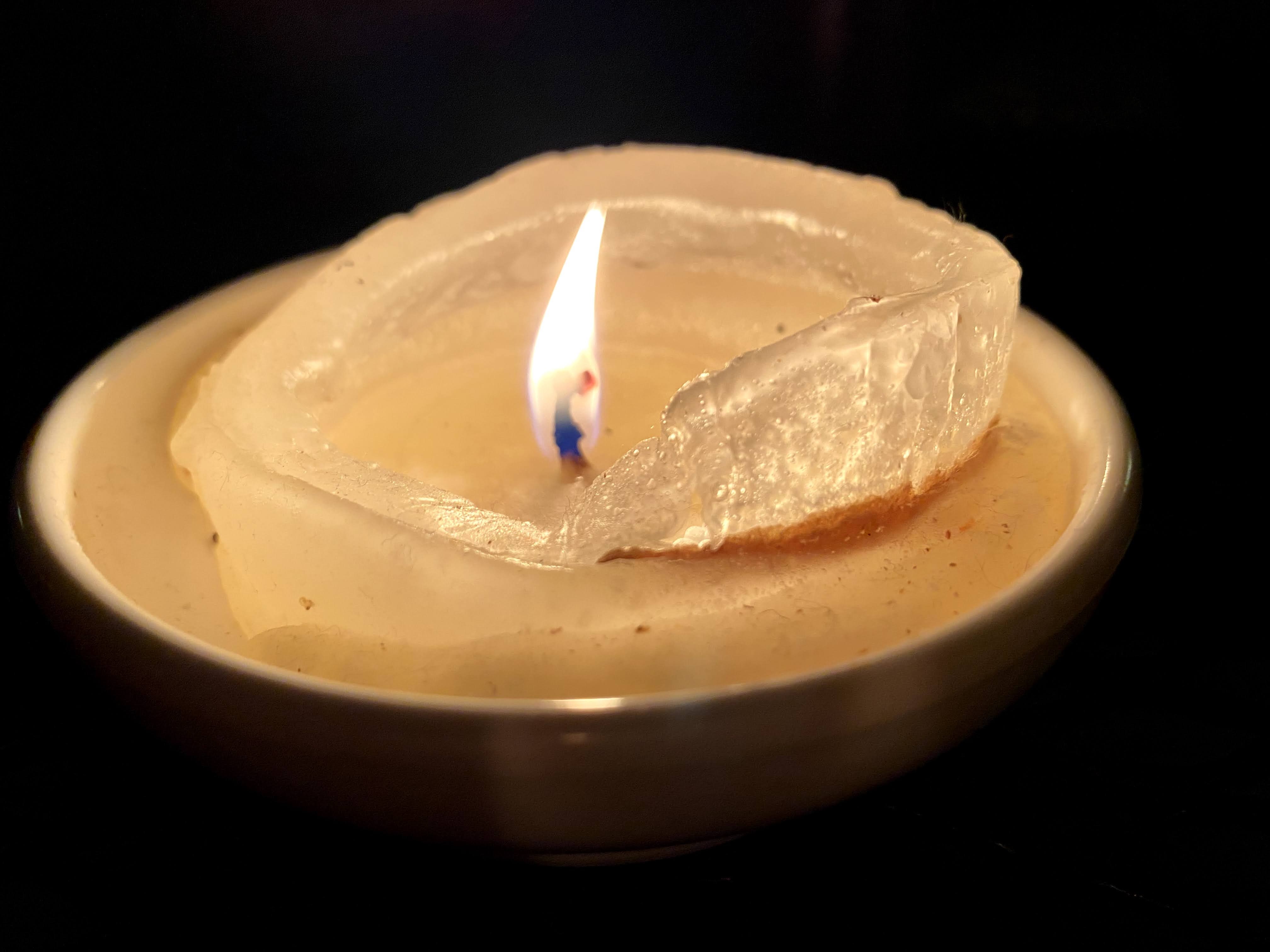
Candle Images

Close up image of a candle
Image of a candle from above
close up image of a candle

Early in the pandemic I found myself thinking and feeling strong emotions. I was looking for a way to express them. My husband and I sat on our back deck in late March 2020 and I took these photographs. The lantern that looks like COVID was a failed Christmas craft attempt still hanging from the rafter in late March and was shockingly similar to the virus the world was facing. I was struck by the darkness and uncertainty that COVID had brought to our lives, but found hope in this bright version that fought off the darkness of night. As we talked, we lit more and more candles. It was if we were looking for hope in the light they provided. COVID is still with us but we continue to look for and find hope.


Wendy Ward is a Professor in the Department of Pediatrics and serves as the Associate Provost for Faculty and the Director of Interprofessional Faculty Development at UAMS.

Filed Under: 5 - Images

Nature is What We Know

Image of the Arkansas River taken from a hill
Image of the Arkansas River taken from a hill. Downtown Little Rock is visible in the distance.

Nature is what we know—
Yet have no art to say—
So impotent Our Wisdom is
To her Simplicity.

(Excerpt from Emily Dickinson’s “Nature is what we see”)

During lockdown in March 2020, I began exploring film photography and the city I grew up in. I started spending more time in nature, hiking and hanging from trees. These past years have been tough on us. We live in a society that is fast-paced; society often goes on without us. We are told that time is precious and limited, so we should make the most of it and accomplish as much as we can, but in doing so, many of us lose sight of the importance of being present. So, this past year, I learned the importance of slowing down.

Shot on Minolta X-700 using 35mm Kodak 200 film.


Jeannie Kuang-Nguyen is a graduating fourth-year medical student at UAMS who will begin emergency medicine residency training at Kendall Regional Medical Center in Miami, Florida this summer.

Filed Under: 5 - Images

Virus in a Cell

microscopic image of a virus in a cell

3D created image of a virus entering a host cell.  


Xuwei Hou is a Researcher at the UAMS Department of Internal Medicine.

Filed Under: 5 - Images

  • «Previous Page
  • Page 1
  • Interim pages omitted …
  • Page 26
  • Page 27
  • Page 28
  • Page 29
  • Page 30
  • Next Page»
University of Arkansas for Medical Sciences LogoUniversity of Arkansas for Medical SciencesUniversity of Arkansas for Medical Sciences
Mailing Address: 4301 West Markham Street, Little Rock, AR 72205
Phone: (501) 686-7000
  • Facebook
  • X
  • Instagram
  • YouTube
  • LinkedIn
  • Pinterest
  • Disclaimer
  • Terms of Use
  • Privacy Statement
  • Legal Notices

© 2025 University of Arkansas for Medical Sciences