• Skip to main content
  • Skip to main content
Choose which site to search.
University of Arkansas for Medical Sciences Logo University of Arkansas for Medical Sciences
Medicine and Meaning
  • UAMS Health
  • Jobs
  • Giving
  • About Us
    • Submission Guidelines
  • Issues
  • Fiction
  • Non-fiction
  • Poetry
  • Conversations
  • Images
  • 55-Word Stories
  • History of Medicine
  1. University of Arkansas for Medical Sciences
  2. Medicine and Meaning
  3. Author: Chris Lesher
  4. Page 13

Chris Lesher

The Postmortem

By Abeer Chaudhary

The scenes from those 18 months played in mind on repeat like a broken record. The phone call from my sister, the helplessly put-together care packages, the group video chats, the flights back and forth from Chicago, the inkling of hope with each improving scan, the bated breath after a broken hip, the sleepless nights spent in prayer, the heartbreaking family meeting, and then the peace that came with her peace. 

The ironies left a bitter taste in my mouth. She used to say she didn’t want to die behind the microscope. Instead, she died underneath it. She buried her mom when she was a medical student. I buried mine a month after taking my own board exam. These uncanny parallels colored my future bleak. 

I can’t bring myself to say “I miss her” aloud. Certainly, not to my father. How can I throw that in his face when I know he feels her loss more keenly than her children? For those 18 months, he drove her to her appointments, cooked all her meals, cleaned up after her, flew with her to MD Anderson (twice), and remained the most hopeful out of us despite knowing how this was going to end. 

I’ll never forget the look in his eyes after her last oncology appointment. He kept looking at her as though she was going to evaporate right in front of him. We had finished out another Ramadan and Eid in good spirits despite the COVID-19 lockdown, but I could feel the atmosphere shift abruptly. I didn’t push for details that day as it was the week of my boards. I knew they wouldn’t tell me until after I completed them. That’s just how Desi parents are.

Feigning ignorance to perpetuate the façade of bliss was all I could do in the meantime. The day after boards, however, is still the worst day of my life.

Mets in previously unaffected organs. Lab values off the charts. A clinical trial chemo agent that could cause intracranial bleeding. The worst part is that she was willing to continue. 

She felt obligated.

For us. 

Although we all knew her treatment had been strictly palliative, it still came as a shock to see the actual end of the line. Of course, we could see it physically. It took two of us to lift her up. She had no appetite to intake any nutrients. A yellowish hue finally began to take up residence in her eyes and skin. 

My siblings, who were at more advanced stages in their medical training, thankfully took the reigns. “You don’t have to do anything. You can remain comfortable at home.” At the height of a new pandemic of uncertain duration, the thought of her being in a hospital alone with no visitors would have crushed our spirits altogether. Our acceptance and support were the reassurance she needed to step back.

So, we agreed to stop and to let nature take its course, which it did fairly quickly.

The remaining days passed in warm embraces, life lessons, quiet contemplation, Netflix binges, and gradually worsening encephalopathy. Her sharp-as-a-knife mind dulled into a mere butter knife. I’m still unsure whether it was foretelling or foreboding when she mistook 20-something year old me for our 70-something year old president, but I digress.

The night her death became imminent, all four of us bunked around her bed and took turns to get up and administer morphine to calm her death rattle. By the next morning, the rattling stopped. 

Her lungs had taken their last breath. Her heart had taken its last beat. Her soul had exited this world forever.

Although the sorrow was deep, the impact of the blow was cushioned in my mind as I already mourned her obtunded state. The physical loss almost seemed insignificant in comparison to the cognitive.

As per Islamic tradition, she was buried the same day after the women of our family performed her ghusl. Her headstone, which would be delivered several weeks later, had carvings of birds because they made her happy. Knowing that made us happy.

The postmortem period involved a recalibration of sorts that was both unfamiliar and instinctual. My father bursting into tears and hugging me when I found out I passed my first set of boards was not the reaction I expected. When the leave of absence ended and it was time for us to return to our respective school/jobs, anxiety was at an all-time high. How would a full-time caregiver react to being alone? Our preventative approach led us to the animal shelter. Enter Alpine, a green-eyed goofy feline who managed to partially fill a void with her warm cuddles and silly antics.

The void never really does get smaller. Its proportion shrinks as other joys fill the space around it, but it remains there as a reminder of what once was. You don’t remain the same, but why would you? Experiencing the brevity of mortality is incredibly humbling. To live in the same attitude would be a disservice to those who have come and gone. 

There is not a day that goes by where she doesn’t cross my mind in some form or fashion. The lessons I’ve gleaned from her life and death hover in the back of my mind, and I often ask myself “WWHD: What Would Humera do?” We don’t think of adult children needing their parents in the same way young children do, but I have felt the need for that guidance so keenly in my twenties. The apparent absence during major life events still causes tears to well up in my eyes for a moment, but it is often followed by a smile when I reminisce on how much love I got to know and continue to experience. It is a privilege to carry it forward. 

This has allowed me to lift the tonearm and let the broken record stop playing. It is time to listen to something new.  


Abeer Chaudhary, D.O., is a resident physician at the UAMS Northwest Campus.

Filed Under: Mehta 2024 - Non-fiction, Mehta Awards 2024 – Winners

Reflection on Radically Accepting Uncertainty

By Ana Rodriguez Rivera

Meme of man in a yellow suit clasping his hands. Text reads" "2020 Coronavirus Pandemic! Funeral homes:
Meme_Insurgent. “Pandemic!” March 2020.

I was in the emergency room, scrolling through Facebook when I came across Anthony Adams in the bright yellow suit (Meme_Insurgent). I’m convinced that the creator of the image was reaching out to me, reminding me to radically accept the facts of life. The problem: life’s truths are not always pleasant. We often don’t like them. Nevertheless, the goal is to accept the good and the bad with the same level of tenacity. Your dog died? Radically accept. Lost your wallet? Radically accept. Fallen in love? Radically accept. It’s a skill that’s easy to understand, but hard to practice. For me, the hardest parts of life to accept are those that result in uncertainty. As children, we aren’t taught how to handle uncertainty. All the books my teachers read to me had clear outcomes. Eventually, I gained the skill to predict the endings of some stories. Knowing what to expect prepared me for a conclusion and gave me a sense of closure. I could move on with the satisfaction that all had been resolved. Not knowing, not being able to foresee what happens next, and most importantly, not being able to prepare for it—ambiguity—simply scares me to the core. I wonder: is it possible to radically accept the randomness of life? If so, how can it be done? I laughed out loud as I savored the darkness of the meme, startling the person next to me. I was alone, suffering from breathing problems, with only Anthony to comfort me.

Early one March morning—a Monday to be exact—I put on my blue Walmart vest and made my way to work. I was running late. The morning had been crisp, so I’d been forced to spend some time defrosting the windshield of my little Chevy Spark. In my rush to clock in and prepare my register for the day, I failed to notice the agitation in the air. Suspicion hit me when I spotted a flock of managers huddled at the front of the store. Such a rare phenomenon—Walmart higher-ups so easily accessible—is not to be taken lightly. My coworkers became restless. Their voices buzzed back and forth with urgency as they talked to one another. I finally glanced over at the register to my left. “Hey, do you know what’s going on?”

My coworker shook her head and answered, “They’re saying the schools are going to shut down early.”

Later that day, Governor Hutchinson ordered the immediate closure of all public schools. I’d heard about COVID-19 on the news, but it had seemed so distant, so far away. Suddenly, it was at our doorstep, and it was not going away. When the news broke, the tension in the store erupted into chaos. My coworkers were frantically calling their spouses and family members— What’re we going to do about the kids? — Can you pick up so-and-so from school? The phone vibrated in my pocket. My husband: They are closing the office for a few days. I think something major is going on with this virus. Out of nowhere, the store overflowed with nervous customers. Shopping carts full of groceries lined the aisles. I must have scanned more items that day than I ever had during my time there.

Rumors spread that the Governor planned on shutting down businesses and other public spaces. Health officials were sending warnings about the rapid spread of the virus. I remember looking at the bottle of Germ X next to my register with a sudden sense of hopelessness. At some point, I found myself heading towards the breakroom at the back of the store. I walked past aisle after aisle of empty shelves. I stopped to watch one shopper load multiple cases of water into his cart. For the first time, many of us came face-to-face with what British author Thomas Hardy called “[t]he Immanent Will that stirs and urges everything.” COVID-19 urged many of us into a jarring unease. The virus reminded us that fate—the “Immanent Will”—plays a large part in the trajectory of our lives, despite how certain we felt about them. W.H. Auden aptly dubbed the nineteenth century the “Age of Anxiety.” Many poets and novelists during this time grappled with a swiftly changing world. Some, like Hardy, also reflected on a higher power, an invisible force, that inexplicably drives the world. In the poem, “Anything Can Happen,” written in 2004, Irish author Seamus Heaney writes, “Anything can happen. You know how Jupiter / Will mostly wait for clouds to gather head / Before he hurls the lightning? Well, just now / He galloped his thunder cart and his horses” (lines 1-4). Heaney wrote this poem in response to the shocking events of 9/11 in the United States. Heaney describes the randomness of the attacks and contemplates the higher being responsible for such devastation. Although I don’t remember much about that day, I’ve learned a lot about it through documentaries and news stories.

I remember reading a story one year on the anniversary of the tragedy. The vice president of an insurance company heading to his office on the ninety-sixth floor of the World Trade Center made an impromptu stop at the post office. He took longer than he’d thought and was slightly behind schedule. When he arrived at the subway station, the train he normally took was at capacity, and he had to take a different route. All these incidents made the man unusually late for work. When he finally arrived, he learned that the Boeing 767 had crashed into his office building. This story captivates me enormously. When I first heard it, I was awed that a man could be so lucky. However, reflecting on Hardy’s philosophy about the “Immanent Will,” a few things occur to me. Although fate and chance are often associated with destruction, pain, and sorrow, they are also linked to miracles and “lucky” circumstances, as the man’s extraordinary story shows. Perhaps the first step to radically accepting uncertainty is acknowledging that nothing is certain—not even the negative and frightening things our minds tell us could happen.

The only thing we know for sure is that “[a]nything can happen.”
Sure, anything can happen, but how do we cope with the ambiguity of it?
Thinking back on the pandemic’s worst years, what strikes me as remarkable is how people coped with the bleakness of it all. I recall the smorgasbord of morbidly funny COVID-19 memes amid the news of death, global economic distress, and leadership failures. Internet memes have always been one of my generation’s finest talents. As a creative endeavor, memes are easy to create since there are no strict conventions to follow. We use memes to mass share bits of information—cultural symbols, themes, and ideas—without much effort. Some people may findpandemic memes callous. However, it’s important to consider one thing: in one of the most difficult moments in history, people turned their distress and anxiety into witty, creative pieces. Authentic representations of life’s darkest qualities laced with a touch of humor makes for a rather therapeutic tonic. Dark humor—my generation’s way of mustering through even the direst of situations.

The dark humor of pandemic-era internet memes recalls Hardy’s ability to render dark humor in his own work more than a century earlier. He wrote “Ah, Are You Digging on My Grave?” in 1913. In the poem, Hardy juxtaposes humor with grim reality. The narrator attempts to identify the person disturbing her grave. She naively assumes it’s the people she left behind; ironically, the final answer comes from her beloved dog: “‘Mistress, I dug upon your grave / To bury a bone… / I am sorry, but I quite forgot / It was your resting-place’” (lines 31-36). I held back a chuckle when I first read this poem. I detected an endearing irony in the poem that I’d found in the pandemic memes. The poem is a reminder that death remains true for us all and that even our furry companions may forget us. Some readers may find such a dire message discouraging, but I think Hardy gives us a different outlook, one that engenders laughter in the face of gloom. Instead of buckling under the heavy burden of uncertainty, fear, and despondency, Hardy, like the pandemic meme creators, found ways to wrest creativity, inspiration, and even humor from unfortunate circumstances.

Although some consider Hardy a great pessimist, he always struck me as a man that observed the world as it was—ironic, sometimes cruel, and largely uncertain. There’s an admirable quality in his ability to write matter-of-factly about these issues. It’s almost as if through writing, Hardy found a way to accept the perversity of fate and the volatility of life.There’s a fearlessness that inspires poems like “Ah, Are You Digging on My Grave?” I suppose this approach has always drawn me to his work.

I first encountered Hardy in my final year as an undergraduate. My mentor and longtime friend, Dr. Kay Walter, agreed to let me take one of her courses as an independent study. On the reading list was Hardy’s Jude the Obscure (1896). Both Jude Fawley’s tragic story and Hardy’s lyricism impacted me immensely. I often think about one passage from the novel: “As you got older, and felt yourself to be at the centre of your time, and not at a point in its circumference, as you had felt when you were little, you were seized with a sort of shuddering…” I didn’t quite understand Hardy’s message back then as well as I do now. As a child, I perceived life as a predetermined sequence of big moments. At some point, I was going to lose my first tooth, get my driver’s license, graduate high school, and continue the expected path along the circle. However, the older I get, the more it all becomes murky. Within the past couple of years, I’ve become more aware of the lack of direction in my life. It truly feels like I’m standing at the center of my time, looking at what has already passed, but unable to see what is to come. Unlike Hardy, I have not figured out a way to handle the uncertainty in my life. Like any good scholar, I continue to look for instruction in the books that I read.

About reading, Siri Husvedt writes, “The more I read, the more I change. The more varied my reading, the more I am to perceive the world from myriad perspectives.” No matter how diverse my reading lists are each semester, I find that many of the writers I study tackle the same issues and concerns, but in their own way. For example, Latina author, Carmen Maria Machado, writes about the uncertainty in her life in her memoir In the Dream House (2019). Machado experiences instability and random violence due to her abusive girlfriend. She makes it clear that writing helps her cope with her trauma. In one chapter, she contemplates the end of the world: “A theory about the end of everything: the heat death of the universe. Entropy will take over and matter will scatter and nothing will be anymore.” According to the Oxford English Dictionary, “entropy” is: “A state of or tendency towards disorder…” When things are in order, we feel a sense of security. Disorder leads to uncertainty. Like Hardy, Machado works through the volatility in her life brought on by disorder. She, too, finds a way to radically accept her circumstances. Hardy and Machado—two vastly different writers—both offer strategies for surviving life’s randomness. The more entropic our world becomes, the more I agree with Husvedt’s advice. Reading can change us. Additionally, diversifying our reading offers ample knowledge for devising our own form of acceptance. There’s hope, then, that living with uncertainty can be done.

Is it possible to radically accept the randomness of life? Unfortunately, I can’t google the answer to this question. As I’ve battled with uncertainty, I’ve learned that my biggest barrier is fear. I have a chilling terror of blind spots, muddy waters, and the unknown. One thing is certain: I’m grateful that the writers I’ve encountered have shown me the possibilities. Arundhati Roy asserts, “We have to reach within ourselves and find the strength to think. To fight.” The starting point is confronting my fear. When I reflect on Hardy’s work, I realize that what I admire most is his ability to challenge the hopelessness that uncertainty brings. His courage garnered poems and novels that provide me with clarity. The strength to reach within ourselves and find the means to fight is both an individual and collective process. My journey is uniquely mine, but I find myself reaching out for support, and I find that I rely on others—Hardy and Machado, for example—to help me get through it.

In their own search for answers, others look to the mundane tasks in our lives. For example, in the essay “Driving as Metaphor,” published in 2019, Rachel Cusk observes, “Trying to unravel these snarl-ups, it often becomes clear that many of its participants are unable fully to manoeuvre and control the cars they are driving. Others struggle to adapt to the change of circumstance and to the necessity for acting as a group.” Cusk presents a solution that best portrays what I mean by “collective process.” Cusk uses the metaphor of driving to explain the intensely complicated problems that arise in our lives. Periodically, we find ourselves tangled in chaos and many of us fail to overcome it alone. Cusk emphasizes the need for collective action. Problem-solving becomes a collaborative endeavor. And so, unashamedly, I turn to Hardy and others for answers. As I reflect on the radical acceptance of uncertainty, I have become keenly aware that the books and poems I’ve read inform my understanding of these concerns. Gradually, I sense a change within me.

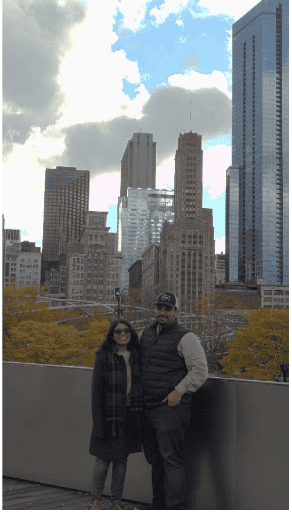
Two people posing before the Chicago skyline
On Our Honeymoon, Chicago, November 2021

When I think back on the pandemic, it’s hard to believe that somehow, we made it. The day Governor Hutchinson closed the schools, I remember going home to watch the news. As the global reports poured in, a cold, stony fear settled in the pit of my stomach. And yet, I somehow managed to get out of bed every morning. Somehow, I kept going. So many of us did. Among the dark memories of that time are jewels: Hugging my mother and father for the first time after months of quarantining; my husband making popcorn as we settled in for another quiet movie night; honeymooning in Chicago after the travel ban and feeling like the luckiest people in the world. Life has always been a hodgepodge of chance and fate. From Hardy’s time to the present, we’ve endured and survived despite the instability of our world. We remember that although chance and fate might bring great sorrow, it also brings us miracles. We take comfort in knowing that it’s possible to find humor and joy even in the bleakest situations. At times, it feels like I’m stuck in a place of fear and anxiety, but I am optimistic that one day, I’ll find peace despite the chaos. For now, I’ll keep turning to my books in search of answers.

Works Cited

  • “Entropy, n.” OED Online, Oxford University Press, September 2022, www.oed.com/view/Entry/63009.
  • Meme_Insurgent. “Pandemic!” March 2021. https://www.memedroid.com/memes/detail/2912669/Pandemic.

Ms. Ana Rodriguez Rivera is a research writer at the Winthrop P. Rockefeller Cancer Institute.

Filed Under: Mehta 2024 - Non-fiction, Mehta Awards 2024 – Winners

Sweet Serial

By Jon Oden

“Are ya stupid, boy?” the gravelly voice slurred.

The stubbled face of his father glared at him, vaporous breath making him gag.

“Look at me when I’m speakin’, boy!” The pale, angry face turned, eyes darting around like he was expecting something.  “I see it on ya.  I can smell it oozing outta your skin.”

His father had always been a crazy bastard, even now.  And wasn’t it just like him to show up and try to embarrass him…in public and naked!  

“Stop staring at me queer!”  The man’s heart skipped, could anyone hear this?  “Yeah,” The old man saw fear in his son’s eyes, “I know wha you…you’ve done…been doin’.”  It belched.

The man’s mouth was dry, he could feel his spit fight its way down his narrowed throat.  He couldn’t breathe.

“I told ya to stay away!”  The face blurred as it turned away.  “I told ya not to go lookin’ in places ya don’t have any business…” It faded into sadness, sobbing.

“Why… can’t ya…Listen to me!”  The last three words were a scream!  A deafening sound that pierced his eardrums and made his eyes tear up.  “Listen…Listen…listen…”

“Hey, are you listening to me?” Joel was waving his arms behind the counter.  “What the Hell, man.  You’re holding up the line,”  he chuckled.

The man looked behind him.  No one.

“You’ve been standing there for, like, five minutes, bro.  Holding that burrito like it was your ma’s hand.”  He chuckled again.  “Ya good?”

A faint beeping sound floated up from his belt.  The man quickly placed his free hand on a small box clipped there and silenced it.  He smiled at Joel, who was staring at him.

Joel grinned, “Ya good?”

“Yep, just…need to get my burrito and head to the grove.”  He started searching his pockets for money.

“The grove?  Ooooooo, spooky, man…cool.”  

The little box chirped again.  

“Ya good, bro?  I got some shit back here like…” Joel twisted around and dug through the shelves behind the counter, his dirty smock didn’t cover his ass when he bent over.  “Chocolate and Skittles…they’re only a little outta date…”

“Nah, Joel.  I’m good…got that in the truck if…if I need it.”  His hands passed over his keys making them jingle.  “Aha!”  He pulled out a wad of bills.

The door opened with a jingle sound.  The man turned quickly to look who it was, sweat beading on his forehead. 

His father was still standing at the doorway…still naked and crying.

Joel welcomed the new customers.  A cheerleader from the local high school and what looked like her brother?  Boyfriend?  Who cared.

The man walked up to the counter and tossed a few dollars down.  “That enough?”

“Looks good to me, bro.”  Joel scooped up the cash and put it in his pocket.  

He grinned even wider than usual.  “Old man owes me.”

The man nodded and turned toward the door, pausing when he saw his father’s pasty buttocks heading out with the cheerleader.  

He sighed.  His old man always was a greasy pervert.  He would never change no matter what happened to him.  The man shook his head.  He would get to his truck, eat a few handfuls of Skittles and his father would fade away just like all the other times.

“Hurry up, boy!” A raspy voice echoed from the parking lot.  “I ain’t got all day and your truck is starting to smell bad.”  

The man gulped.  “See ya around Joel.”

 “I’ll be around, man.”

Without turning back to acknowledge his friend, he opened the door.  It jingled just as it always did.  “If you’re headin’ to the grove, Bobby,” Joel’s voice was more serious, “you might want to grab another bag of lye.  Ya never use enough, and if you’ve taken care of what you were gonna take care of, I put out the big bags you asked me to order.”

Bobby turned and nodded.  “Thanks Joel.”

“No worries, man.”  His grin returned.  “I bet even your pops will approve of this one.”

He turned his beat-up, 1984 sky-blue Ford pick-up onto the dirt road that led to his family’s tree orchard.  Rich people from Little Rock and Conway called it the grove.  Thought it was quaint and authentic.  Locals just thought it best to avoid mentioning it.  The land had a history…decades of history. 

He looked at the time, then shoved his phone back into his pocket as he snorted at the thought of how he used to bring his daughter here.  She had loved it.  She really belonged here.  Bobby Pennington looked to his right to see the calm waters of the Arkansas River pass quickly by as he drove deeper into the dark valley of pine and poplar trees that his family had owned for over a century.  

He let his mind wander a bit.  How he had grown up here.  When his mother left him, trusting his father to raise a confused eight-year-old.  Then, how he dropped out of the U of A to join the Marines and fight Saddam.  He scoffed at himself.  He thought of how his heart beat a little faster when his father appeared.  Scared of his old man?  Pathetic!  Stinky geezer!  But, what else could he do?  He couldn’t abandon this place.  His daughter loved it here.

When he finally pulled up to the wooded entrance of the farm, the weather, warm and a little breezy outside of the valley, became suddenly and ominously cold and rainy.  He had to roll his windows up as the pelting rain began to slap him in the face and soak his shirt.  The dramatic drop in temperature forced him to crank up the heat even though the heater in the old beater truck was for shit.  

“Damn!” he groaned wiping the drops of water off his skin.  “Just my crappy luck.”  He pulled the latch to open the door and slide into the freezing rain.

Bobby trudged to the back, careful not to slip and fall into the six-foot-deep culvert at the side of the road.  He reached over the side of the truck and into the dented and worn bed, pushing away the odds and ends, his tool belt, and a shovel.  He grabbed the body-shaped form wrapped in thick black plastic, duct-taped at both ends, and threw it over his shoulder.  The force of the package made him grunt, almost winded him.  

“Heavy sack-a…” he groaned.

In the wind and the rain, his hand slipped off his truck and he fell backwards with the weight of the thick black plastic package landing on top of him.  It made the worst scrunching sound as it hit his chest. 

“Shit!” he gasped, his face plastered in cold mud and gravel.  The smell of industrial -grade plastic shoved up his nose and into his mouth.  He tried not to think about what was under that plastic shroud.  

The little box on his belt beeped again.  Beep…beep…beep.  “Shit…” he whispered.  He pulled the box off his belt and looked at the screen.  69 flashed in bright red.  “Okay…not…too bad.”

Bobby tossed the long, heavy black bag off him and got to his knees.  His muddy hands fumbled desperately across every pocket he had.  “Shit!” he whimpered.  “Where the…”  Then, his ice-cold fingers grazed a small bag deep his in left pant pocket. 

He grabbed it, ripped it open losing some of what was inside to the rivulets of water passing underneath his soaked jeans.  Then, with his muddy hands and frozen fingers, he tossed what was left of the bag into his mouth.  He shut his eyes, tried to relax, and chewed vigorously.

“She won’t come this early.  She won’t come…please, baby…don’t…

He chewed some more and swallowed hard.  Started chewing again.

“She can’t come this early…”

“Daddy?”

Bobby’s heart stopped at the sound of her sweet voice.

He didn’t dare open his eyes.  He knew what would be there.  He couldn’t look at it again…not again.  What he would see was not really her.  He felt the little box vibrate.  “Thank you…”  His blood sugar was normal again…Skittles were working.  He let his eye lids relax…slowly.  He knew she wasn’t there, couldn’t feel her anymore.  “Please…”  As light began to pierce his retina, his heart began to pound a little faster, “Please, sweet love…”  He knew she was gone.  

He sighed as the rain dripped from his face, running together with his tears.  His clothes were, by now, completely soaked, but he didn’t feel it, and could have cared less.  

“Why does this have to happen to me?!”  He wanted to scream it, but he knew to keep quiet in this place.  Noise tended to attract the worst of them.

It had been this way ever since he was diagnosed.  Maybe a little before.  His mother told him he was a sensitive boy.  It was seven years now.  Type 1 Diabetes had pulled him out of the Marines, into his family business…businesses.  It was the insulin and low blood sugars that dragged him into a world he wished he never knew, brought on by “neuroglycopenia.”  He could hear his endocrinologist roll over that word like anybody should know what it meant.  Prick.

His world became a living nightmare from the beginning.  His neuroglycopenic hallucinations were painful at first.  Made his head ache and his eyes burn.  That prick doctor had the balls to write an article about it.  Eventually, he got used to it.  And he stopped going to his doctor.  “My blood sugars are fine, thank you very much.” 

Sometimes, seeing loved ones was hard.  They were the most difficult to see clearly and understand.  All of them presented just as they wished to be seen.  All of them wanted something.  Sometimes they appeared clean and healthy, even happy, other times not so much, gory and grim, dirty.  They each had their heralds that preceded their appearance by just a few moments, like theme music.  Gave him a bit of a heads up, but they would never allow Bobby to avoid them.  

Some preferred a specific smell.  Maddy loved honeysuckle.  His naked father smelled like rot-gut whiskey, which was never easy to take.  Some preferred a sound.  His Marine buddy, Sam, liked the sound of a Harley, which confused the shit out of Bobby when he manifested while he was driving.  Others liked specific sensations like a cut in the skin from a razor, or deep depression.  It was fine, ‘cause it only lasted a few minutes, but if Bobby let himself stay with them too long he would lose himself in their hellish fantasy.  That’s how Joel came to know his…situation.  He sometimes needed a sidekick to fend the more difficult ones off.

He might need Joel tonight.  He would need Joel, but in some part of his mind he didn’t want Joel involved in tonight.  This was his problem to deal with. 

The spoke’s themes told Bobby a little bit about them.  The darker the theme, the more ominous, and maybe more dangerous, the ghoul.  Bobby could sometimes control the event, but it was a work in progress and there really wasn’t any training manual on the subject.  He was doing the best he could with what he had.  

What did they all have in common?  His blood sugar.  It had to be low for him to see them, which is why he paid out his ass for the glucose monitoring system attached at all times to his belt.  He even slept with it right next to him.  If the thing beeped, he knew something was coming and he could treat his low and limit his time, control his time with them.  It was fool-proof, just so long as he kept his monitor connected to him.

There really is nothing worse than waking up to your dead father pretending to take a piss in a dark bathroom!  Ludicrous, really, if you knew how the man died.

Bobby got to his feet and pulled the black bag back over his shoulder, more carefully this time.  He turned slowly toward the entrance of the grove and, after a few deep breaths to slow his pounding heart, he took his first step forward toward the dark line of trees a few yards ahead.  

The grove itself was hidden several hundred yards up a 1500-foot rise in the middle of his valley.  The rustic nature of the land along with the steep grade kept most looky-loos away.  Cops too.  When he was young, his parents would grow weed out here and sell it to the hippies that came up from Dallas.  They made a killing!  

“They sure did make a killing out here,” he chuckled.  

He stopped right after he said it.  The wind was blowing hard through the pines, which always made the air smell so good, but just at the edge of that aroma was something different…raw…musty and rotten.  Through the pounding rain and raking branches up above, he could hear the rustling of leaves and gravel all around him.  Sounds too heavy to be deer or even wild hogs.  Sounds that seemed to close in quickly, then fade back.  Something cold and wet touched his neck.

He twisted around almost too quickly, his feet losing traction in the muck, but he kept himself from falling again.  “Had to be a drop of rain…” 

Something grabbed the bag and pulled him backwards.  His legs followed the momentum, trying desperately to stay upright.  The pulling force stopped.  Bobby regained his balance, falling to one knee, but keeping his plastic-bagged cargo up on his now sore shoulder.  

He heard children giggle just to the right.  He turned his head, but too late.  Just branches were left bobbing in the breeze.  Bobby knew they were playing with him.  They liked to do that when he brought them someone new.

“Come play with us, Bobby.”

“No.”  Bobby stood back up and rubbed the mud off his knee.

They giggled again.  This time on the left.  “Come play…”. The voice was deeper, impatient.

“No!”  His meter beeped again.  “Give me a break!”

“My daddy told me not to yell at my sister.”  The boy manifested right in front of Bobby.  Couldn’t have been more than six-years-old.  “Now I can’t find them.”  His neck was red and swollen.  “Can you help me?  I won’t yell at her anymore.”  His eyes were dark and empty as if he was programmed to say what he was saying, but he didn’t grasp what any of it meant.

Bobby’s heart broke for the boy.  He knew who it was, had gone to Kindergarten with him.  “No, Jimmy, I can’t help you.”  

The boy turned and started to walk back into the forest.  He stopped and without facing Bobby said, “Maddy misses you, but you can’t keep coming here.  You’re only making it worse.”  A mist enveloped him and he was gone.

Bobby gulped down more of his Skittle stash.  Then started walking back up the trail

He planned very carefully for tonight.  He always did for these nights.  Ate the right foods.  Counted his carbs carefully and even though he underdosed with his insulin – he had to subtract two or three units from his calculation just so he wouldn’t have to fight low blood sugars all night.  But that was the thing with diabetes.  You can do everything right, and still feel like you messed up!

“Bitch,” he whispered through the ice forming over his beard.  He was talking to his diabetes and to the heavy figure draped over his back.  It was raining much harder now and the pellets of ice scratched at every exposed pore on his body.  He groaned as he repositioned the black mass across his shoulder.

“Damn it!”  His foot slipped on the slick undergrowth, almost causing him to lose his grip on the plastic again, nearly dropping the limp, pulpy bulk into the stewing morass below. 

He stopped and leaned against one of the taller trees; too dark to tell what kind it was, but he knew just by the feel it was one of his pines.  He blew warm air into his numb hands cupped over his mouth.  “This one deserved it, Maddy.”  He sniffed loudly, “Don’t be mad at me.”

He took a sidewards glance at the shadow on his back, “We’ll be there soon, love.”  His voice stained with sarcasm.  The giggles from behind the leaves returned.  More this time.

A muffled beep pierced the frigid air as his feet sloshed through a puddle of black muck.  He sighed.  “Geez!  Again?!  Alright…just a minute.”  His mind was swimming, his anxiety mounting since the beginning of the evening.  Even though there was little chance of getting caught out here; how suspicious could a tree farm be, really?  Little chance was not zero chance.  

He looked past the darkness and swaying trees, not seeing anything, he threw back even more Skittles and went forward.  “What the Hell is with these blood sugars?”

Another fifty yards up the hill, rain pouring, feet sliding, his black hoodie soaked, and his muscles screaming, he came to a stop.  “This is your place, Senator.”  He said, dropping the canvas-wrapped package between two Frazier saplings sprouting from twin mounds of bare earth.  “I will always love the end of ya’lls session.”  Bobby smiled, “no one will miss you for another three weeks, and with your history, no one will even care.” 

Rivulets of water forced themselves around the new obstacle; Nature didn’t care about the shit in her way.

He pulled out his entrenching tool and started to dig.  The earth was still soft except for the web-like roots of all the vegetation that covered the forest floor, but the rain filled any progress he managed within seconds. 

His waist beeped again.  “Shit!”  His hands were muddy and numb, but he managed to unclip the small, black box attached to his belt.  Fifty-Two now.  Bobby grimaced.  If he used up all his Skittles before he could get back to his truck, the Senator won’t be the only one staying the night in a muddy hole.

Icy water fell into his face from the unkempt mop of grey hair hanging over his thick eye-brows.  “Shit…don’t have time…”.  He fumbled with the screen.

It beeped again, answering the steam from the man’s mouth with a sorta, ‘The take care of yourself, numbnuts!’  The red tracing shining off its face told a blood sugar of 49, and a single arrow pointing straight down.  “That ain’t good,” he sighed.

He looked at the canvas-encased Senator.  “You’ll have to wait.”  

He rolled his eyes.  He could feel the dizziness and weakness begin to grip him.  “Get a hold of yourself.  She wouldn’t want you to have a seizure and she sure wouldn’t want you to get caught out here because of your stupidity.”  He tapped the screen firmly, then pulled out some more candy from his pocket.  Cleansing this world of scum was dangerous enough; leaving home without enough Skittles to treat his low blood sugars was suicide.    

He started to dig again.  “At least no ghosts,” he muttered under his breath.  Noise attracted them.  The roots may still get in his way.  Even so, the farm was still the perfect place to bury bodies.  His soil was perfect for getting rid of bodies and such.  He had been treating the soil since…since his daughter died, forcing the land to grow his trees and adding materials that would dissolve organic matter more quickly.  It was all very scientific-like, which he had learned on the internet.  

He stopped; the memory of Maddy hard to face in this place.  A memory of a horrible day made worse by unwelcome comments by wrong-minded people calling her fag…evil.  A school protest in front of the capitol building for tolerance and peace.  This had all happened before.  A few kids speaking their mind in a closed-minded community.  Backwards beliefs shrouded behind biblical verse.  A dichotomy that defied logic, but bad people didn’t live in logic.  Maddy just couldn’t stand the pressure.  She had accepted herself and her friends.  She took the bullying and the loneliness, but she couldn’t take the hatred spewed from her own community, and it overwhelmed her.  She was all he had, but she protested that day.  Skin heads showed up and started pushing, then the cops arrived.  Someone pulled a gun, and in a blink of an eye, a flash and a tiny pop…she was gone.  

He nodded his head as he continued shoveling out piles of slimy-black earth.  He was doing the right thing.  These people had to pay.  

He had tried talking, tried to change their minds.  In the end, it was like convincing a teenager Tik Tok was just stupid.  

He climbed out of the hole, his numb fingers aching.  

Shaking his head to clear thick drops of water from his eyes, he thought of the horrible person he liberated from the Earth tonight.  The woman made it her job to hate and ridicule everything he…his daughter stood for.  She preyed on the weak.  Lied.  Cheated.  And now she was gone.  

His heart sank as he thought of how many others were out there.  He had to fight off the urge to scream as he pulled the plastic up close to his face.  The woman behind that thick film had laughed at him when he told her about Maddy.  She laughed!  “No one in this legislature will ever support you, or that lesbian bitch’s cause.”  She had said that to his face!  His lips curled, and he spat into what should have been her face.  Then he grinned, letting the weight of her fall backwards into the gloom.

He picked up his shovel and started to cover her.  After, he pulled the last thing left in his pack, a small Balsam pine tree; the root ball covered in burlap. 

“You’ll be ready soon enough, little guy.”  He stoked the tiny green branches.  

His daughter would be proud.

The rain slowed to a drizzle, allowing him to look over his field in the valley below.  His land stretched out to the Arkansas River at the base of the huge hill.  It was shrouded in dense shadow, but he knew every inch of the land.  The moon was hidden by a thick wall of clouds, but he could see faint brushstrokes of green highlighted in the gloom.  She loved it, so he loved it.  The trees meant something to him and his family.  Every tree held something special within it.  Every time a customer took one of his trees home, they took home something more personal and spiritual.

Bobby felt dizzy again, worse this time.

“I am proud of you, Daddy.”  Her voice was so sweet.  Was he imagining her?  His meter hadn’t alerted.

“That’s because I’m smarter than you, dipshit.”  That voice was familiar.

Bobby’s heart jumped into his throat, pounding like it was about to explode.  He pulled his meter back off his belt and looked, but found nothing but a black screen.  He pressed every button, but nothing revived it.  “I just changed you…”

“You did, redneck, but…guess what…I’ve got skills.”  

Bobby followed the sound of the voice to a stubby pine several yard to the left, just beyond the grave he had just covered.  His eyes blurred and his head ached.  He fumbled across his jacket pockets for more Skittles.

“That isn’t going to help you, sugar-boy,” she chuckled.  “I got your number…literally!”  She let out a deep laugh that echoed off the trees.  

Bobby knew who it was, but he wouldn’t let himself believe it.  “I…I…just…”

“Killed me!”  She frowned.  “Yes, you did, Hick!”  She was shaking her head, mussed blonde hair matted with blood swaying with her motion.  “I have had people try to kill me before, but you have some balls on you, sir.”

“Daddy…”

“Shut that lesbian bitch up, or I’ll make sure she sees you suffer.”  A wide grin engulfed her face, eyes black and empty just like the boy before.  “I’m here for you to atone for your sins.”  She glared at the pine trees planted in rows stretching out around her.  “And you have been a very bad boy!  Whoa!”

“You can’t do anything to me,” he panted, barely able to keep his eyes open.

“Oh, but you are wrong, newbie.”  She scoffed, then got on all fours and galloped over to him.  Her face pressed into his.  “You see,” she licked her lips.  “We all have our strengths and weaknesses.”  Her appearance changed into a more gory creature, her lips melted back and her jaw bone broke through her chubby jowls.

Bobby’s stomach turned at the smell.

“I learn pretty fast.”  She stood up and paced back a few steps.  “You have to, you see when you’re a woman in politics.  There are some sick perverts in my business.”  She grinned again.  “I learned while you had me unrestrained…bastard, that isn’t safe…in the back of you heap of a truck, that I can control your electronic devices.”  She raised her hands as if in praise worship, “shout out to my admin person who taught me about TikTok.  You can learn anything on that app.”

Bobby groaned.  He could feel his blood sugar diving down.  He could barely keep his eyes open.  The Senator’s voice was just a dull echo at this point.

“Stay with me, Bubba.”  She sat right in front of his sagging head.  “I’ve been juicing you with more and more insulin all night, dumbass.  That pump you use was very accommodating and easy to activate.”  

“Daddy,” Maddy sobbed.

“I told you to shut up!”

“Leave her…”

“You such a sad sack, Bobby.  You lost your wife in the Gulf.  Another Marine dead on the field.  Then you got kicked out because your pancreas went tits up.”  She moaned in pleasure, “it is just so tasty, but it gets better because then, you lose poor Maddicakes over there to a fidgety cop!”  The woman laughed again.  “Priceless!”

Bobby looked up at her.  

“You didn’t know that, did you?”  She sucked in air through her teeth, “yep, a young cop.  With a family, mind you, made a mistake and we, as the law makers of our state, forgave him for that.”

Bobby’s eyes began to throb.

“Are you gonna cry again, Bob-o?”  She nodded, “go ahead and cry.  I would put you out of your misery with my brand new nickle-plated Colt .45.”  Her eyes got wide with excitement. “I had hollow-point bullets special made for her, but…” She turned and looked Bobby directly in the eyes, “you buried her right over there!”  She pointed a chunky finger at the fresh mound of mud, which was already eroding in the rain.  “Ah well, water under the bridge…or over my mound.”

“I drained your meter of all its precious battery power so you would be blind to your exposure to us.  And, now, all I have to do is sit and wait as your life slowly swirls the proverbial drain, or wait long enough for you to go insane because…pretty soon the others are going to smell fresh meat and come lookin’ for ya.  It’s just a matter of time, and either way you loose…bitch!”

Somewhere in the distance, a faint ringing sound caught the woman’s attention.  “What is that?”  She turned her head this way and that trying to locate the sound.  “That sounds like my phone…”. She turned to Bobby, who already knew his stupid mistake.  “Did you leave my GPS enabled, government-issued phone on my murdered body?” Her face was ecstatic, her massive grin pushed her big cheeks up to her sunken eyeballs.  “You did!  Amateur hour, shit kicker.  You are going to jail now, if you make it off this hill!”  She jumped and skipped around Bobby and Maddy, who had huddled around her father, being careful not to get in the maniac ghoul’s way.

The trees began to giggle again.  “Here they come, Amateur sugar-boy!  Here they come for you.”  She sniffed the air.  Her grin disappeared and her face darkened.  “And they are hungry for you, Bobby.”

Maddy whimpered.

“It’s okay, Maddy.  This…This was probably meant to happen…just rotten luck.”

“Did you forget your emergency bag I made you?” she whispered.  Her voice was older now, more like her real voice.  “I swear, dad, if you forgot it again.”

Bobby sat up and looked at her.  She was pale and thin, but her eyes were just as green as they had been that morning when he left for work.  He wanted so much to hold her.  To hug her say he loved her just once more.  “No…sweetheart…I always keep it in my pocket now.”

“Then take it out and use your emergency shot.”  

“My…”

“Your glucagon, dad, the antidote to insulin.  Use it to get your blood sugar up…Now!”   She screamed the last part loud enough to bring Bobby back from the brink.  His adrenaline was pumping hard enough to force his starved muscles into action.

He reached into his inside jacket pocket and pulled out the red container that held glucagon, the antidote to insulin.  He popped the case open and pulled out the pre-filled syringe.  Then he plunged the long needle into his numb leg and pushed the plunger down.

“Noooo!” the senator screamed when she realized what he was doing and what Maddy had planned all along.  “You’ll never get away with it.  My people will come looking and they’re gonna find tha…phone…”. Her voice faded with her image.

Bobby felt his blood sugar rise and blood begin pumping to his vital organs again.  His mind was clearing. 

His phone rang; his heart jumped into his throat. 

“Hello?” he croaked.  “No, Mr. James, you didn’t wake me up.  I was j-just…uh…getting some…how can I help?”

He listened again.  “Oh…absolutely.”  His grin returned.  “How many…”.  He listened to the muffled voice.  “No, sir.  Fifty Balsams will be no problem…at all.”


Jon Oden, M.D., is Chief of Pediatric Endocrinology and the James H. Hamlin II Endowed Chair in Pediatric Endocrinology at UAMS.

Filed Under: Mehta 2024 - Fiction, Mehta Awards 2024 – Winners

Death of an Immigrant

By Shaili Jain

“Your father’s health has taken a turn for the worse. We’ve stabilized him, but he is approaching the ceiling of care. We’ll allow family to come in, two at a time, but visitors have to self-isolate for ten days afterward.”

My husband, R, and I sat on the couch in the living room of our London rental listening on speakerphone to Dr. P, a senior pulmonary specialist at an east London hospital as she took care of R’s father, ill with COVID-19 pneumonia.

This day, a Friday in January of 2021, marked day 20 of my father-in-law’s hospitalization. He was one of the unfortunate ones for whom a bout of coronavirus meant his own immune system, after killing the virus, went into overdrive from healing to destructive, attacking his own organs. For the past three weeks R and I have been virtually coordinating his medical care and, like millions of families around the globe, were immersed in the language of COVID: cytokine storm, Optiflow, venturi mask, CPAP machine, D-dimers and dexamethasone. We have been consumed in a daily rhythm of making calls to the hospital, waiting for medical updates from the doctors, anxiety, tears, randomly preparing perfunctory meals, and sleepless nights. As the brown children of immigrants raised in England, we have also reprised our childhood roles: advocates and translators for our parents and navigators of the hospital systems that will always remain anathema to them. 

This is the call we have been dreading. As Dr. P talked, I moved closer to R on the couch, instinctively grabbing his hand, and while I wait for him to respond, I studied his face, a face I had known for 30 years. The cheekbones were more chiseled, skin tanned from the California sunshine, and sideburns greying, but it remained the face of the man I’ve loved since my freshman year of college. 

“Thank you for updating us, doctor. I’ll make my way to the hospital shortly,” R said calmly.

As we hung up, R looked at me, his face stunned.

“This is it. Dad’s not going to make it, is he?” 

My mind whirled.

“We just have to take one hour at a time,” I murmured. “Call the rest of the family, they need to be updated.”

                                                                        ***

Not long after the world had celebrated a U.K. grandmother becoming the first to receive the Pfizer COVID-19 vaccination, R’s London-dwelling elderly parents reported feeling under the weather. By the morning of our Heathrow-bound December 19 flight, my mother-in-law was coughing and my father-in-law was nursing a sniffle. Sitting next to R, double-masked, in the quiet departure lounge of San Francisco International Airport, our interlocked hands sanitized to cracked rawness, I shared my gut instinct. “The doctor in me doesn’t have a good feeling about this.” 

Two days after arriving at the London rental that would become a temporary home for myself, R, and our two teenagers, I’d watched the news reports with mouth agape: a new U.K. strain of COVID-19 was responsible for a steep rise in cases. The earlier progress made in fighting the virus yielded to a new reality – Christmas was cancelled, and new lockdowns were announced. In the days that followed, my parents-in-law would both receive positive COVID-19 tests, attributable to this mutation that was spreading rampantly in populous London. A panel of government scientists deemed the new strain more contagious and 30 percent more deadly than the original virus. Most chilling was the fact that, in the U.K, COVID-19 death rates were highest among Blacks and South Asians.

Like my own, R’s parents were also part of the post-World War II wave of Indian immigrants to England. As brown kids born and raised in the often-racist Great Britain of the 1970s, both our formative years had been steeped in the traumas of working-class immigrant households. R and I were intimately acquainted with the life circumstances of these communities of color and how this correlated with their high COVID-19 death rates. The east London postal code where R was raised, and where his parents still live, was filled with the invisible workers who kept a metropolis-like London churning: bus drivers, janitors, deliverymen and small business owners – lower-paid workers in the public-facing occupations who didn’t have the luxury of working from home. And in Great Britain, with its deep and far reaching oppressive colonial history, such workers were more likely to hail from Black, Asian and minority ethnic backgrounds.  

We also understood the mindset of these families who lived life stuck in survival mode – when trauma, stress and job insecurity are everyday facts of life, there is a limit to how much mindshare gets devoted to a global pandemic. Moreover, a pervasive mistrust of White authority (e.g., politicians, government scientists and doctors) runs deep among the Indian, Pakistani, Bangladeshi and Caribbean communities living in under-resourced pockets of the U.K. The traumatic history of the British Commonwealth means they are skeptical of people in power and more reliant on their own respective clans. This deep-rooted generational mistrust translates to millions being stuck in a surreal time warp — they cling to cultural superstitions, traditional norms and religious ideologies decades after their counterparts back home have evolved and adapted to the realities of a new day. So, if your family mobile chat spreads the fake news that keeping raw ginger in your pocket will protect you from coronavirus, that may influence you more than the BBC public service announcement telling you to wear a mask. Moreover, you’re willing to bend lockdown rules to fulfill duties related to births, deaths, and marriages, because nothing matters more than obligation to your own kith and kin.

In the early days of our own union, R and I decided education and an indefatigable work ethic were our escape from the powerlessness that defined our childhoods. In 2000, both tired of class-obsessed England, we’d made the ultimate commitment to the new world and left England for America. Together we’d built a modern life taking the only path available – working very hard at mastering difficult things. I was a psychiatrist, PTSD specialist and trauma scientist, while R was a technology start-up executive. Over the decades, we had collected accolades, reached targets, and accomplished goals which served as a healing balm that caressed the scars of our harsh early years.

The pandemic only further highlighted the differences between our Old World origins and New World life. Our adopted California tribe implicitly understood exponential virus growth, incubation periods, and why a facemask must cover your mouth and nose. Most of all, we understood how things you can’t see can still kill you. Our well-paying jobs and access to high-speed internet afforded us the privilege of spending most of the pandemic in a safe bubble, but all that changed in December 2020 when we returned to the country of our birth. In a global pandemic, a postal code, or a ZIP code in America, can determine destiny – simply living in the less affluent pockets of London means a higher risk of infection. Social distancing is near impossible on the narrow pavements of the inner city that, even in lockdown, those pavements were filled with unmasked pedestrians. The thin streets are lined with rows of century old-terraced houses, themselves barely six feet in width. Central London imposes a financial penalty for drivers of personal vehicles, so public transport becomes the default for those who are strapped for cash. Skyrocketing housing prices means multigenerational living is the norm, but this only adds to overcrowding in the grocery stores, hospital waiting rooms and local parks, structures not built to withstand this surge in population.

The forward momentum that was part and parcel of our dynamic Silicon Valley life was screeching to a halt, yanking us back into the helplessness of our past. Mental whiplash ensued along with the realization that, no matter how successful our new world accomplishments, we might not escape the destiny of our origins and our family was hurtling toward becoming a COVID-19 statistic. Our immediate concern was for R’s mother, who had the medical conditions associated with poorer outcomes from COVID-19. In contrast, his father was the healthy parent with the good genes who, with his tall, broad muscular frame and erect posture, easily looked a decade younger than his 80 years. He was the caregiver to his wife, walked five miles a day, had no major illnesses, and had never spent a day of his life in the hospital. 


This was not to say his life had been free of strife. He was the only member of his family of origin to leave his small Indian town for a better life in London. Even though he had an Indian master’s degree, he took the demotion required for so many immigrants and worked in the British postal office as a mail sorter. Once, during the 1970s, on his way home after working a double shift, he was viciously attacked by a group of skinheads at a railway station, and his subsequent police report went uninvestigated. He lived through the loss of his youngest daughter who died of childhood leukemia at age seven. Living far away from his beloved parents during a time when air travel was neither affordable nor frequent meant he was unable to make it home in time for either of their funerals. Despite all these cumulative wounds, he maintained a fastidious concrete positivity about life, saying, “Everything is fine, there is 
nothing to worry about.”

In the days leading up to Christmas, R called his parents everyday inquiring about their symptoms. Fever? Cough? Shortness of breath? Did you eat? How much water did you drink? In the backdrop, we continued to digest the local news reporting on hospitals running out of oxygen, ambulance shortages, and packed emergency rooms. Determined to avoid either of his parents needing to be hospitalized, R had a pulse oximeter shipped to their home and called 111, the National Health Service helpline, on their behalf, which resulted in a prescription for an antibiotic for his mother but no further recommendations for his father other than to keep rested and hydrated.

As we headed into the new year, R’s mother appeared to be slowly recovering, but the same could not be said for his dad. The frequency of our check-in video calls increased as we registered a dissonance between his self-report, “I’ll be fine…don’t fuss,” and his gaunt face and lethargic appearance. We could not shake the feeling that he was an unreliable narrator, not because he was intentionally deceiving us, but rather his ingrained stoicism was distorting his own perception of reality. Relative to what he’d endured in his immigrant life, how much harm could a little infection really do? 

R and I had grown up bearing witness to our parents’ suffering, whether it was the misery caused by major traumas or the torment of the daily microaggressions that accompanied life in a country where the color of their skin rendered their voices unheard. The absence of safe spaces in our childhood meant self-reliance within the family became a necessity, and this included us, as children, taking on the role of becoming parents to our own parents. Merging with their suffering led to a role reversal, as we learned from a young age to constantly worry about our parents’ physical and emotional wellbeing. This process of parentification also meant that in the face of our parents’ Old World suffering, any New World hurt we experienced paled in significance. We learned to negate our own feelings, and in merging with part of a more painful whole, we ourselves ran the risk of making our own emotions invisible.  

In his late 20s, R had tussled with his father, urging his parents to move from his ever-declining childhood neighborhood, a place R had come to equate with their chronic sufferance. R was contemptuous of the mindset of the average Londoner now living in this postal code and perpetually frustrated by the lack of good healthcare available to his aging parents in an area that had become overpopulated and under-resourced. Yet his father resisted R’s arguments to move to a “better area.” Maybe he’d become too attached to the home he’d lived in since 1973, a house full of memories of his children when they were young, including memories of the daughter that never made it to adulthood?  Perhaps my father-in-law had no energy left for another move as he had thrown every ounce he had into that original move from India – a  destiny-changing move, which ensured his children and grandchildren a whole world of different opportunities? By his 30s, R and his father reached an uneasy truce on the topic; by the year R turned 40, both father and son had settled into a more peaceful acceptance about the situation. R quit trying to parent his own parents into making a decision he felt was in their own best interests. All this meant that for the 20 years that we made our annual visit to England from America, our first stop was the modest terraced East London home of R’s youth. My father-in-law seemed to possess a sixth sense about when our taxi would arrive, because he was always there, standing outside, to greet us: a kiss on the cheek for R, a fatherly touch of my forehead that conferred me with his blessings, and hugs, laughter and an abundance of grandpa jokes for our growing children.

Now, stuck in the eye of a COVID storm, R was again thrust into the role of parent. Immigrant kids often end up making decisions for their parents that, in an ideal world, no child should have to make, and they are also left to deal with the burden of the excessive responsibility that comes with such choices. On the morning of January 3, after R’s verbal poking and prodding, my father-in-law admitted that he was feeling a bit short of breath first thing in the morning and last thing at night. Within minutes, R made the call for an ambulance and, later that day, his father was admitted to a hospital in the heart of an East London borough with a mild COVID-19 pneumonia. 

Whatever hope we might have once held that my father-in-law would make a complete recovery from COVID-19 dwindled on day five of his hospitalization, when his doctor called to inform us that R’s father was struggling to breathe, and they were now giving him hospital-grade oxygen to keep his saturation levels in the normal range. According to the doctor, while there was still a reasonable chance of his recovery, he remained in real danger and the next seven to ten days of progress would be critical in determining his overall prognosis. This sobering statement was followed with an obligatory discussion with the family about end-of-life and do-not-resuscitate decisions. 

Along with this heart-breaking turn of events, I witnessed a shift in R who, faced with the possibility that his father might die, aged overnight. With each subsequent FaceTime call he made to his dad, his own hair greyed, the circles under his eyes darkened, and his weight steadily dropped. A tenderness seeped its way into their conversations, and I watched how, during this time of crisis, the considerable differences in their ideologies dissolved, revealing instead only their stark similarities. On one particularly tough day, when hope was evading even my ever-optimistic husband, R choked up during his FaceTime call with his father. “I’m not leaving England till you come home from the hospital, dad.”

In the Old World Indian patriarchy, honoring one’s father is one of the highest virtues, and Lord Rama — an avatar of the god Vishnu, the most virtuous hero in the Hindu religion, and a person revered the world over for his goodness as a son — remains the personification of that ideal. During the distressing days of witnessing his father’s demise, I watched R’s strong sense of filial duty emerge as he took on that ancient avatar for himself. The patriarchal burden that had, until now, rested on his father’s shoulders now shifted directly to R’s, bypassing any surviving parents or other family elders. 

                                                                        ***

Dr. P’s unexpected Friday evening call interrupted my evening meal preparations, so as R started calling family, I returned to the kitchen reasoning that he had not eaten properly all day and he needed something in his stomach before he would leave for the hospital. I finished boiling the abandoned half-cooked pasta and doused the rigatoni in a pre-made carton of tomato mascarpone sauce. As the adrenaline-fueled distress of the evening ebbed, my mind started to churn. The doctor in me played out the consequences of R going to the COVID ward to be at his dying father’s bedside. What would come of him exposing himself to this more virulent and deadly strain? None of us have had COVID (so no natural immunity), nor have we been vaccinated, so our best-case scenario was putting R in strict isolation on the top floor of our rental and spending 10-14 days hypervigilant for signs of fever, cough, loss of taste or smell, all the while remaining COVID negative. A daunting scenario, but nonetheless doable. What if his hospital visit resulted in a mild case of COVID-19? That, we could also handle. I had packed some basic medical supplies and PPE in my luggage, he could monitor his symptoms and communicate updates to me via phone, and I could deliver food to his bedroom door until he was COVID-free. 

What if his symptoms took a turn for the worse? That scenario fueled a sick feeling in the pit of my stomach. What if he became too sick to measure his pulse oximeter reading or too weak to get a tray of food or communicate with me by FaceTime? I’d have to go in with my basic PPE to nurse him, but what if I got sick too? How would I ensure it did not spread to our children? And what about the worst-case scenario – what if his symptoms were severe and we had to call for an ambulance? As a middle-aged man of South Asian origin being treated for this deadlier variant of COVID-19, in an overloaded government healthcare system, what would his prognosis be?

Every fiber of my being knew R’s decision to go to the COVID ward was a mistake. Yet shockingly, despite having an honors degree in microbiology, over 20 years of experience as a practicing physician, and world-class science training, I was frozen and unable to challenge R to rethink his decision. The last few weeks of bearing witness to R’s filial duty toward his sick father had thrown us both back into the Old World values of our youth where patriarchy reigns supreme. As a wife and daughter-in-law, what I had to say under these circumstances paled in significance, even though I understood the risks better than most and I was the one who had to take on the side effects of R’s decision. I stood staring out of the kitchen window into the pitch-black evening darkness and felt myself shrinking. My father-in-law’s fatal illness thrusted us back into the ingrained rhythms of our ancestral DNA where R plays Rama and I, by default, am forced to assume the role of his wife, Sita. 

Sita is the cultural ideal of a woman that permeated my childhood. Sita, the wife of Lord Rama and an avatar of the goddess Lakshmi, accompanied her husband into exile and was then abducted and imprisoned by the evil Ravana. Upon her release, she underwent an ordeal of fire to prove her purity, only to be banished by Rama, in deference to his public’s protests that her captivity had tarred her. The world in which I was raised attached a nobility to a woman who was a Suffering Sita – the good wife who says yes to others, even if it means saying no to herself, over and over. To this day, billions of Hindus all around the world celebrate this ancient union as ideal – a symbol of love and devotion, even though the virtuous Rama was guilty of benign neglect toward Sita: ignoring her undesirable circumstances despite the fact he also held responsibility for them.

When R and I came of age in the early 1990s, it was still acceptable for brown British girls to be coerced into arranged marriages with grooms from the Indian subcontinent. With our “love marriage” (our decision to marry was driven by us, not our parents), R and I made an unwavering commitment to modernity: we lived together before we got married; I did not take his last name; R supported my career aspirations, which meant that, on paper, I would become more educated than him, and the two decades we’d lived in America represented us building a life where we took turns prioritizing careers, housework and childcare. 

Yet, as the years rolled by with us both reaching for the heights of our careers, all while caring for children at home and aging parents abroad, our marriage had periodically been branded with the deep cultural imprint of Ram and Sita’s inequitable relationship. This ancient traumatic rhythm manifested with my claim that, despite doing the lion’s share of work that kept our demanding 21st-century household running, R did not truly value me. R’s response? He did value me and had no idea what I was fussing about.  This bristling had previously stirred deep discontent in our modern relationship, and here it was again, this time triggered by a global pandemic.

I reached over the Miele stove top to switch off the electricity and cast the pasta pot, now holding a hot, red gelatinous bundle of rigatoni to one side. I felt an oppressive patriarchal force burrowing down through the centuries and forcing me into silence – a force so strong it rendered me illogical. I had the professional expertise to understand the gravity of this situation, yet I felt I didn’t have permission to speak. I sensed the Old World pressures that were, once again, straining my marriage. Then, perhaps due to the months of built up COVID-related existential angst, a moment of clarity: These patriarchal forces were so entrenched they will seep into every aspect of my life forever. I had to draw a line in the sand that represented enough and rid myself of every trace of the Suffering Sita within me. It dawned on me that the only thing that mattered in this moment was that no one else in this family got sick with COVID-19, and I had to do everything in my power to ensure that outcome – even if it meant that R and I would have the biggest fight of our marriage, a conflict powerful enough to sow the seeds of its eventual destruction.

Just then R burst into the kitchen and rushed toward me, sweeping me into a tight hug. Pressed against his chest, I heard him breathing hard. Fighting back tears, he said, “I can’t go into the hospital. Who will perform Dad’s last rights if I get COVID?”

In traditional Hindu culture, the last burial rites of a parent are the responsibility of a son – an assignment grounded in an ancient belief that only a male heir has the power to pave the way for his parent’s soul to reach “moksha,” or heaven. As his father’s only son, R assumed this duty as it lay squarely on his shoulders. On a better day, a day before COVID-19 had wreaked havoc in our lives and world, R and I would have debated such antiquated beliefs and their relevance to our modern lives, but this was not the time for such a discussion. It was my father-in-law’s belief that R should perform his last rites, and in the face of his impending death, nothing else mattered. As I held R tight, I felt relief that he had organically come to the same decision (albeit for different reasons) that moments earlier I was ready to go to battle for. I also felt deep sadness that he had to choose filial duty over his wish to be at his dying father’s bedside.

That night, we were lying in bed, sleep evading both of us. I wrestled with R’s decision. I feared the downstream mental health consequences of such a traumatic choice – would he suffer guilt, depression or a complicated bereavement? I started to second-guess myself. Had I blown the risks of getting infected out of proportion? My insomniac churning sparked a possible solution. My father-in-law at the time was COVID-negative and received only palliative care, so perhaps he could have been transferred to a non-COVID ward? A ward where the risk of exposure to a visitor was slim? This was a more justified risk that R could take, so duty would not rob him of a chance to hold his dying father’s hand.

Early next morning, we called the hospital and asked to speak to the doctor on call. I explained the situation, asking if an accommodation could be made.  The doctor listened patiently, and then in a calm voice, laced with the heaviness of fatigue, reminded me of the gravity of the situation.

“There is no non-COVID ward in this hospital, every ward is now a COVID ward. It’s not a good idea to come to the hospital…you can catch COVID walking down the hallway.”

                        ***

The weekend marked the start of a virtual vigil at my father-in-law’s hospital bedside. Over these hours we slowly accepted our family’s defeat against COVID-19 and let go of any hope for his recovery. We shifted our energies, instead, toward ensuring he has a peaceful death. A Hindu priest delivered a last prayer, via telephone, and religious music played softly in the background as he took a few sips of the Indian holy water (ganga-jal) that my mother-in-law delivered to the ward.

As he was lying in the hospital bed, a reduced version of his former self, struggling to draw each breath, he somehow summoned the strength to listen to our final messages for him. Then, with determination, he shared his last words of advice for his children and grandchildren. When it comes to R’s turn, I mentally predicted what he might say.

“Take care of your mum,” or “You are the man of the house now” – loving reminders of what is expected of R in the years ahead: a formal passing on of the responsibility baton from immigrant father to son.

I imagined R’s response in return, seeing him bravely conjuring up the boldness required to give his dying father the reassurance he needed.

“Don’t worry, Dad, I’ve got this. I’ll take care of everything.”

But then my father-in-law took us by surprise. For a man not known for his mastery of the spoken word, he spoke with poetic lucidity, voicing a single intimate sentence he never explicitly stated to R before.

“You are my good boy, my special boy, I see your face every time I close my eyes and you’ll forever live in my heart.”

R broke down in tears and, because our lives have been intertwined since we were teenagers, I knew what he was feeling. A burden lifted from his shoulders as his father’s deathbed message did not consist of a wish, request or instruction. It was a sentence, without conditions, signaling to R that he was known by his father, that he was seen by him and that, more than the Old World values of duty, respect and honor, pure love was what ultimately defined their bond.

The next day, as the sun shone uncharacteristically bright for a January afternoon in London, my father-in-law peacefully slipped away. COVID-19 may have caused his death, but in his last words to R, he ensured the virus will not leave indelible scars on his son’s psyche. Instead, his dying message provided R with the sustenance he will need to eventually heal from the sudden loss of his father, beautiful words that will, in time, form a bridge transporting us safely from our Old World traumas back to our New World lives.


Shaili Jain, M.D., is an Adjunct Clinical Professor of Psychiatry and Behavioral Sciences at the Stanford University School of Medicine. She is an internationally recognized leader in communicating to the public about trauma and PTSD. Dr. Jain’s acclaimed debut non-fiction trade book, The Unspeakable Mind: Stories of Trauma and Healing from the Frontlines of PTSD Science (Harper, 2019), was nominated for a National Book Award. Her essays and commentaries on trauma and PTSD have been presented by the BBC, CNN, The New York Times, STAT, Newsweek, The Los Angeles Times, TEDx, public radio, and others. 

Filed Under: 9 - Non-fiction

Food Gambles: Living with Eosinophilic Esophagitis

By Brontë Pearson

I recall the day strawberry-banana smoothies turned their backs on me. My mother and I stopped for a sweet treat on our way to see my pain management doctor for my biweekly fibromyalgia check-up, as we often did. I’d never had issues with strawberry-banana smoothies in the 15 years before. In fact, I’d thought they were one of the most exquisite things the world could offer. I slurped down the sweet and sour blend like a tornado on a mission and relished the cool tingle inside my cheeks. But that day, as I lay back in the reclined passenger seat of my mother’s PT Cruiser soaring down the interstate, my bottom lip swelled. The inside of my lip sprawled against the outer wall until it couldn’t expand any more. And then, my throat. I found my tongue creeping back as far as it could stretch, wiggling back and forth to sooth a persistent itch.

I was suddenly allergic to bananas. We had to go back to the house to get my inhaler. My itches transformed into an asthma attack marked by intense coughs laced with desperate wheezing. We rescheduled my appointment, and I spent the afternoon inhaling albuterol to relax the muscles in my airways until my lungs decided bananas weren’t worth asphyxiating over.

As a plethora of other food allergies and symptoms soon developed, my mother took me to a gastroenterologist. The only way to uncover the issue was to perform an endoscopy. The pictures from the scope showed that I had ulcers and inflammation in my stomach lining, but the mystery was solved through a biopsy that same day. It revealed the presence of an abnormal number of eosinophils.

Although eosinophils are found in many places throughout the body, particularly within the gastrointestinal tract, the esophagus is not normally one of those places. The presence of eosinophils in the esophagus causes the allergic inflammatory condition called eosinophilic esophagitis, or EoE. I was officially diagnosed with this condition at age 15.

EoE symptoms vary for every person and may differ depending on age. A young child may struggle with eating, vomiting, and poor weight gain. As the child ages, he or she may begin to struggle more with reflux, chest and abdominal pain, and difficulty swallowing. Eating can be a serious gamble. Dairy, soy, peanuts, corn, and an array of other foods initiate an immune response as a toxin when eaten, pushing me into a slew of digestive and allergic complications. In my adolescence, my flares would primarily consist of digestive problems, while an adult with eosinophilic esophagitis is more likely to experience esophageal problems like difficulty swallowing. As I have grown older, I have noticed my EoE evolve from juvenile symptoms to more of those of an adult, though some of those juvenile symptoms remain prevalent. I’ve found in recent years that food gets more easily lodged in my esophagus when I swallow, not unlike when you swallow a big bite of the driest turkey you’ve ever had. This process causes me to choke or need to force fluids down my throat to push my meal along. 

Finding an effective treatment to solve symptoms and allergies that are continuously changing has been a major challenge. My pediatrician performed a scratch test to identify my exact food allergies, and the gastroenterologist prescribed a proton-pump inhibitor to suppress acid production and an anti-nausea medication. I started an elimination diet where I eliminated the foods causing allergies. This diet was usually helpful in reducing symptoms, but EoE is incredibly complicated. Sometimes, foods eaten regularly may lead to triggers, even ones that were never associated with symptoms before. Symptoms may also appear with a food on one occasion and then be absent the next time that it’s consumed. 

Rice gave me almost immediate digestive flares when I was a teenager, but as time has passed, I’ve reintroduced a side of rice with meals on occasion and have not encountered many issues. On some days, though, I transport right back to my adolescent body, and lo and behold, I’ll find myself doubled over with severe nausea and abdominal pain.

Unfortunately, it is not enough to be symptom- or eosinophil-free to be considered fully treated. Eosinophilic esophagitis comes and goes, unlike an infection. A few years after my diagnosis, I had minimal symptoms for about a year, but the summer before my junior year of college, I began having excruciating abdominal pain that seemed perpetual, and my food allergies returned. After a few months of seeking refuge beneath a heating pad, I visited another gastroenterologist and underwent an endoscopy and biopsy, and they confirmed that I had a high eosinophil count, gastritis, and multiple ulcers. Stomach acid eroded my stomach lining like heat melts icing off a cake. My medication fell short of helping my condition, so I tried new ones. I describe my hunt for the right medication as a process of trial and error over these last 11 years since my diagnosis, as my body either reacts adversely or develops a tolerance to medications. 

Although meal choices and even treatment methods are a gamble for people like me who live with EoE, the quality of our lives doesn’t have to be. I have joined a Facebook group for people who are diagnosed or have a loved one who is diagnosed with EoE. Here, we can endure our struggles and celebrate our battles won together as we exchange experiences and strategize our way through each round with the Russian Roulette of gastroenterological disorders. Because EoE affects only one to four of every 10,000 people in the United States, this struggle can feel lonely. Discovering a community of others who can relate to my experiences with this condition has benefited me in manifold ways. I am hopeful that, by sharing my story here, others who are navigating EoE may find that same comfort knowing they are not the only ones enlisted in this unpredictable duel against themselves and will feel inspired to find the connections and help they need to tackle this complex condition.


Brontë Pearson, M.A., is a research writer for the Winthrop P. Rockefeller Cancer Institute and a freelance science journalist and creative writer. Ms. Pearson resides in Little Rock with her two children and enjoys nature walks, alternative rock music, and Thai food.

Filed Under: 8 – Non-fiction

How Art Thou Out of Breath

By Elizabeth Bales Frank

I live two blocks from a hospital, so that the moans of passing ambulances never diminish but are choked off mid-cry. At the start of the pandemic, the ambulances wailed by my apartment building so consistently that it became a soundtrack, the woodwind section of a diabolical orchestra in a perpetual, unresolved tune-up. 

The advantage to the hospital’s proximity is that I can walk to the emergency room. I have done this twice. The first time, I walked in on an ankle fractured in two places. News of my feat spread among the residents, some of whom swung by to ask for a demonstration after seeing the X-rays: “They’re saying that you walked here. Can you show me?”

The second time I walked to the ER, I couldn’t breathe. I’d been to Urgent Care that morning and was dismissed after an hour on a nebulizer with the diagnosis: “Sometimes you graduate from Urgent Care. You’re still wheezing.” I knew better than the doctor that I was still wheezing, but unsure of how I was meant to commemorate my “graduation.” I returned home and coughed in long hacking arias, propped up on pillows in my bed. Intermittently, I checked my work emails. Then that evening, after addressing a calamity in corporate communications, something inside of me clicked. Asthmatics know this click. 

“I hope that helps,” I emailed my colleagues. “I need to go to the ER now.”

It was eight-thirty, approximately twelve hours since I had graduated from Urgent Care. I pulled on my coat and left my apartment so abruptly that I left behind both of my phones—my work iPhone and my personal cell. Midway on the journey to the ER, I realized that my lack of cell phones would be a problem when they asked at Admitting, “Person to contact in case of an emergency.” I considered “in case of an emergency” a semantic point, as the emergency was already occurring. I chose not to turn back. At a certain point in an attack, the lungs take charge, as they would if you were fighting to surface from a shipwreck and realized that your wallet is down on the ocean floor. You would not turn and dive down to retrieve your ID. You would dive up, towards the life-sustaining lungful of air.

The waiting room at the hospital was packed but calm. As I bent over the sign-in sheet, the admissions clerk asked, “Do you have asthma?”

For the previous two days, my breathing had whined like the fretful pipe of a damaged church organ, the congested whistling asthmatics try to fight with persistent but futile – “non-productive,” in medical parlance – coughing that results in no relief. The lungs, a collection of clogged, exhausted straws, ache. The ribcage aches. By the time I reached the admissions desk at the ER, my breathing had progressed to an ongoing crackle, like the static on a beat cop’s walkie-talkie. 

Did I have asthma?

I nodded.

With gratifying speed, I was placed into a jaunty wheelchair, brightly colored, shaped like a folding chair on wheels, and propelled to an admitting station. My intake was eased by the medical record of that broken ankle (“Everything still the same?”) Then I was wheeled through another crowded corridor. I was parked at a crossroads of activity and stillness, a tumult of patients to my right, and before me a long corridor which held a few crash carts parked outside open doors, with a circular desk at the end of it, manned by a young woman with a high blonde ponytail. 

On my right, the corridor was packed and in a waiting area, every chair was taken. Patients laid on gurneys in a long line waiting to be X-rayed. Patients sat in chairs clutching injured limbs. Agitated patients weaved through the supine and the seated, demanding food, water, sympathy, acknowledgement. They were attended to or ignored by scurrying staff propelled by such urgency that I thought they were responding to a recent catastrophe—a train crash, or a building explosion. I asked, but was told no. Just a Monday night in December 2017 in a hospital formerly known as Astoria General before it was upgraded and absorbed into the Mount Sinai system.

I breathed shallowly, but with a serenity new to the past thirty-six hours. When I had decided, the night before, to go to Urgent Care, I learned that Urgent Care cared urgently only twelve hours a day. It was three in the morning when I checked their website. I had to wait until eight to walk through their doors. Unlike the depictions of them on TV, asthma attacks are not flailing, thrashing affairs. You don’t have the breath to rock to and fro shouting “I can’t breathe!” as patients do on hospital dramas. You sit. You quell your panic. Panic drains breath. Your reservoir is perilously shallow. You sip delicately at each breath. You promise yourself that help is on the way. 

At Mount Sinai, the ponytailed girl down the quiet hall called out my name and I raised my hand hopefully, like an airline passenger on standby.

Most medical personnel present to me as highly confident high school seniors. ERs in particular are staffed by recent graduates eager to combat their medical student loans with hefty schedules of overtime. The ponytailed young woman told me this after she trotted over and began firing questions. I responded with a few of my own, including why does the entire staff look like the student body of a high school. She herself looked like the captain of the varsity track team: fit, steely, restless with energy. She was my attending physician. I handed over the report from Urgent Care. She and the nurse at her side frowned as they read it.

“Left lung X-ray ‘abnormal,’ ” Dr. Track rolled her eyes. “How helpful.”

“This is the worst asthma attack I have ever had as an adult,” I told her in careful breaths. But history was irrelevant. I was no more than today’s readings. The doctor at Urgent Care had taught me this twelve hours earlier. 

“This is the worst asthma attack I’ve ever had that didn’t involve a cat,” I had told Dr. Urgent Care. “I had very bad asthma as a child. My parents were both heavy smokers and we had four cats.”

Dr. Urgent Care had gazed at me as though I myself were a cat, pussyfooting around his exam table while he waited for me to settle down so he could measure my signs.

At Mount Sinai, Dr. Track asked, “How often have you been admitted overnight for asthma?” 

“I’ve never been admitted overnight.” I added. When her raised eyebrow hinted that I was a lightweight, as asthmatics go, I supplied more unnecessary history: “The last time I was in the ER was the John Muir Medical Center in Walnut Creek. I was visiting my brother. He had a cat. It was a wonderful ER,” I went on talking about my California stay as Dr. Track tapped at her device. “They had heated blankets.” I was, also, their sole patient for two whole hours, until a boy came in with a sprained wrist, but it seemed rude to bring that up. “And an oxygen tent!”

“There’ll be oxygen in your nebulizer treatment,” Dr. Track told me with a touch of disdain, as if oxygen was just another drug junkies craved. “How long ago was this?”

“John Muir? Um, it was the year E.R. debuted.” Dr. Track exchanged an unreadable glance with her nurse. “The show, E.R.? George Clooney? I guess . . . you’re too young.”

“X-ray,” said Dr. Track to the nurse, and once again I was rushed away to wait. 

After my mother died when I was eight, I developed severe asthma. I’d had allergies before then. I remember my mother’s impatience with me when I couldn’t easily swallow my first prescribed antihistamine pills. But a few years after her sudden death, I found myself unable to breathe to the point where I was hurried to the ER. I was then sent to an allergist to determine the cause. 

I was subjected to a scratch test in which my back was pricked repeatedly with dots of potential allergens in long even rows (“hold still, hold still”), which raised hot itchy wheals as though an angry army had set up tents on my back. I was allergic to dozens and dozens of triggers. I was allergic to things I had never encountered, like cattle, things I had never heard of, like Brazil nuts, and things that filled my waking days and sleepless nights, such as cigarette smoke, cats, dust, and most of the grasses and the trees in the yard outside. 

Treatment in those days, at least in my part of the world, at least for children, was random and arbitrary. A belief prevailed that asthma was “all in your head.” It was the ‘70s, the era in which Susan Sontag was diagnosed with breast cancer and explored the culture of victim-blaming in the literature of health. In Illness as Metaphor, she wrote, “A disease of the lungs is, metaphorically, a disease of the soul.” But she also wrote, “Theories that diseases are caused by mental states and can be cured by willpower are always an index of how much is not understood about the physical terrain of a disease.” At Children’s Hospital in downtown St. Louis, I was made to drink water, glass after glass after glass, until I vomited. And then I was made to do it again. 

My future stepmother Claire, who had just started dating my father, sat with me, urging me on. “Honey, you know I’d drink that water for you if I could,” and “honey, the doctors know what they’re doing.” She said this after I pointed out that my stomach and my lungs were in no way connected. Why was I being made to drink water as though I had been poisoned? It wouldn’t clear my lungs. I was only eleven, but I knew that much. 

I also knew that I was a burden, that if I’d had any decency, I would have made myself easier, not more difficult, to care for, after my mother died. My grief was a corset and invisible hands pulled its strings. I was learning to manage the panic of an attack, but I hadn’t yet mastered the shame of one. My father wouldn’t sit with me. During the long night of the water, he sat in the waiting room where he could smoke in peace while his girlfriend, a woman so alien that she didn’t know enough to refrain from calling me  “honey” – that we were not a family of endearments – coaxed me through the ordeal.

We sat in a room filled with steam humidifiers, which would indicate a token acknowledgement that the crisis was in my lungs. But they made me drink on and on, glass after glass of water, all through the night. I have no memory of how this night ended, or when the morning came. Years later, one of Claire’s sons asked one of his professors why the doctor would put me through that torment. He replied, “To take her mind off things.”

After that, the prescription was to sit in the bathroom near my bedroom with the shower turned fully to hot until steam filled the room, and the doorknobs dripped fat drops of condensation. I was to breathe in steam until my lungs became “relaxed.” I did this on numerous long nights, in the spring, when pollen was at its worst, and in the fall, when mold was at its worst, until dawn—however a poet would describe it—gentled the sky with a smear of light. 

Only if that failed – and it nearly always did – only then was I permitted to wake up Claire. She was my stepmother by then, and tasked wholly with my care. So she packed up her cigarettes and drove me to the emergency room.

Friends and therapists have asked where my father was. He was in one of three places: asleep in bed, at the office, or standing in the kitchen corner with his cigar, his sports talk radio and his gin and tonic. “You’ll outgrow it,” was his only contribution, accompanied by a baleful stare reproaching me for not having got on with the outgrowing, the metamorphosis into healthier lungs.

My stepmother smoked and muttered in the car but delivered me into a suburban ER where the water torture was replaced by actual medicine: a hypodermic needle of adrenaline. I grew to associate the chemically-induced timpani of an adrenalized heartbeat with a profound sense of well-being. Once back home, I fell into a deep sleep, even while my heart raced.  

At Mount Sinai, they gave me vials of albuterol administered through a nebulizer which wafted out medicinal steam. I breathed through a mask through three courses of the medication. Although a stimulant, albuterol is no adrenaline. It relaxed my bronchial tubes but it did nothing for the mucus clogging them, which could only be dislodged through violent coughing, and then only temporarily. When I tried to lie down, mucus gurgled through my lungs with the groan and drama of pipes of an old apartment building. I had to sit up and cough it out in wracking jags that lasted two to three minutes, sometimes crouching on my hands and knees.  

When I had inhaled every drop in the vials, a nurse appeared and replaced them with fresh ones. When those, too, were absorbed into my lungs, he appeared again, plucked out the empty vials, and replaced them with full. 

“Last round,” he said, patting my hand, before he disappeared for good.

I suppose the pat was a reward for good behavior, for not having dementia, like the woman on my left who continuously shrieked, “What’s taking so long? I’m gonna miss the ambulette!,” for not having loud combative relatives, like the woman on my right, for not complaining, like the ones cluttering the hallway. I spent my hour-long albuterol sessions quietly breathing in the medication, removing my mask only to cough. An ideal patient.

Although my father believed that my asthma was a rare malady I had plucked out of thin air to complicate his life, asthma is almost certainly as old as breathing. It is first mentioned in The Iliad, when Hector, mighty Hector of the glancing plume, lies out of breath (the word Homer uses is asthmatì) after battle on the plains of Troy. Asthma then meanders through the ancient world, through Aristophanes and Plato, generally employed to mean “breathless” before it is taken up for serious study by the father of medicine himself, Hippocrates, who describes it in some detail in his treatise On Airs, Waters and Places. Asthma then catapults to ancient fame with the asthmatic Seneca, who wrote to a friend: “anything else may be called illness; but this is a sort of continued ‘last gasp.’ Hence physicians call it ‘practicing how to die.’ ”

When I graduated from the Mount Sinai ER, I was released into the crisp, still air of a December near-dawn. I had been in the ER for roughly seven hours, the last fifteen minutes of which were spent with the hospital bursar, who was unable to convince the hospital software to process my hundred-dollar co-payment. She waved me away cheerfully. “We’ll bill you,” she chuckled. I laughed with her, as though hospital expenses were merry. Part of me laughed just because I had the air to do it. 

I walked out of the hospital, toward my bed, in which I would be able to lie flat and sleep for the first time in three nights. I went out as I had come in, on my own two feet, walking the 80 paces down Crescent Street to home, past the echoey pre-war brick apartment buildings with their grand colonial names – the Mayflower, the Queen Anne, the Jefferson — and the Church of the Redeemer, built in the 19th century with local granite. I have always loved this church, with its Gothic design, its humble height, and its rambling garden made more bucolic by the intermittent nature of its tending. I remained sick, weak, coughing and bedbound for another week. My primary care physician prescribed steroids. Eventually, this fierce, mysterious illness left my body.

When the coughing finally abated and I came off the steroids, in early, pre-pollen spring, I looked up “deaths by asthma” on the website of the Centers for Disease Control and Prevention. In 2017, 3,564 people in the U.S. died from asthma. It struck me at the time as a very large number of people to die from respiratory failure. 

Although I had, during several of my adolescent asthma attacks, felt an encroaching blackness, there was only one time that I felt truly imperiled. It was bad enough that my stepsister fetched both my parents, bad enough that my father actually climbed the stairs to look at me. I was sitting cross-legged on my stepsister’s bed, hunched over, clutching my kneecaps.

“I’m gonna die,” I gasped.

“No, you’re not,” my father answered. His scorn was shriveling, as though I were indulging in mere teenage drama, claiming that I would just die if I didn’t get a certain prom dress.

I didn’t know, at the time, that people did die from asthma. I didn’t know until I moved to New York for college and the chancellor of the New York City Schools died. According to his obituary in The New York Times, he said to his wife, “Babe, I’m not gonna make it this time,” before he collapsed. He heard the click and this time, it was fatal. He never regained consciousness. Reading this in my dorm room, I thought of all the clicks I had experienced. I thought of my father’s disdain. I thought, now that I had control, or what I could muster of it, of my health, I would take this seriously.

In April 2020, Elmhurst Hospital was the epicenter of the epicenter of the COVID pandemic, and the Astoria branch of Mount Sinai served as its overflow hospital. Ambulances rushed three times an hour past the Jefferson, the Mayflower, the Queen Anne. Crescent Street teemed with flashing lights and triage tents. The Church of the Redeemer set up cots for the staff of the hospital so they could snatch a nap between shifts, without having to risk carrying the infection home. I pictured Dr. Track, before she could so much as loosen her hair, collapsing on a cot into the gentle arms, as Shakespeare would have it, of “Nature’s soft nurse.” 

In Romeo and Juliet, Juliet petulantly demands of her Nurse: “How are thou out of breath when thou hast breath/to say to me that thou art out of breath?” The Nurse has returned from her visit to Romeo. Juliet is far more interested in what the Nurse has to say about Romeo than the fact that the Nurse lacks the breath to say it. 

The pandemic brought us many Nurses out of breath, and a not inconsiderable number of Juliets who resented the Nurse’s breathlessness as an inconvenience to their own affairs. In my small corner of the world, some of us even functioned as a kind of Chorus, marking the shifts of the health care workers wearily trudging home from the hospital with what became known as the “the clap,” the applause that started up when the shift change struck at seven o’clock, leaning out of their windows to cheer weary hospital staff trudging toward the subway. Some, not content with their hands and voices, banged cookware for greater effect and sound.

“Pots and pans,” I pictured Dr. Track muttering, “How helpful.”

But I tried not to picture the patients inside the ambulances keening past my window, the patients attended by EMTs in HAZMAT suits, wheeled into ICU’s as they fought for breath until, all too soon, they lost the fight, without so much as a part on the hand or the promise of a last round. In the early days of the pandemic, I was terrified, as everyone was. I was simultaneously more terrified, as someone with an existing respiratory disability and so more vulnerable, and less terrified, as someone who had, so many lonely, aching nights, been practicing how to die. It is a feat I have yet to master, just as I have yet to return to that hospital, on foot or any other way, as I live and breathe.


Elizabeth Bales Frank is an essayist and legal researcher who lives in Astoria, Queens, New York City. Her work has appeared in several publications including The Arkansas Review, Cosmopolitan, and The New York Times. She holds a BFA from the Tisch School of the Arts at New York University and an MLIS from the Pratt Institute. 

Filed Under: 8 – Non-fiction

Final Bill

By Robert Granader

“A notice period!” Reggie shouted to an empty room. “Are you kidding me?”

He was alone in his den, reading through the final bills from the Sunset Village Retirement Complex. A stack of condolence cards lay unread on the side of his desk.

“Sharon,” he screamed into the next room. “When do we need to clean out my parents’ place?”

His wife rushed in; she’d worn out the carpet coming into his den when he shouted and leaving again when he steamed.

“There’s no rush,” Sharon said. “There’s a three-month cancellation window.”

“A cancellation period,” he repeated. “When should we have put in notice, when she went into hospice?”

Sharon ignored him and exited.

Over the previous few months, Sharon rarely stepped in to hear the completion of his rants. She’d learned, in the weeks and months before and since his parents’ passing, that Reggie’s top emotion was not sadness but frustration, followed by anger, and often she was the family sponge for it.

He was more critical than usual. Everything from problems with the food to criticism of the mourners, nitpicking at the children, anger at the skies that the sun either shined too brightly or didn’t at all. He seemed mad at the universe that this was where he had landed. It was his turn to be the son mourning the parents. An orphan at age fifty-eight. It was his time to be the next generation, even though it had been happening slowly for decades. He just didn’t see it hitting this hard.

The pain of the previous week’s events dissolved into three parts anger, two parts frustration, and one part mourning.

“There is a business to death,” he said quietly to himself. “The casket, the graveyard, do you tip the diggers? The clergy? Everybody has their hand out.”

“Will you look at this!” he screamed. “There’s a minimum!”

She ran back in. “To what?”

“There’s a food minimum,” he said. “My mother hadn’t had a full meal in ten years, and all this time she’s had a monthly food minimum, like it’s a country club.”

“I’m sure it’s standard,” Sharon said, doing nothing to pacify him.

“There’s a food minimum during the cancellation period,” his voice rising. “That means we need to pay for three months of food while she’s in the ground?”

“Why not send it to Hal and see what he says,” Sharon said, referring to their family attorney.

Soon Reggie was on the phone with Ms. Hilty, caretaker of Sunset Hills. His voice went up, almost cracking. He was raging at the heavens—not Ms. Hilty, not the lawyers, not the contract; it was everything.

But in the end his mother was dead either way, and this was how he lashed out, with loud voices at people who couldn’t solve his problems.

What set off this cascade of emotion was the untimely alarm on his phone. It was three days into shiva, the week-long Jewish mourning period, and his phone dinged. It was his monthly reminder to pay his mother’s bills. A reminder he’d set years ago when he took over the responsibility of his parents’ finances. But now it was worthless; time to shut it down. This would end, like so many things that ended when she took her final breath.

That ding came the first Wednesday of the month for the past ten years, and it was a reminder not just to pay the bill but to call or visit. His parents had plenty of money, and so his check of the bills took on a familiar perusal. The bills rarely varied; there was a cost for the room, an association expense, food overruns.

But now, scanning the “final” bill, he steamed over the things he’d never noticed and now seemed unfair.

“This is a scam,” he said to himself. “It’s all just a business, everything is just a business.”

He understood about final bills. He knew that subscriptions don’t end when people die, collectors don’t disappear, horror stories abound. 

“These are the perfect scams,” he said, digging deep into the internet for confirmation. “It’s a he said/she said, and one of the saids is dead!” 

Sharon was in bed, doing a crossword puzzle online, when he came into their room.

“Look at this,” he said, a stack of papers in one hand and his phone in the other. “This article is all about how nursing homes scamming dementia patients.”

“At Sunset Village?” she asked.

“No, this happened in North Carolina, but it’s the perfect crime,” he said. “Charging people with no memory for things they may or may not have ordered. They can’t get away with this.”

Sharon looked up from her puzzle. 

“This has to stop,” she said. “Let’s assume you are correct, that there is this vast conspiracy to bilk old people with memory loss and that they get into this business for the lucrative gambit of charging for extra food. So what?”

In the end all of the things he wanted to challenge were in the contract: 

  1. There was a three-month period after his mother died where they would have to pay for her room, clean-up, and disposal.
  2. A food minimum was included during that time.
  3. Everything was prepaid.

In the early days of what he called “their captivity” at Sunset Village, he was a frequent visitor, happy to have them out of their stair-filled, sharp-edged house. But as they got older, the vacant look crept into their eyes, the boredom he thought he saw, and his time between visits spread.

For a moment he lamented not seeing his mother in her final months, but his lack of visits, he convinced himself, was not from a lack of love. There was such a sadness to it all. The quiet days staring at the walls. He imagined all the hours as a series of boredom combatants. How unpleasant everything looked to him, from the painting classes to the meals and the food; he couldn’t imagine the taste of the food.

Ms. Hilty—the CFO of Death, as he called her—had been the recipient of his ire for some time, well before either parent got sick. It started years before with a late-day call when she asked if they could speak privately.

He assumed one of his parents got a bad medical test result or wasn’t taking their medication.

“Our actuarial tables tell us your mother is living longer than expected,” was how Ms. Hilty started the conversation.

“And it works better for your business if she dies younger?” Reggie said.

“No, of course not,” she stumbled before righting herself and saying, “We love your mother, like we love all our residents. So well-liked by so many people.”

“But you’d like her to die,” he said.

“Oh God no, we hope she continues to lead a productive life.” Ms. Hilty was clearly reading off a script. “But she is outliving, or could outlive, her bank account, or at least the accounts that we see. And so we’d like, or rather, we’ll need some assurances, some backup, some guarantees.”

“You want to make sure you’re getting paid,” he said.

“You’re a businessman, Mr. Freed, you can understand.”

And of course he could, but there was something about the way she went about it. Something about the euphemisms and the questions where the answers were known. His father still handled all the family bills at that point, and so Reggie wasn’t privy to the extent of the financial proctology exam they went through—their bank accounts, insurance policies, their income levels—and what that meant for acceptance to Sunset Village.

Outliving your money is bad for business, and evidently his mother was getting a bit too close for their comfort.

So when she died Reggie wanted to say, “See, Ms. Hilty, your actuarial tables were wrong, she died in time.”

“Would that be helpful?” Sharon asked, when he explained his plan to “rub it in Ms. Hilty’s face.”

Ms. Hilty was the reason he went there so infrequently; he could tell himself. It wasn’t fear of death, or the smell, or the memories of his father in his waning days. It was the garbage and the bureaucracy and all the paperwork that went into keeping his parents alive and fed and their days filled.

He thought about all the things that animated his life, from work to his wife and kids, golf on the weekends, the shows they’d watch. His life was rich and full, just as his parents’ had been at one time. It wasn’t that his parents’ death was a mortality reminder, it was that their empty lives drove a fear deep into him of what old age might become. He wasn’t like his mother. She was happy and smiley in her youth, as a young mother, as a grandmother, and as she faded into old age, she remained that same person.

But he was his father, and he knew he had a darkness that followed him. A darkness that made even sunny days difficult when he was irritable, frustrated, angry. But mostly he was scared. Of something, the world, sickness; maybe it wasn’t even anything specific, just something deep in his amygdala was telling him to watch out.

And all this swirled in his head in the mornings before he made it out of bed and in the evenings before he fell into his fitful sleeps, but during his day his mind was cleaned by the real or imagined activities that occupied his mind so he wouldn’t have time to dwell on “the troubles,” as his wife called them.

So, he imagined his parents’ world. A space where he couldn’t fill his day with all the things that clogged his mind and ate up the worries. He feared retirement or the dormant life would be like the dread of his mornings and his nights. He could never tell anyone, but this was why he worked so much and so long. Most of his friends seemed to love the nighttime when their wives were out. The night to do whatever you wanted. But he dreaded the quiet. If Sharon was out playing cards or at dinner with girlfriends, he’d stay late at the office or go to a bar and have a drink with a game on the television. An empty house felt sad.

When he did see his parents, they talked about a lifestyle that suited them, but he was sure it was a façade. In his final years his dad would recount his day to Reggie, telling him about the doctor visits, the chess games, the books he’d read, and Reggie thought he was just filling time. His father would announce his excitement about the day, all the things he’d accomplish before he took his post-lunch nap.

Thrilling.

At breakfast the following morning, Reggie was quiet.

“Are you going to argue over the three-dollar extra food charge?” Sharon asked, breaking the silence.

“I would but I’m screwed,” he said. “The system is fixed, I can’t break in. This last bill is filled with charges that of course I can’t verify. Did my mother ask for an electric blanket in her last days? I have no idea. So they charge her for the blanket and extra nighttime electricity.”

“Let it go,” she said. “Do you want me to pay them so you don’t have to see it?” 

“It’s prepaid,” he shouted, “even the food minimum.”

“Well, then head over there and gobble up the buffet and get your money’s worth,” she said.

“Yes,” he said, “yes, yes, yes!”

“You are not going to use your mother’s food minimum,” she said.

“Oh yes I am,” he said. “You’ve wanted to go out to dinner. Well, it’s all you can eat, baby.”

“No,” she said.

“Dinner tonight, it’s on my mom,” he said.

“We’re eating Jell-O at Sunset Village?” she asked.

“For these prices they need to do better than Jell-O,” he said.

“I’m not eating there,” she said.

“You won’t believe this but they do takeout,” he said, pointing to a menu on his phone.

Pulling into the parking lot for the first time since what he thought was the last time, he felt something stir in his belly. By habit he looked toward the end window on the right side of the building, fifth floor, his parents’ room. The light was on and it made him wonder, in the way a child wonders, that some trick of the brain or miracle might occur, and he was wrong about everything. Although he hadn’t seen the body, he knew she was dead. Everything from the doctor, the coroner, the funeral home, those couldn’t be faked; she wasn’t in that room waiting for him. But the mind plays tricks.

The café, as it was called, was on the first floor, and while he felt a pull to the elevator, he cruised past the front desk and followed the line toward dinner.

“Oh, Mr. Freed.” A broad Jamaican woman with a perpetual smile stopped him. She had been working the front desk since he could remember. This woman was made for this place: she wasn’t good at being sad or trying to look sad, she oozed happiness. Even Reggie could feel that.

She surprised him by coming out from behind the desk to embrace him in a hug filled with real emotion. He knew this because it affected him, although he knew it must have been perfunctory, as she must do this every time a person dies. 

“Thank you,” he said, his voice catching.

“I think we have someone taking care of the room,” she said.

“Yeah, uh, no, I’m not here to see my mom,” he said before catching himself. “I mean her room, yeah, I can’t do that, thanks so much, thanks. I’m just here for some food.”

He even felt stupid saying it. 

Sharon was right, he thought. Nobody would be in this business solely to make money and screw old people. Would you really spend your time and effort cleaning out dead people’s rooms day after day just so you could overcharge them for extra toiletries?

The take-out window was at the far end of the cafeteria, requiring him to walk the length of the floor. Sitting on an old wooden shelf was a brown bag with cardboard handles with his mother’s name written across it. He reached for it and someone out of sight beyond the counter said, “Thanks, Rebecca.”

“I’m not,” he said hesitantly, “I mean obviously.”

“Oh, I’m sorry,” said a large woman with an even larger Afro caged in by a hairnet who was just coming into visibility. “Can I help?”

“No, I just mean Rebecca was my mother and she’s gone,” he said.

“They didn’t tell me the food was for the family, I’m so sorry,” she said. “Let me see your bill. We usually comp the family when they are in bereavement.”

“Bereavement? No, I don’t think we qualify, she died last week,” he said, “but there was still credit for the food, so I thought.”

Her confused look told him everything he needed to know. Nobody else did this. Ever. Nobody came and used up the dead person’s minimum. Either it was a huge scam that no one realized, or he was just an animal for doing it.

“She still has money on her account,” he said before grabbing the bag and hurrying off through the cafeteria and out to his car.

Sharon and Reggie were both surprised by the menu, its variety and quality, raising their eyebrows at how good the stir-fry was.

His energy behind squeezing every dollar out of Sunset Village faded over time, and that, coupled with his embarrassment as clearly being the only son to ever eat through his mother’s remaining food minimum, made him feel this was a one-and-done.

Days later he was in his office midday and unable to work. He wanted to be done with grieving. He kept telling himself to move on. He didn’t feel any overwhelming sadness, but he had to admit he was unproductive. God, he was unproductive. He’d look up and an hour had passed, and he hadn’t finished a single document, an email, or remembered what he was trying to do. And this was a day like that, nothing was getting done. Usually he’d walk the half mile to the salad place, assuming he just needed to get some blood pumping. But nothing was working and he’d had the same salad three days in a row. He scrolled through his phone and saw an email with another statement from Sunset Village. He opened it and saw a reduction in the food minimum. He clicked on the link and the menu popped open.

Of course they served lunch, he thought. He ordered online and headed to Sunset Village.

Embarrassment again set in. He looked down as he walked through the vestibule, just trying to get his food, but as he approached the take-away counter, it wasn’t there.

Fumbling through the app, he tried to show the kind-eyed woman his order until she said, “Ahhhh, I see. We have your order but you didn’t check the ‘to go’ button.”

“So what does that mean?”

“We have you set up at table twelve,” she said.

The air left his body. He needed to escape, eyeing the exits. This wasn’t what he planned on. His food was on the table, his name attached to a small stand. He half-smiled at his predicament and what this whole thing had gotten him. Picturing his parents sitting in the corner, watching and laughing how his emotion got the best of him again. He pulled his AirPods from his pocket and plugged in well before he reached his seat. 

He pressed play just so something was going on in his head, his eyes on his food.

Even though it was delicious, he ate quickly and stood to leave. The sound of his squeaking chair turned a group of heads down the row from him. Three women and one man looked at him through their glasses and squints.

Hurrying past, a hand reached out and startled him. He stopped.

“Aren’t you Joe and Rebecca’s boy?” the man said.

“I am,” he replied, unsure of whom he was speaking with.

“I used to play chess with your dad,” he said. The old man struggled to stand.

Reggie helped him while urging him not to get up.

But the man rose. “He was a helluva player,” he said, “up till the end.”

“Thanks. I didn’t know he could still play, I mean with the memory thing and everything,” Reggie said before hurrying for the door.

* * *

“Are you ready for dinner with somebody other than me?” Sharon asked him later that night over dinner. His interest in other people and mindless pitter-patter of talking about the weather and sports with old friends infuriated him, but now it made him sad as well.

“I don’t think so,” he said. “I’m just not ready for that kind of socializing, you know, the bullshit.”

“I get it,” she said. “The Reynoldses want to come by later tonight. You up for a drink with them?”

“That’s fine,” he said, pushing his food around the corners of his plate.

“Why aren’t you eating?”

“Big lunch,” he said. “Oh, I didn’t tell you, I went by Sunset Village today.”

“For lunch? To make good carryout is a real art,” she said.

“Actually, I ate in.”

“Really?”

“I didn’t mean to but they’d already set up the table.”

“You ate alone?”

“Actually, this couple who knew my parents talked to me for a bit. He played chess with my dad.”

Later that week they pulled into the Sunset Village parking lot.

“We don’t have to do this,” he said.

“No, I want to,” she said in a tone that wasn’t very convincing.

They marched in together, past the front desk, where they were outfitted with name tags, and they sat at a table with a paper tablecloth and a flower in a vase strung together with a pipe cleaner.

“Fancy,” she said quietly but smiled at him. “Good to be out.”

They arrived closer to 7 p.m., assuming the myth that old people eat early and that it would have been cleared out by then. The Friday-night crowd was festive and dressed in their finest for the evening out, colorful dresses and men with three buttons open on their shirts.

As he and Sharon sat quietly, the place erupted in laughter and discussion.

“Pretty loud,” Sharon said.

“Because they’re all deaf,” he said. 

They were shouting and they all had visible hearing aids dangling from their ears, but they were enjoying it.

“Who wants tequila?” someone shouted from the back. Reggie looked to see an employee making margueritas in colorful glasses with multicolored salt around the rim.

Another staffer pulled out hats and a sign that read Welcome to Margaritaville.

“It’s Cinco de Mayo,” Sharon said.

“They can’t feed these folks tequila, can they? It screams broken hips.”

And then, before she could answer, two residents dressed in shiny shoes got up to dance. The room smelled of tequila, the decorations screamed 1950s Cuba, and the music blared in tune.

These people weren’t bored and unhappy in an empty string of meals and chess games, Reggie thought. Whatever their lives were at this point, it was enough. There was less time to fill because of naps and sapped energy, but still this room was joyful, and he wondered whether his parents were this happy.

He didn’t feel like dancing, and besides, most Jews didn’t attend dances and happy occasions for up to a year after losing a parent. But he didn’t know he was attending a party. His attempt to extract some revenge on the CFO of Death for having a food minimum for dead people was highjacked by a Jimmy Buffett concert.

They finished their meal amid the din and just sat, watching the activity.

In bed later that night, Sharon asked Reggie if he was ready to start branching out, seeing other people “our own age.”

“Not yet,” he said.

The next day he received a notice that they’d met their food minimum, and he’d be charged for any “overages.”

“They get you whether you use the minimum or not,” he said.

“How about one last meal?” he asked Sharon on the final day of the month.

“I don’t really feel like it,” she said. “Can we carry out?”

“If you place the order,” he said, “I’ll pick up.”

When he arrived, he no longer looked toward his parents’ room. Instead, his eyes were on the dining room, to see how busy it was, who was eating, whether there was a line at carryout.

“Hi, Mr. F,” Sarah said at the front desk. 

“Howdy, Mr. F,” Gerry said from behind the take-out counter.

“You’re over on your minimum, you know,” Gerry said as she checked him out.

“I know,” he said, smiling. “This is the last meal, I promise.”

“Is Mrs. F with you?” she asked.

“No, keep hers wrapped, I’ll just eat mine real quick,” he said.

She uncovered his food and dressed up his plate. He carried it, along with the bag with Sharon’s dinner, to a table.

Looking down to pick up his fork, a large sadness overtook him as he realized this was the last time he would stick a fork in his food in this place where his parents ate their final meals. This was the last supper. If anyone asked, he wouldn’t be able to explain; he just felt like crying. He wanted his parents like a child wants his parents when they are away, or when he is scared, or when someone has been mean to him. He blinked away the tears.

The sound of the tinfoil coming off a plate brought him back to the moment, this table, this meal. He hadn’t noticed an old man with an angular face sat down beside him, and he was opening Sharon’s dinner.

Reggie looked at the man, who was digging through the bag, searching for utensils. Too surprised to say anything, he just watched.

“You Joe’s son?” the man asked as he stuck his spoon in the soup.

“I am,” Reggie said, unable to ask the man why he was eating his wife’s meal.

“That man loved the Detroit Lions,” the man said. 

“He did,” Reggie said.

“And they stunk,” the man said loudly and then laughed at himself.

“Remind me your name?” Reggie asked.

“Mo,” he said. “We’ve met before.”

“Of course,” Reggie said, although he had no recollection of him.

“You know they’re dead,” Mo said. 

“I know,” Reggie said.

“Why didn’t you visit when they were alive?”

Reggie looked down at his plate. Normally he would be annoyed to the point of walking away from this question. But in the state he was in, mourning the end of so much, he sat there and took the abuse.

“I don’t know,” Reggie said. “I guess I just didn’t want to see them sick at the end.”

“Bullshit,” Mo announced. “You didn’t come before they got real sick.”

“I know,” Reggie said. “I didn’t come.”

“No, you didn’t,” Mo said.

“It made me sad,” Reggie said.

“To see your parents old?” Mo asked.

“No, it wasn’t them. It was me. I know that now,” he said. “I know our job is to grow old.”

“Better than the alternative,” Mo said, jumping in without looking at Reggie.

“Yep, better than the alternative, but when I saw this place, I wondered why grow old? Why am I going to grow old and watch my body droop, my children make mistakes, our lives get smaller? He and my mom would fight, and I’d wonder, is this winning?”

“They wouldn’t fight,” Mo said. “They’d bicker about stilly stuff, but you know what? They knew it was small stuff.”

Reggie nodded and moved his food around his plate.

“Our lives might look small to you,” Mo said. “And it is. But we are happy with it. We have friends and activities and it’s enough. I don’t want to go out past nine at night because I get tired. I like being home. This home. I want to get back to my room and my books and my memories.”

“I didn’t know,” he said, “I just thought—”

“But you didn’t ask if we were happy, if they were” Mo said. “Everyone looks at us like we are sad but we aren’t. Yes, there’s been sadness over the years. I miss my friends. I miss my Maria. I miss my dog, the toy collie I grew up with back in Ohio. I miss parts of being young, but I don’t want to be young. I don’t want to have your worries. When you get older and things close in on you, you want simplicity. You want no pain. You want to no frustration. Sometimes you know what you want. Sometimes you just want a good cup of soup.”

“And you find that here?” Reggie asked.

“In spades,” he said. “Have you had the soup?”

Reggie smiled as Mo slurped down Sharon’s soup. He closed his eyes as he prepared to walk away from this place, this smell, this food, those curtains. He knew he would never be back and that he couldn’t change the last months of his parents’ lives. He knew that all the things he couldn’t talk about with his parents were, in fact, things he could talk about. They were laid out there for him to ask, but he didn’t find a way. It was his fears, not theirs. All those years of not talking about getting old, when they would have told him that life was pretty good.

Now he knew. 

“Thanks, Mo,” he said, rising slowly from the table. “It’s getting late.”

Mo startled Reggie by putting his hand on his.

“It’s not late,” he said. “There’s plenty of fun left.”


Robert Granader’s work has been featured in the Washington Post, Washingtonian magazine, The New York Times, Blue Lake Review, borrowed solace, Doubly Mad: A Journal of Arts and Ideas, Gris-Gris, Front Porch Review, Isele Magazine, The MacGuffin, Mariashriver.com, Open Ceilings, Pennsylvania English, riverSedge: A Journal of Art and Literature, and Umbrella Factory. He has won writing awards from Bethesda Magazine and Writer’s Digest. In 2022, he published a collection of his short stories, Writing in the Q. He has attended various workshops at the Writer’s Center in Bethesda, Maryland, as well as the Key West Literary Seminar and Writer’s Digest Conference in Los Angeles. He has a bachelor’s degree in English from the University of Michigan and a Juris Doctorate degree from The George Washington University. He has published more than 400 short stories, articles, and essays in over sixty publications and is now the CEO of Marketresearch.com.

Filed Under: 8 – Fiction

What’s in a Name?

By Faiza Khan

In India, names are given based on their meaning. 

Faiza; one who provides benefit to others. 

I believe my parents thought ahead and wanted me to serve.

However, my grandfather changed my first name; Sanober (a beautiful tree, with a short life). 

So here I am, blessed with a lifetime of service. 

Choice or fate? 


Faiza Khan, M.D., is an immigrant physician living in Arkansas with her family.  Dr. Khan has a passion for reading and has rekindled her love for creative writing.  She is a participant in the NWMN Collaborative and uses narrative medicine to connect with patients beyond the operating room. She wants to use her voice to heal with words and has published topics of patient interest on kevinmd.com.

Filed Under: 8 - 55 Words

Melting

By Claire Gist Bradberry

The echocardiogram came back. His heart was so big it could barely beat: dilated cardiomyopathy. 

“He’ll be lucky to make it to Little Rock alive.” 

We told his mama. She melted to the floor. We melted too. 

“I didn’t bring him in soon enough.” 

You came as soon as you knew. It’s not your fault.


Claire is a third year medical student at UAMS Northwest who wrote this story to express the grief that emergency medicine encounters can bring for patients, their families, and their physicians.

Filed Under: 8 - 55 Words

Just like in the Movies

By Diane M. Jarrett

When she was a teenager in the 1940s, Marie loved going to the neighborhood theater to gaze in rapture at Gene Tierney, her favorite actress.

Marie watched Gene smoking in movie after movie.  Glamorous, exotic, daring.  She excitedly bought her first pack of cigarettes.

Gene died of emphysema.  Marie died of throat cancer.  The End.


Dr. Diane Jarrett is the Director of Education and Communications in the UAMS Department of Family and Preventive Medicine. In her personal life she enjoys writing about vintage stars such as Gene Tierney (1920-1991), a popular actress who unfortunately inspired “Marie” (not her real name) to begin smoking cigarettes.

Filed Under: 8 - 55 Words

  • «Previous Page
  • Page 1
  • Interim pages omitted …
  • Page 11
  • Page 12
  • Page 13
  • Page 14
  • Page 15
  • Interim pages omitted …
  • Page 30
  • Next Page»
University of Arkansas for Medical Sciences LogoUniversity of Arkansas for Medical SciencesUniversity of Arkansas for Medical Sciences
Mailing Address: 4301 West Markham Street, Little Rock, AR 72205
Phone: (501) 686-7000
  • Facebook
  • X
  • Instagram
  • YouTube
  • LinkedIn
  • Disclaimer
  • Terms of Use
  • Privacy Statement
  • Legal Notices

© 2026 University of Arkansas for Medical Sciences