• Skip to main content
  • Skip to main content
Choose which site to search.
University of Arkansas for Medical Sciences Logo University of Arkansas for Medical Sciences
Medicine and Meaning
  • UAMS Health
  • Jobs
  • Giving
  • About Us
    • Submission Guidelines
  • Issues
  • Fiction
  • Non-fiction
  • Poetry
  • Conversations
  • Images
  • 55-Word Stories
  • History of Medicine
  1. University of Arkansas for Medical Sciences
  2. Medicine and Meaning
  3. Author: Chris Lesher
  4. Page 9

Chris Lesher

Pink Skies & Cricket Cries

By Charles Hayden Strahan

There is nothing more simple
than how you find your joy.
And not the kind that’s derived
from games or from toys.

But rather, it’s natural.
The little things on this planet,
that as I’ve grown older
I’ve taken for granted.

I’ve seen you on mornings
that don’t start off right,
where you’re tired, or hungry,
or couldn’t sleep through the night.

Your eyes full of tears.
You scream and you shout.
You fight every step
As we make our way out.

But as soon as you see
those purple-pink skies
I watch as the sun
and your spirits both rise.

And I’ve seen you on evenings
you don’t want to be over,
when you’d rather stay out
picking flowers and clovers.

And although we both know
it’s time to head off to bed
before we go in
we make a quick stop instead.

We walk to the corner
where we can hear the bugs cry.
And to you they sing songs
like sweet lullabies.
I’m afraid I can’t see
Or hear the world like you do
But I feel the world’s light
shining brightly through you.

So when the hustle and bustle
of the world gets too loud
your laugh sings like crickets
and I tune the rest out.

When the fog starts to roll in
and my clouds start to gray,
your smile is my pink sky
and I know I’m okay.


Charles Hayden Strahan is a Receiving Administrative Coordinator at UAMS Northwest.

Filed Under: 11 – Poetry

The Toxic One

By Kristen Alexander

The toxic one once told me he avoids me at all costs.
“I wouldn’t be at lunch with you if it wasn’t for our boss.”
Just weeks after I met him, he stormed out and slammed his door,
refused to talk it out and said that ‘fluff’s’ not what he’s for.
Said he’d do things how I’d asked, called it malicious compliance.
I never saw a day he lacked that kind of veiled defiance.
In meetings, if I questioned him, his face turned pink with rage.
Our leaders called me paranoid, likely blamed it on my age.
The team (except the leaders) all agreed he was a problem,
but no one had the guts to speak – it wasn’t their job to solve them.
With him, I always felt unsafe, so guarded and defenseless.
I’ve never had a colleague seem so angry and defensive.
The leaders will reward these men for their toxic behavior,
But when a woman acts with strength, they rarely show her favor.
He fed on praise and accolades, the leaders on him doted.
He sopped it up like bread with broth, and then he got promoted.


Kristen is an Arkansas native who has worked at UAMS for almost eight years. She earned her bachelor’s in English literature from the University of Central Arkansas and her dual master’s in public health and public service from the University of Arkansas for Medical Sciences and the Clinton School of Public Service. Her typical artistic medium is textiles, such as quilts, knitting, and fabric collage. She competes in the annual SOMArdi Gras beard competition, and has been featured in “Art from the Heart”, the UAMS art show, for her homemade beards. Her 2025 beard took the “Best in Show” prize – the first time a woman won the entire contest! Kristen also sings, plays ukulele, and volunteers as a docent at the Arkansas Museum of Fine Arts.

Filed Under: 11 – Poetry

To Tell the Truth

By Duane Anderson

They asked him if he was feeling okay
after having just donated a unit of blood,
being concerned with his well being
knowing that some bodies act differently
with a change of bodily fluids, especially
with the recent loss of a pint of blood.

He said that he thought so,
and then they went into their good cop,
bad cop routine with him,
responding that they would
soon know if he was lying
if his face began to turn pale,

or if he passed out on the donation bed.
It seemed you either felt fine, or you didn’t,
there wasn’t any in-between,
and their concern wasn’t meant to be
part of a guessing game with questions like
who’s on first, or what’s the meaning of life?

In the end, everything turned out well,
another happy ending,
walking out of the room without any assistance
into the lighted hallway to go back to his office,
later riding off into the sunset
as he went home that evening.


Duane Anderson currently lives in La Vista, Nebraska. He has had poems published in Fine Lines, Cholla Needles, Tipton Poetry Journal, and several other publications. He is the author of On the Corner of Walk and Don’t Walk, The Blood Drives: One Pint Down, Conquer the Mountains, and Family Portraits.

Filed Under: 11 – Poetry

The Surgery Was a Success

By Cynthia Bernard

He didn’t know where to stop
so he kept going, kept going,
excising strip after strip,
two millimeters at a time.
He wanted a clear margin,
he wanted, for her,
all of this to be over,
so he cut and he swabbed,
and he cut some more,
and he thought, well, just a bit more,
let’s be certain to get it all,
out, out, damn spot
and anything spreading
from the spot,
so he kept going,
cut, swab, cut, swab,
until it was all gone,
she had no skin left,
then he wrapped her
in parchment paper
to protect the furniture
and sent her home,
dripping, happily dripping,
so relieved—no skin,
no melanoma,
no worries anymore.


Cynthia Bernard is a woman in her early seventies, a long-time classroom teacher and an emerging writer of poetry, short fiction, and creative nonfiction. She lives and writes on a hill overlooking the ocean, about 25 miles south of San Francisco. Her work has appeared in Multiplicity Magazine, Passager, Verse-Virtual, Poetry Breakfast, The Seattle Star, and elsewhere. She was selected by Western Rivers Conservancy to serve as the Poet-Protector of Deer Creek Falls in the northern Sierra Nevada foothills.

Filed Under: 11 – Poetry

The Poet Therapist

By Rachel Greenberg

Nearing cronehood
I’ve had my share of trauma and tragedy.
Buried loved ones,
my own war wounds.
To those who seek healing,
now that I know what I know
I want to tell them this:
Don’t you know that your pain is metaphor
your loss, poetic
the horrors you’ve experienced, heroic?

Everything is a symbol of something else
like these leaves clinging
to their last vestiges of life
before they spin to earth,
like the cold darkness before dawn,
like the wild geese just outside my window.
They call to me
as you tell your story.


Rachel Greenberg is a therapist, poet, memoirist and storyteller who lives in bucolic Western Massachusetts. She has a private practice and her work as a therapist and love of wild spaces inform her writing. Her work has been published or is forthcoming in the Atlanta Review, the Elysium Review, Mama Stew, the Main Street Rag, and the Sun Magazine.

Filed Under: 11 – Poetry

My Companion

By Courteney Ragan

It’s always with me,
A forever companion forged by circumstances not within my control.
Like a rash that lessens in intensity but never fully goes away.
Or a forgotten bruise that hums with pain at the slightest touch.

In my sleep, like an intruder who steals a peaceful night’s rest and erases memories of joy in an instant,
Only to awake with the sinking, aching, devastation that none of it was real.
In the grocery store, like a soft breeze carrying the scent of her
lemon perfume—
Only to realize, again, it’s worn by a stranger, not her.
In the car, like an echo that replays whispers of her laugh
Only to be met with an empty, dark passenger seat.

Life before my companion was light.
Days never felt too long or like my feet were perpetually stuck in thick, brown mud.
Until years were forever changed in seconds,
And, like rushing water, it poured in, covering and transforming everything in its path.

Grief is my companion.
It is in these everyday occurrences of my life that it has interwoven itself and stands tallest.
Just as I grab my bag before leaving the house in the morning, it grabs me and carries me throughout the day.
A powerful reminder of a life that is no more.


Courteney Ragan is an instructor in the Writing Center as part of the Educational and Student Success Center at the University of Arkansas for Medical Sciences. Before joining UAMS in 2024, she worked as an English teacher for 11 years. She has a Master of Education degree from the University of Arkansas at Little Rock and enjoys reading literature of all genres. She currently resides in Maumelle, Arkansas, and enjoys spending time with family and friends.

Filed Under: 11 – Poetry

Work Life Balance

By Jeff Rawlings

Britney gloves up and wonders
if she has a taco seasoning packet
in her kitchen cabinet where she stores
her spices and her sanity while doing twelves
at the nursing home.

Britney rolls up the draw sheet
and tucks it under Mr. Cipriando’s left side,
to make it easier to pull it out from under him
when he’s rolled off the bedpan.
She remembers that there is no taco seasoning packet
in her kitchen cabinet.

Britney wishes all her residents were as nice
as Mr. Cipriando, who has never hit Britney on purpose.
Once, back when he was a little more verbal,
he complimented Britney on her tattoos.
She’ll stop at the market after work and get the seasoning.
She’ll bring Mr. Cipriando a bowl of her taco soup tomorrow,
but he won’t be there, and only a part of Britney will ever be there.


Jeff Rawlings is retired following a military stint, a long career in quality systems management, and a delightful four and a half years on the staff of the Donald W. Reynolds Library serving Baxter County. He is a 1972 U of A Fayetteville English Lit graduate, and he was most active in writing and publishing during the 1990s and early 2000s. In recent years, he has reclaimed his passion for the language and the written word. He was the poetry critic for the Poet’s Roundtable of Arkansas for the 2015-2016 term, and he is now connected with several local poets with whom he shares his scribblings and observations.

Filed Under: 11 – Poetry

Dr. Tom M. Pinson

By Timothy G. Nutt

On October 7, 1879, the first class of the newly-established Arkansas Industrial University Department of Medicine opened in Little Rock. One hundred forty-five years ago this year, Arkansans had the first opportunity to attend an in-state medical school. Previously, those interested in attending formal school to study medicine had to go to out-of-state institutions in St. Louis, New Orleans, Louisville, or other major cities. 

The school, itself, had been established only a few months earlier, after a deal had been negotiated between leaders at Arkansas Industrial University (now-University of Arkansas, Fayetteville) and eight Little Rock physicians.  The arrangement allowed the eight doctors to establish a proprietary medical school using the name of the state university. The use of Arkansas Industrial University in the name of the new medical school was the only connection AIU had with the new entity since University leaders provided no input in the curriculum nor budgeted any money for the new entity. The eight doctors who pledged their own money in order to fund the school had teaching and administrative positions in the school and divided any profits realized by it. 

Dr. P.O. Hooper served as president of the Department of Medicine, as well Professor of Theory and Practice of Medicine; Dr. Edwin T. Bentley served as Professor of Institutes and Practice of Surgery; Dr. A.L. Breysacher served as Professor of Obstetrics and Diseases of Women and Children, Dr. Roscoe Greene Jennings was appointed Professor of Clinical Surgery and Venereal Diseases. Dr. John J. McAlmont, a former mayor of Little Rock, served as chair of Materia Medica and Therapeutics. Dr. James A. Dibrell Jr, held the position of Professor of Anatomy, while Dr. James H. Southall held the chair of Institutes of Medicine (physiology). The last of the eight founders was Dr. Claiborne Watkins, who was appointed Professor of Chemistry and Toxicology. Additionally, a number of other physicians served in adjunct positions in the new medical school. With the purchase and renovation of the former Sperindio Hotel completed and school leadership in place, plans were made for the school’s inaugural session. 

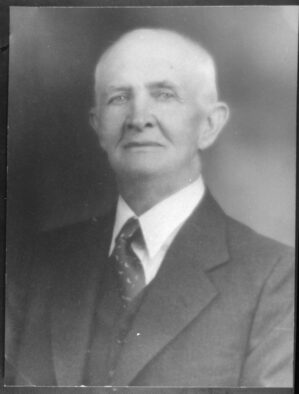
Dr. Tom M. Pinson
Tom M. Pinson, M.D., ca. 1936. Pinson was the first graduate of the newly-established Arkansas Industrial University Department of Medicine in 1880. Image courtesy of: UAMS Historical Research Center

At the opening ceremonies on October 7, 1879, Governor William Miller welcomed the new faculty, students, and public to the event. Six of the students of the inaugural class were in attendance that day, although 16 more entered the school during the next few weeks. All of the students were male and ranged in ages from 18 to 39, with varying experiences and education. A few women had applied to enter the medical school, but their applications were rejected simply because of their gender. 

Students attended classes five days a week for the next five months, the length of the first academic session. The first commencement exercises were held on March 2, 1880, which again featured remarks from Gov. Miller. Dr. Hooper conferred the M.D. degree on Dr. Tom M. Pinson, the lone graduate that year. Pinson’s diploma had not arrived in time so, instead, he was presented with Dr. Hooper’s diploma. 

The newly-minted Dr. Pinson, a native of El Dorado, had already served an apprenticeship and attended the University of Louisville Medical College, hence the reason he was able to graduate after only a semester at the AIU Department of Medicine. After his graduation, Pinson returned to El Dorado to practice medicine with his father, Dr. John Hendrick Pinson. In 1885, the younger Dr. Pinson moved to Cookville, Texas, where he operated his medical practice until 1889, when he returned to El Dorado. After the death of his wife in 1917, Dr. Pinson moved back to Texas, where he practiced medicine in Kerrville until his death in 1940. 

While the last 145 years have been filled with challenges, UAMS continues to improve the quality of education for those interested in medicine and the other health sciences, as well as improving overall access to health care for all Arkansans. The feelings and emotions of those first twenty-two medical students in 1879, are probably similar to what the students entering medical school for the 2024-2025 academic year are feeling—hope, excitement, and pride.  


Timothy G. Nutt is the Director of the UAMS Historical Research Center.

Filed Under: 10 – history of medicine

Conversation with Jessica L. Coker, M.D.

Dr. Coker is an Associate Professor in the Departments of Psychiatry and OB/GYN at UAMS. She has been awarded multiple grants focusing on substance use disorders during the perinatal period and became the medical director of the psychiatry inpatient units in 2023.  Dr. Coker was recently chosen by her colleagues to serve as medical Chief of Staff-elect. 

Interview and article by Brittany Tian and Claire Gist

Guest Editor: Arthur Jefferson

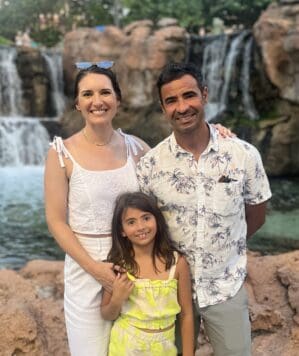
Jessica Coker and family posing outside

What brought you to medicine?

A memorable career day in sixth grade initially sparked my interest in medicine. A neonatologist gave a compelling presentation, and I decided then that I wanted to be a neonatologist or doctor. It took a lot of perseverance to make it through all the required schooling. I entered medical school with an interest in neonatology or pediatric medicine, but eventually found a home in psychiatry with a focus on women’s mental health.  

Were you drawn to psychiatry immediately? 

Not at all. I tell current med students that mental health was not talked about when I was in high school or college. Back then, mental health still carried a lot of stigma. At the start of med school, I wasn’t even sure what a psychiatry practice looked like. Med school required students to take “Brain and Behavior,” but mental health was not a central focus of that course.  

My love of children is what I think initially sparked my interest in psychiatry, and specifically women’s mental health. A frustrating part of pediatrics is that you often encounter children who don’t have safe families and family structures. I realized that parents need a lot of help, too. We know that parents’ mental health issues impact the way they raise their children. I found that the best way that I can help children in Arkansas is to help their moms be as happy, stable, and functional as they can be. Helping these women gives me joy and satisfaction with my work. 

What are your favorite parts of psychiatry?

Psychotherapy. I appreciate women’s openness to therapy and willingness to address uncomfortable or sensitive issues in treatment. As a mom, I also naturally connect with other moms and pregnant and post-partum women.  Many doctors hesitate to see these women, so I like helping a patient population that at times is avoided or overlooked. I enjoy helping moms figure out which treatment options effectively balance their mental health needs with the safety of their pregnancy and breastfeeding.  

Tell us about your research in psychiatry and postpartum patients. 

A lot of my research has focused on how substance use impacts maternal mortality, as this is a big issue in our country. Drug overdoses are the number one cause of why women die during the first year postpartum and suicide is the second.  If you look at why this is happening, it is mostly for psychiatric reasons. We are looking at how we can do a better job for these women so we can help prevent maternal deaths. In Arkansas, we don’t track the data of how many postpartum women in Arkansas have died from drug overdose or suicide. My resident, Dr. Wesley White, and I are working to get that data so we can see how many postpartum deaths are from drug overdose or suicide because they are not currently reported anywhere or provided in the legislative report. 

Do you think there’s a misconception that maternal mortality is only an obstetrics complication as opposed to a psychiatric one as well? 

I think there has always been a lot of heat on OB/GYNs for the maternal mortality issue for a variety of reasons. In my view, a root cause is a general lack of ownership among physicians for new moms. What I mean is, when a mom is pregnant, her obstetrician follows her. When baby is born, the pediatricians care for the baby, but nobody is focusing on the mom’s care after the birth. Moms naturally focus on their newborn in the first year postpartum while their own health needs take a backseat. A gap exists in our healthcare system between the moment of delivery and the connection to providers such as psychiatrists afterward. It’s a huge challenge because we want to connect with these women and encourage them to seek help, but it takes ground-level providers to identify and refer them to us.  

Are any systems in place between psychiatry and OB/GYN that help with referrals? 

Right now, we mostly see referrals from UAMS and UAMS-trained providers because they know about us, and they keep us busy without a need to advertise. Because we have a limited number of providers, our clinic is almost always full. We recently started a new fellowship to help us grow.

Are there any specific moments in your career that you carry with you or have shaped your career? 

Countless, but for me and many other doctors, one patient encounter can spark your passion. I reached a point as a medical student here at UAMS where I narrowed my likely career path to either pediatrics, internal medicine or psychiatry. During my psychiatry rotation, I helped treat a pregnant patient with substance use issues. We struggled to form an appropriate treatment program for her and considered reporting her to DHS, but ultimately discharged her. About nine months later during a family medicine rotation, I encountered this patient for the second time. She had overdosed and was intubated in the ICU. When I walked into her room, she recognized me from her stay at UAMS and I comforted her. After seeing her again, I knew psychiatry was the right fit for me and that I wanted to help pregnant women, including those with substance use disorders. I still get goosebumps when I think of this patient. It was a profoundly impactful moment. 

Do you have any words of wisdom for students when choosing a specialty?

I think one of the big mistakes people make is externalizing rather than internalizing their decision. Externalizing their decision is often deciding based on factors such as the patient population, the people they get to work with, and/or “liking” a certain pathophysiology. And while this is helpful, internalizing what about themselves would make them a good fit in their chosen field or what skills make them work well with a certain patient population can lead to more satisfaction in the long run. 

If someone is interested in psychiatry, I think they need to be very curious, empathetic and have emotional intelligence about how people are feeling. The ability to read people is critical in psychiatry. Other considerations are whether you enjoy listening to people and their stories, your willingness to spend a lot of time with patients, and whether you can treat patients in distress without feeling like you must fix it.

What general career advice do you have for students?

Being a physician has its ups and downs and with the incredible privilege of caring for patients, there is also the burden of responsibility and stress. My advice is that if you are not happy in your career, you have the power to change this to be happy with whatever work you’re doing. Often people will expect things around them to change, but I have found it easier and more fulfilling to make my own changes (even minor ones). The resources that come with being a physician can provide less burden on other parts of your life and there are many different types of jobs in various locations to explore. The extensive education you have received as a doctor can even help if you no longer want to see patients.  If I’m ever not happy with my work, I will change what I’m doing, and I hope that encourages others to as well. 

As the recent Chief of Staff Elect for UAMS, what does your role mean to you? 

I like to think of the position as being the voice of all providers who see patients at UAMS to the senior leadership. I would describe it more as an influencer role than a management role. I’ll also be part of the Hospital Medical Board, the Credentialing Committee, and other committees that govern how providers practice medicine. I’ll be working on things like hospital policies and procedures in collaboration with providers who are working hard to care for our patients.

What goals do you have in the near future? 

Some of my goals include continuing personal growth and a bigger focus on mentoring, which is one of my big passions. I like helping people grow and figure out what they love to do. 

With the PRI, our goals are to be more present in the community and find ways to better connect with people from across the state by continuing to expand our faculty and services provided.

One last question: What’s bringing you joy right now in your life?

Lots of things bring me joy, but my family and work bring me the most joy.  My eight-year-old, Evelyn, is the light of the life.  Work brings me joy because I genuinely love what I do.  Being a doctor becomes part of your identity, and I love being at UAMS.  Outside of work, I also love reading, exercising, long walks with my dog, and traveling.  

Filed Under: 10 – Conversations

Seizures of Nothing Much

Seizures of NothingMuch Damiani 9-2024Download

Luca M Damiani is an artist, author and university fellow, focusing his ongoing creative practice and research on neuroscience/health, technology and nature. Luca has a neurological disability and has had various visual art books and academic articles published, as well as being exhibited internationally. He has worked and collaborated with institutions such as BMJ Medical Humanities, BBC, Science Gallery, Computer Arts Society, Disney, Yale University, Jewish Book Council, The Times of Israel, TATE, V&A and more. www.lucadamiani-art.com.

Filed Under: 10 – 55-word-stories

  • «Previous Page
  • Page 1
  • Interim pages omitted …
  • Page 7
  • Page 8
  • Page 9
  • Page 10
  • Page 11
  • Interim pages omitted …
  • Page 30
  • Next Page»
University of Arkansas for Medical Sciences LogoUniversity of Arkansas for Medical SciencesUniversity of Arkansas for Medical Sciences
Mailing Address: 4301 West Markham Street, Little Rock, AR 72205
Phone: (501) 686-7000
  • Facebook
  • X
  • Instagram
  • YouTube
  • LinkedIn
  • Disclaimer
  • Terms of Use
  • Privacy Statement
  • Legal Notices

© 2026 University of Arkansas for Medical Sciences