• Skip to main content
  • Skip to main content
Choose which site to search.
University of Arkansas for Medical Sciences Logo University of Arkansas for Medical Sciences
Medicine and Meaning
  • UAMS Health
  • Jobs
  • Giving
  • About Us
    • Submission Guidelines
  • Issues
  • Fiction
  • Non-fiction
  • Poetry
  • Conversations
  • Images
  • 55-Word Stories
  • History of Medicine
  1. University of Arkansas for Medical Sciences
  2. Medicine and Meaning
  3. Author: Chris Lesher
  4. Page 17

Chris Lesher

Cleft

By Brook Scalzo

cleft

\ ˈkleft \

Noun

: a space or opening made by or as if by splitting

Adjective

: split, divided, or partially divided into two

The ultrasound technician said, “It’s going to be okay,” but I didn’t hear her. I could only hear the crinkling of the paper beneath me. Scott held my hand. I was bare, exposed, and vulnerable, as strangers stared at me, awaiting a response. I knew. I knew even before she told me. I saw it seconds before the laughter turned into an awkward silence while more practitioners entered the room. 

A tiny black line on the ultrasound. A cleft. 

I was twenty weeks pregnant and at my required anatomy scan, as I was of advanced maternal age and complications with pregnancy were more likely. I had gone into this appointment optimistic. And while the pregnancy had been difficult on me, genetic testing and other resources had led me to believe I was carrying a healthy baby. 

The specialist started rambling to fill the silence. “It really is so different these days. It’s just a quick surgery a few days after birth,” she said, her words trailing off. “It’s just cosmetic.” 

Lies. 

Scott smiled politely and nodded along in hopeful optimism. I knew better. I knew too much. At that moment, a decade of pediatric nursing experience and hundreds of textbook pages flooded my brain. Pain, hearing loss, syndromes, surgeries, orthodontics, reflux, aspiration, heart defects, self-esteem, developmental disabilities and feeding tubes all swam in my mind around one little word: cleft. 

I immediately decided to bypass the first stage of grief and went straight to anger. No denial for me; I was plagued with too much information. So, I decided to be appalled. I was appalled about the process, appalled at the lies, and appalled that I didn’t even get to pull my pants up before they lightheartedly delivered this earth-shattering news. 

Like a child with a broken toy, I was desolate, and I wanted my mom. I needed her to fix it. Later, she stood over me, 20 weeks pregnant crying in the bathtub, and matter-of-factly asked, “Brook, do you want this baby?”  

I paused longer than I am proud to admit. “Yes,” I said. 

“Okay,” she said, “then, enough of this.” 

I’m not sure what I felt as she helped me out of the tub.  

It’s of no real consequence. Because it wasn’t about me anymore.  

I was a mom. 

Statistics. They’re so boring when you are not one of them. Prevalence of cleft lip and palate is “common,” with more than 200,000 cases each year in the United States alone. So, we should all be aware, educated, and prepared, right? Not even close. I learned in an instant the line between nurse and mother should never need to be crossed, but there I was, research papers covering my bed and terrified to read them. Instead, I shuffled the pages together and shoved them in a drawer. 

I wasn’t ready. 

Arkansas Children’s Hospital, my home for 10 years as a nurse, now wore a new face. My phone rang early the next day. “I saw your name come across my desk and I wanted to reach out immediately to confirm an appointment with the Cleft Team,” said the voice on the other side. It was the Ear, Nose, and Throat specialty nurse who I had worked with on the COVID Hotline just a few months prior. I had an appointment with the Cleft Team at the hospital the very next day. The place where I had cared for countless patients was now ready to care for me. 

But I still wasn’t ready. 

The familiar halls that I could navigate in the dark suddenly felt like a maze. The familiar smiles were wasted. I wasn’t home anymore. I was lost, and it would take a team of doctors, nurses, friends, and my family to help me find my way back. Vulnerability. That was the difference. Stripped of my badge and scrubs; I was stripped of my superpowers. The role reversal from nurse to patient was debilitating. My nursing philosophy and passion for my career forever changed that day. The greatest honor I will ever know is to be trusted with someone’s child, and now I would now have to do what thousands of parents had done for me: trust them. 

My mom and I were led to a cramped room with a tiny table that held a thick binder. A welcoming, masked face greeted us and began to review the contents of the book. I do not remember a single word that was said. I sat staring at the corner while a friendly, young voice danced around my mother’s harsher, but polite tones. I missed it. I missed the whole thing. In retrospect, I should’ve waited or asked for a do-over. Because, for the life of me, I cannot even remember meeting one of the most influential men in my daughter’s young life, Dr. Adam Johnson. 

Afterward, depression hit me hard, just as the stages of grief predicted. I lived in a numb daze for weeks. Tears filled my eyes with even a glance at my bump. I felt guilt and shame. What had I done? How had I already messed this up? Bilateral cleft lip and palate, but what else?

Wait. Watch. Hope. Prepare. 

My closest friends, family and colleges were extremely supportive, and the condolences kept coming: 

“It’s amazing what they can do.” 

“It’s just one little surgery.”

“She won’t even remember.”

“God chose you, because he knew you could do it.”

All were well-intentioned, supportive, and all filled with love, but I just needed to someone to say, “This sucks.” I needed someone to share my pain, hurt and fear with me. My mom and sister began researching for the best plastic surgeons in the country while I laid in a dark room. They worked tirelessly to navigate and pave a way for me, but I just couldn’t bring myself to even look at a photo of a cleft baby. 

I. Just. Wasn’t. Ready.

There were two very long weeks until the next “big day”. The hospital’s specialists would perform a fetal echo to rule out any heart defects, which are common in babies with cleft. That word again: “common.”  Nothing about this experience felt common. I went to the appointment alone. Walking through the halls of Children’s without my cotton armor and checking-in at the Heart Station desk. It was the same desk at which I sat during nursing school, registering patients for the Cardiology Clinic. A familiar face checked me in with a worried look in her eyes, but she said nothing of my circumstances. We exchanged pleasantries and I took a seat. 

A new stage of grief began in that waiting room, bargaining. I begged and pleaded silently and fervently for this baby’s heart to be okay. “If this one thing can be okay,” I promised myself, “then I can handle everything else. I will stop moping and prepare to advocate for this child. Please, let it be okay.”  I watched mothers tend to their children in wheelchairs and on ventilators – something so common in my career – suddenly hitting too close to home. I was called back quickly by more familiar faces who shifted from smiles to serious expressions when they realized I was the patient. 

Once again, I sat in the dim, cold room and hiked up my dress as the ultrasound tech covered my legs with a sheet, keeping my stomach exposed. The test took eight minutes, but it could have just as easily been eight hours. She looked up from her screen. “Okay! That’s the fastest one I have ever done!” As she closed the door, I could hear her telling her collogues of her eight-minute speed-run as they cheered, while I sat in the dark, waiting. A few minutes later, the doctor entered with a grin on his face, turned on the light, and said “Her heart looks great.”  My negotiations had paid off! My prayers answered. This one shift, this one piece of news was enough to get me on to acceptance. 

I was ready.  

I started slowly. I opened the binder I had been given weeks ago. Business cards filled the first sheet. Adam Johnson, M.D., Ph.D., Assistant Professor at the University of Arkansas for Medical Sciences Department of Pediatrics and Sarah Valdez, BSN, RN, CPN, ENT, specialty nurse. They would become my guiding lights throughout this journey. Then came example before-and-after surgery photos, with babies as cute with clefts as they were when repaired. I smiled. 

The next section of the binder was from 2005. A big red flag. Was this the best information that just happened to be old or was there no current literature? It turns out there is plenty of slow-progressing research, but how would a parent without a master’s degree in nursing know how to find it or what it meant? The pages were filled with glossaries, diagrams, and medical terminology, showing the intricacies of the nose, mouth, and palate. It briefly covered feeding cleft-affected babies, the specialists that would make up our Cleft Team, surgery schedules, hearing and speech development, psychological impacts, and financial information. All information I would eventually study and memorize, but that day I only highlighted three sentences.

“Be strong, for it is from you that your child with draw strength.”

“You must instill self-esteem and project a bright future for your child.”

“Above all else, be kind and patient with yourself…You will begin to see beyond the cleft to the love, the sense of fun and mischief, the wonder and sensitivity, and all the traits that define the unique character of your child.”

I smiled again.

After a week or two I was able to memorize the binder of information. I pulled the stack of papers out of the drawer and began planning to meet my baby’s special needs head-on. 

Scott, her father, on the other hand, is not in the medical profession and it was very hard to find up-to-date literature that wasn’t quantitative medical research. If I could barely understand this information, how were other parents supposed to? Every hospital and every surgeon had a different philosophy and different rules. It was difficult to find a gold-standard of care, much less explain what the future held to my partner and family. 

So, I turned to social media. The Facebook Cleft Groups welcomed us with open arms. We learned more from other parents than we could ever learn from reading. I caution you, however, to find a Cleft Team that you trust and use social media only for guidance and support, not medical advice. The same goes for this book. Every cleft-affected child is different, and you will need to find what works for you and your team with evidence-based guidance, trial and error and advocacy. This book will not be filled with the strongest research and evidence-based practices. It is my experience as a nurse and cleft mom, but it cannot take the place of medical recommendations. Cleft parents become fierce advocates with strong opinions, ones that may very easily contrast with mine. I hope it serves as a guide, fills you with hope and shows you that you can feel your feelings. 

You are allowed to struggle and still be the strong parent your child needs. 

A dark introduction to what will hopefully be a positive and inspiring book? Maybe, but it needs to be written. You need to know that it is truly okay to not be okay. You need to grieve the loss of a baby that will not face these challenges. Be productive and aware throughout your grief though, that you are on a timeline now. Work hard to get to acceptance before you meet your baby, or, even better, do it sooner so you can enjoy your pregnancy. I couldn’t do this. Not completely. Not until I met Penny.  

I imagine you might also be in a stage of grief if you sought out this book. That is why I thought sharing my experiences could help you understand that you are not alone in yours. You will soon face harder challenges than you could have anticipated, but you will also have a beautiful, happy, playful, inquisitive baby who has a wide smile that will melt you. 

Knowing what I know now, what we have been through, I wouldn’t change a thing. I will teach her that being comfortable with yourself is the most attractive thing in the world and allow her to celebrate her scars, uniqueness, and victories, as well as her challenges and failures. I would take nothing from her, except the pain. 


Brook Scalzo, M.N.Sc., BFA, RN, CPN, is a Clinical Instructor in the College of Nursing. 

Filed Under: Mehta Awards 2023 - Winners

Remarks from Dr. Hester

Hello, I’m Micah Hester, Chair of the College of Medicine’s Department of Medical Humanities & Bioethics, and as my department coordinates the award process we are celebrating today, I have the honor of welcoming you all to the Third Annual Ceremony for the Drs. Paulette and Jay Mehta Awards in Creative Writing. We are very glad to see all you here, and others online, to celebrate our colleagues whose creative efforts are to be honored today.

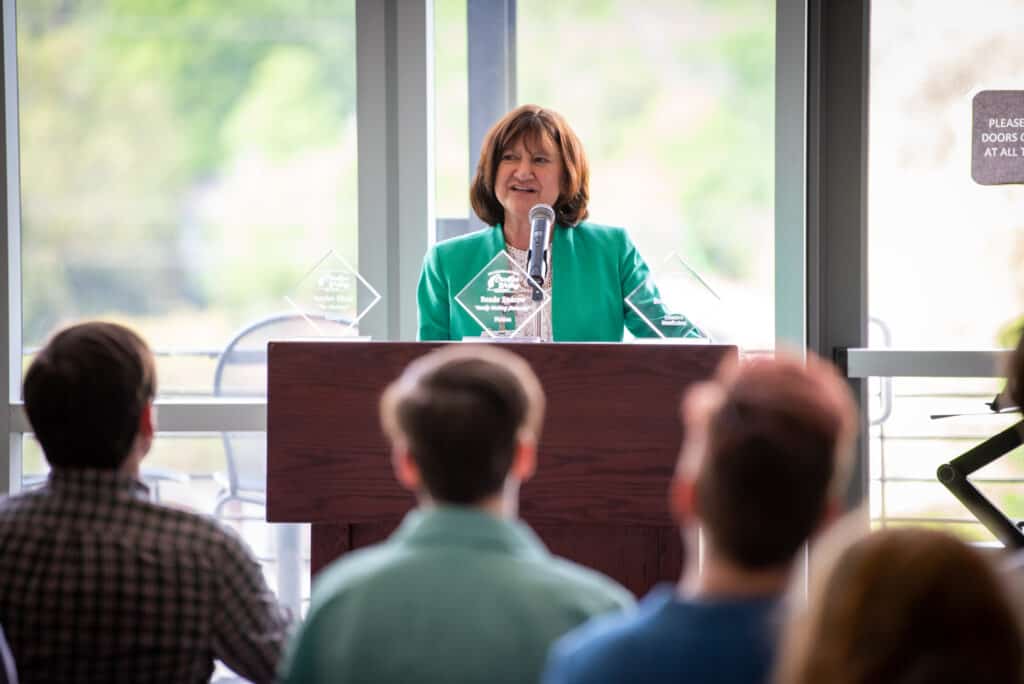
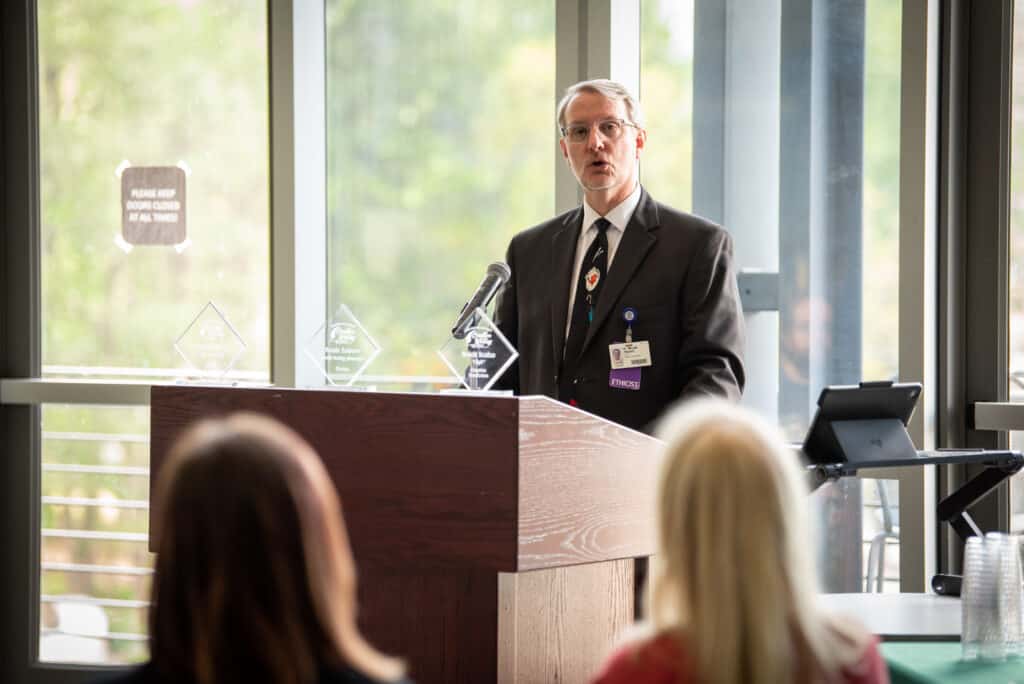
Dr. Hester addresses the audience

The Mehta Award arose from the generous endowment by the Drs. Mehta, both long-standing members of the UAMS faculty, Paulette in Hem/Onc and Jay in Cardiology. Both are outstanding clinicians who are moved to care deeply for their patients, in part because they care deeply about all aspects of the human condition. The Mehtas have long supported education, literature, creativity, and the community, and this award is but one example of how their interests have been manifested for the benefit of UAMS.

As with previous years, a call for entries went out during the fall of this academic year, and over 50 entries (divided into categories of poetry, creative non-fiction, and fiction) were submitted by a members of the UAMS community, members who represented several of our colleges, the med center, from students, staff, and faculty. A five-person review committee reviewed every entry. I would like to acknowledge their important efforts here: Holly Taylor in Quality Management, Lauren Bunch in the College of Medicine and the Department of Medical Humanities & Bioethics, and Angela Scott in the College of Medicine and the Department of Pediatrics. Further, we asked for expert help from outside UAMS, and Casey Kayser, associate professor at UA-Fayetteville’s English Department and Eliz Borne of the Central Arkansas Library System agreed to serve. Entries are submitted by email and then blinded for review. After several iterations of reading through the marvelous entries, the committee came to light upon one winner in each of the three literary categories. A little later we will have the good fortune of hearing experts from each of the winning entries, but right now, it is left for me to thank the many people who helped make this award possible from the review committee members to the Office of Institutional Advancement—and, of course, the Mehtas themselves.

The importance of creativity, critical thinking, crafting narratives, and artful approaches to health care should not be undervalued. Science makes no difference to the human race if it pays no attention to the human condition, and the humanities and arts are the disciplines in our academic and personal lives that provide the perspectives necessary to connect individuals with one another. To highlight the importance of the relationship of the humanities to our work at UAMS, we have invited our Provost, Stephanie Gardner, to say a few words. Dr. Gardner…

Thank, you Dr. Gardner. Again, these Awards are named for the two people who generously funded the endowment that will help fund these Awards now and into the future. I would, thus, like to invite Drs. Paulette & Jay Mehta to say a few words to us about their interests in providing this marvelous opportunity for UAMS.

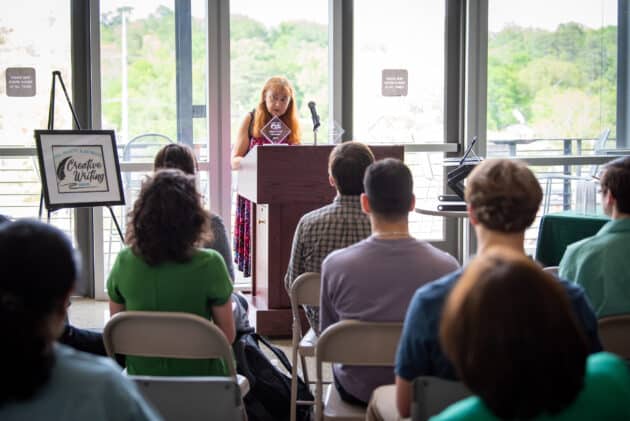
Thank you so much, Paulette and Jay. Before turning to our informal time to eat and talk with one another, we want to highlight the wonderful work of the Award winners. Top prizes were awarded in poetry, fiction, and creative nonfiction (and several other pieces were identified for honorable mention).  The awards include a trophy and cash prize, and the winners are with us today. I shall introduce them each, in turn, and they have agreed to say a few words and read excerpts from their work, and their entire pieces will soon be published in UAMS’s own online literary journal, Medicine & Meaning.

The top prize in poetry was awarded to Haylee Shull (from Northwest Arkansas) for her piece, “The Orchard.”  Haylee, congratulations.

Thank you. Top prize in fiction goes to, “Hardly Working (Remotely),” by Reade Zodrow, who is also from Northwest.  Reade, well done.

Finally, top prize in creative nonfiction is by Brook Scalzo in the College of Nursing for her work “Cleft.”  Brook, congratulations.

Thank you, and thank you all for coming to today’s ceremony. The Mehta Award will be given out each year, and there seems no lack of brilliant creative writing here at UAMS. So, please, look for the announcement next fall requesting entries. Now, please, enjoy the reception.


Micah Hester, Ph.D., is the chair of the Department of Medical Humanities and Bioethics in the College of Medicine at UAMS.

Filed Under: Mehta Awards 2023

Why Doctors and Other Healthcare Professionals Write

By Dr. Paulette Mehta

Transcript of speech presented at Mehta Creative Writing Awards Ceremony and Reception, April 2023. 

Thank you to Dr Stephanie Gardner for your kind words and Dr. Hester for organizing this celebration of creative writing. Thank you also to the winners of this award who will be honored and who will read part or all of their work today.

You, the winners of the award and others healthcare workers who write, follow a long and honorable tradition. In fact, some of the most famous writers of all time have been doctors perhaps because they (we) are present at the most intimate moments of life, from the moment of birth to the moment of death and everything in between. These distinguished writers include Anton Chekhov, the Russian physician who wrote some of the most famous short stories including Uncle Vanya; Sir Arthur Conan Doyle, the Scottish physician who wrote Sherlock Holmes; and Michael Creighton, who wrote Jurassic Park. They also include Oliver Sacks, the neurologist who wrote The Man Who Mistook His Wife for a Hat, Anthropologist on Mars, Awakenings, and many other amazing stories from his neurology practice. This list goes on and on to include some of the most illustrious authors.

Dr. Mehta addresses the audience at the event

Why do healthcare  professionals write when they already have so much to do? And what makes them so good at writing?

I believe there are as many reasons for doing so as there are healers who write. First, they write to make sense of and to honor their experiences. We are privy to the most intimate and the most catastrophic of a person’s life events and writing puts it in a perspective that enables us to cope with our inner reactions and emotions. It also allows us to share our experiences and to teach others about what we’re experiencing, whether others be our patients and families, our colleagues, our students, our friends.

Increasingly doctors and other healthcare workers are being trained to write their experiences as a way to build resilience and protect against burnout, stress, depression, and ultimately even deaths of desperation.

Storytelling and story listening are the essence of a healer’s life. Patients come to us with bodies to heal but also with stories to tell. Their stories need to be heard, understood, and addressed. Their stories extend  to their families, their community, and us. When we listen well; when we accept their story with honor, humility, and humanity; and when we help to resolve their stories – our patients do better.

This is what I believe. This is what Jay believes.

Because we believe this so strongly, we developed this Mehta Creative Writing Award which will continue indefinitely here at UAMS as one aspect of a growing arts-in-medicine cultural renaissance. 

We are grateful for the leaders at UAMS including Dr. Gardner and others who have made this program possible. We are grateful to everyone who submitted stories for this competition. And we congratulate the winners of the award. 

Today we will hear portions of their stories and take time to listen and honor them.  

But that’s not all.  

Although we will only hear portions of most of their stories today, we will publish all of their stories – in their entirety — in the summer edition of Medicine and Meaning, the literary journal of the University of Arkansas for Medical Sciences. Make sure to read these stories when they come out very soon. 

In the meantime, let’s listen to our winners’ stories.


Paulette Mehta, M.D., MPH, is professor emerita in internal medicine and hematology oncology at the University of Arkansas for Medical Sciences. She is editor in chief of Medicine and Meaning and has published many poems and short stories relating to her practice.

Filed Under: Mehta Awards 2023

Hardly Working (Remotely)

By Reade Zodrow

Fiction

Paul Miller was in his robe lying on the couch as his roommate was leaving for work.

“It’s weird seeing you up this early,” his roommate said.

“I kept staying up later and later until now I wake up at 6am and go to bed around 11 p.m. like a normal person.” 

“Big plans today?”

“The usual, Netflix and a nap,” Paul said.

“You know, eventually you’re going to get caught. What if Meta sues you for everything they paid you?”

“It’s been almost two years. Nothing could possibly happen.”

“I hope that’s true. I can’t pay rent on my own,” his roommate said and left.

In June 2020, Paul was hired at Meta to work remotely in their website programming department. The company was supposed to send a computer for him to use. After a few days, when it hadn’t arrived, Paul emailed his boss and received an out of office message. Over the next week, Paul kept sending emails only to get out of office messages with no return date. After two weeks, Paul received his first paycheck. He emailed HR and they said they would get back to him, but never did. He followed up again with HR only to receive another out of office message. It seemed Paul had been lost in the sea of empty positions brought about by the Great Resignation. Meta was full of senior leaders retiring early to lie on the beach rather than risk dying of Covid.

When a month passed by, Paul decided he’d wait for someone in the company to contact him. After six months of paychecks coming in without a word from HR or his department, he felt complacent, no longer worried he’d get caught. At first, and for a long time, Paul felt guilty about taking a paycheck he hadn’t earned. Then he began justifying to himself that it was better for him to stay home to avoid spreading Covid. When the vaccines rolled out, he came up with new justifications – the Cambridge Analytica scandal, Facebook profiting off user data, and social media creating inferiority complexes in users who cannot live up to the lavish lifestyles displayed by the influencers they follow.

After falling asleep on the couch, Paul woke up and decided to grab a snack. As he opened the fridge, his phone rang. He quickly reached into his pocket to silence it but accidentally answered the phone. He heard a muffled voice saying, “Hello? Hello?”

Paul put the phone to his ear. “Hi, yes, this is Paul Miller.”

“Paul, so wonderful to talk to you. This is Veronica from Meta’s Chicago Office. I looked through the directory and saw your name listed in the Programming Department.”

“Who are you?” 

“Veronica, from the app team. I work at Meta from a satellite office. I have meetings at the main office tomorrow and was hoping you’d show me around. I’m afraid of getting lost in that gigantic building. We can share what we’ve both been working on.”

Paul’s heart nearly stopped. Someone at Meta had called him after all this time. “Ah, yes, that would be great. I-I-I’d be happy to meet you.”

“Wonderful. I’ll find you at the main entrance at 8 a.m.?”

“I’ll be there,” he said and hung up in a daze.

He thought about calling her back and saying he had a surgery scheduled he forgot about, but what if she started asking around about him? It would be better to be at work and appear normal. She wanted him to show her around, but for his interview he had gone straight from the lobby to a conference room on the fourth floor. He wasn’t sure if that’s where his department was and he definitely had no clue where his office was located, if there even was one still reserved for him. For the next several hours, he panicked about being caught.

When his roommate returned from work, Paul told him about the phone call. “What should I do? Assume a new identity and flee the country?”

“In this day and age, thanks to Big Tech, there’s no way of dropping off the radar. Everywhere we go, everything we do is tracked and recorded. Why don’t you put in your notice with HR and quit?”

“What happens if they try to notify my boss or look up my performance evaluations to see if I can be rehired. They could check the keycard system and discover I never entered the building.”

For the rest of the night, Paul watched videos on Facebook and Instagram posted by workers to map out the building. The first floor had the cafeteria, gym, and a relaxation corner with massage chairs. The second floor and third floors were filled with a mix of cubicles, open workspaces, and single offices. The fourth was reserved for the C-suite. He noted where the conference rooms were located, created a diagram of the maze of cubicles on the second floor, and matched as many names to faces as he could. There was a message from a few days ago wishing Larry in accounting a restful vacation this week. Paul printed off a piece of paper with his own name on it to tape in front of Larry’s nameplate.

When the sun rose, Paul had only dozed off for a couple hours, yet he felt wired from adrenaline. He quickly shaved and showered. He put on the same suit he’d worn to his interview. He wanted to go unnoticed, which he didn’t expect to be too hard. He had always been average. Now his averageness would become useful. He had a common name- Paul Miller- which appeared right in the middle of lists, easily skimmed over. In high school, he maintained a 3.0 GPA. He was practically invisible, which is one of the reasons he thought he’d gone unnoticed by Meta for so long. He should have been a bank robber as no one would pick him out of a lineup. He dug his badge out from the junk drawer and drove to work for the first time in two years since being hired.

He arrived early and waited in the lobby. He brought a mask but no one else was wearing one. He didn’t want to stick out so he shoved it in his pocket. He tried not to make eye contact with the employees passing through security. A woman stepped through the front door who looked around the lobby. She was obviously new. He approached her.

“Veronica?” he asked.

“Yes,” she said and held out her hand. 

“I’m Paul. Great to meet you. Please go ahead,” he said and gestured to the security line. He wanted her to go first so she would have already passed through if a guard asked if this was his first day. She was screened, had her badge scanned, and was allowed through. Paul approached the metal detector, holding his keys and phone above his head. He stepped through. The guard scanned the badge hanging from Paul’s neck. The scanner blinked red. The guard scanned another time. Red again. Veronica looked back from the lobby with a look of concern on her face.

“It always bugs out,” Paul told the guard. “My manager ordered me a new one.”

“Either broken or has never been activated. You’ll need to report to the Security Office later today,” the guard said and waved him through the gate.

“What was that?” Veronica asked.

“No problem at all, just chatting with the guard,” Paul smiled. Thinking on the spot was not a strong suit for him. “What would you like to see first? The relaxation corner?” 

“I’d like to go to my office to drop off my purse and computer.”

“Of course,” Paul said. “We have guest offices on the third floor. That’s where I’m located as well.”

As they got off the elevator, Paul visualized the layout of the floor. He turned right, past the whiteboard, and came to a series of cubicles. He spotted the Office Coordinator from one of the Facebook postings, a blond woman in her mid-thirties.

“Hi Jennie,” he said. 

She looked confused but luckily didn’t stop. They came to the row of guest offices.

“I’m going to turn my light on in my office so people know I’m here and then I’ll be right back,” Paul said. 

He practically sprinted to Larry’s office. He pulled out the nametag from his coat pocket and taped it in front of Larry’s name. He pressed down on the door handle. Locked! Why hadn’t he thought of that? Of course the door would be locked. He needed to find someone to open it. He ran around the floor until he found a janitor mopping up a spill in the breakroom. 

“Hey, I locked my keys in my office. Could you open it for me?”

The janitor side-eyed him while putting up wet floor signs. He followed Paul back to the office.

“This is your office? I thought Larry was here?” 

Paul held up his badge next to the nametag that read Paul Miller. 

The janitor sighed, unlocked the door, and left. 

Paul turned on the light. There were family pictures everywhere and drawings from Larry’s kids. Paul began throwing pictures in the desk drawer. Right when he was about to pull the drawings from the corkboard he heard a knock. He spun around to see Veronica.

“I’m all settled in,” she said. She immediately spotted the pictures. “Oh wow, you have kids. What are their names?”

Paul squinted at the drawings. The names were hard to read as they had been written by toddlers. “J-am-es,” he sounded out, “and Sar-ah.”

“Mine are Matthew and Andrew. They’re going into fifth and third grade. They grow up so fast.”

“So true,” Paul said and sat in his chair. 

“Is that you and your wife?” 

Paul looked to where she was looking. Underneath the computer monitor was a family portrait. He was horrified, but he picked it up to show it to her, keeping his thumb over Larry’s face. 

“Wow, she’s beautiful. And you’ve lost a lot of weight, if you don’t mind me saying.”

“Oh not at all.”

“I’ve struggled over the years with my weight as well. What diet do you use?”

His mind blanked. “The liquid fish diet,” he said, mixing up liquid and pescatarian diets. 

Before Veronica could reply, down the hall, someone shouted, “Larry’s back!” The person strolled into view – Jennie from earlier. “You’re not Larry,” she said. 

“My office is being renovated. HR said I could use this one for the time being.”  

“They didn’t tell me, as usual, but welcome to our humble floor,” Jennie said and left.

Paul made up an excuse for Veronica. “Usually I’m on the second floor, but maintenance is rewiring the cables in my office, so if some people on this floor don’t seem to recognize me, that’s why.”

“Hopefully it gets finished soon. Could you show me upstairs to the executive conference room? I’m meeting with the big boss himself, Mr. Zuckerburg. I’m so nervous. He wants me to debrief him on the project my team wrapped up.”

“Do you mean Mark Zuckerburg, as in the Mark Zuckerburg who founded the company?”

“Who else silly? C’mon, let’s get moving. I don’t want to be late.”Paul escorted her to the executive floor. As soon as they turned the corner off the stairwell, they ran into a fishbowl conference room where they saw the man himself, Mark Zuckerburg. He looked much smaller than Paul expected, though he did have his signature sandy blonde, curly hair. 

“Come in, say hi,” Veronica said.

“I really shouldn’t, I have work to catch up on,” Paul said, but before he could turn around, Veronica had already slid open the glass door and was leading him inside.

She walked to the head of the table. “Mr. Zuckerburg, a pleasure to meet you. I’m Veronica Lancaster and this is one of my team’s colleagues, Paul Miller with Programming.”

“A pleasure to meet you,” Paul said, “but I wasn’t scheduled to be part of this meeting. I’ll get out of your hair.”

“Nonsense,” Mark said, “it’s great to meet you both. I love hearing perspectives from team members, especially new ones I’ve never met before. Have a seat.” He gestured towards two empty chairs. 

Paul took a seat, not knowing what else to do. He wanted to jump out of his skin. Mark would surely know what projects a programmer was supposed to be working on. What if he asked Paul about them? 

After a couple minutes of small talk, two Vice Presidents entered the room, Michelle with Marketing and Jeff with Communications. They sat across from Paul and Veronica. 

“Now that everyone is here, we can begin,” Mark started. “Veronica, we’re looking forward to hearing what you’ve been up to.”

She launched into her pitch. “My team has been working with R&D to create an app that will allow users to track their health and post-health accomplishments. We call the new app Healthbook. With enough user data- family history and medical records- this app can predict health emergencies by monitoring health in real time. We collect how much users are actually exercising, what they’re eating, and how their vital signs are doing. Each person is assigned a risk factor. As we roll the app out, we could partner with health insurers, employers, and hospitals. People could earn insurance discounts for using our service. Most importantly, lives could be saved. We expect engagement to increase dramatically after launching when people see results. This will allow Meta to enter the healthcare sector.”

It was difficult to gauge Mark’s reaction. “Any concerns with the project?” he asked Veronica.

“Unfortunately, yes. For users to get the best experience from the app, they will need to give us sensitive, personal data- medical history, location tracking, and ancestry records. This is especially a problem with Europe’s privacy laws.”

Mark turned to Paul. “New guy, what do you think about this?”

“It sounds good to me,” Paul said flatly.

Mark wasn’t satisfied. “You’re a programmer with the company and you don’t have any feedback?”

Paul knew he needed to say something or he’d be fired from the job he’d never shown up to. Fortunately for him, there was no bigger fan of Meta and its products. “Well, sir, if I may say, there has been an uproar about Meta’s involvement in the 2016 election and the perceived problem that Facebook has been invading privacy. People may feel uncomfortable handing over their health data to us. To rebuild trust, we should give the option for users to opt out of our data sharing in the new health app. Most people would ignore the option, but everyone would see we’re trying to do the right thing. For the app, we could have the data stored on the user’s local device so it is not necessarily shared with us. Again, that could be an option but the default would be for Meta servers to store the data.”

“What do you think?” Mark asked the Vice Presidents. 

“Our partners might be disappointed, we all make money from data sharing, but it’s doable,” Michelle said. 

“We could adjust our TOS,” Jeff said.

Mark turned to Veronica. “I was hesitant at first, but Paul convinced me. Veronica, Meta will go forward with your app, Healthbook.”

“Oh my gosh, I’m so honored,” Veronica said, nearly crying. “Our team worked so hard and it paid off.”

“Say, what are you two doing tonight?” Mark asked both of them.

“Nothing besides driving home,” Veronica said.

“I might have company over – my great uncle, Parthulsius,” Paul said, unable to come up with a real name.

“Stay in a hotel tonight,” Mark said to Veronica, “and Paul, cancel those plans with your great uncle. Tonight you’re both playing on the Meta softball team. We need two outfielders to sub in for one worker who is on maternity leave and another who is just plain terrible. I’m tired of losing.”

“My knee locks up. Old hopscotch injury from when I was a kid,” Paul said.

“You can still bat,” Mark said. “Now, if you’ll excuse me, I have a Congressman’s Chief of Staff to meet with about some pesky regulations.” He got up and left.  

Michelle and Jeff gave their congratulations as they walked Paul and Veronica back to the stairs. 

“Whelp, better get back to my office,” Paul said. He planned to shut the door and turn off the light while he thought up an excuse to skip the softball game.

“But the staff meeting is about to start,” Veronica said. “It’s down in the auditorium on the first floor. I’ve never been able to attend one in person, only remotely.”

“Unfortunately I have a project to work on,” Paul said. 

“But Meta doesn’t allow work during the staff meeting. Your team could get in trouble.”

“You’re right, I’ll tell – uh, Anthony – we’ll have to reschedule.”

Paul went with Veronica down to the auditorium. A few hundred workers had already arrived. On the stage was a podium with a table next to it with three chairs.

Veronica dragged Paul to the front row and began introducing herself to those around her. Every time she mentioned Paul was showing her around he winced. Yet another person who might wonder who he was. 

At 10 a.m., the senior leaders walked out, Michelle from Marketing, Jeff from Communications, and to everyone’s surprise, Mark. The leaders sat behind the table while Jennie took the podium to start the meeting.

“Good morning, everyone. So nice to see you all this morning.” Jennie went on to make the company announcements – a new carrier for the dental plan, an additional espresso machine in the open-air kitchen, and family members could use the company gym for free. “Now the moment you’ve all been waiting for, the Employee of the Month award.”

Michelle took the podium as the crowd applauded. “I’m honored to present this award to an employee who went above and beyond. She led her team to success and showed initiative on a project we expect to be the future of Meta. That employee is Veronica Lancaster!”

Of course, Paul thought. Everyone clapped as Veronica went to the stage. Jennie handed her a plaque and a pass for the parking spot by the front entrance.

Veronica began her acceptance speech. “Thank you all. And today, I would like to thank someone for helping me out.” Paul slunk down in his chair. “Someone has volunteered their time for me today. As a thank you, and since I’m from out of town, I would like to give my parking pass to Paul Miller. Paul, please stand up.” 

Paul’s face went red as he half-waved to the crowd. Now everyone knew his face and would expect to see his car parked out front. Hopefully his face was as forgettable as he thought.

When the meeting ended, Veronica leaned over in her seat. “Want to go to lunch? I’m buying. I hear there’s an actual chef in the cafeteria. Today he’s making lemon salmon. That should fit both of our diets. Since you’re on the liquid fish diet, you can mash yours up if you need to.”

“I would love to, but I need to run home at lunch to-,” he tried thinking of an excuse, “-water my plants.”

“You don’t just water them when you get home or before you go to work?”

“It’s a new rose bush. It needs water three times a day.”

“You’re watering it too much. I’ve had rose bushes before. With the amount of rain we’ve had, it shouldn’t need extra water.”

“Hmm, I may need to go home to dry out the plants then.”

“If you’re worried about owing me money, forget it. My treat.”

Paul had no other choice.

The cafeteria was packed. It was easy to find right off the lobby. Paul and Veronica got in line and picked up trays. They each ordered the lemon salmon and started searching for an empty table. Jennie was at one by herself and waved them over.

“You can sit with me,” she offered. “The group I usually eat with are out of the office today.”

“Thanks,” Paul said and set his tray down.

“I’m going to grab a glass of water,” Veronica said, leaving Paul alone with Jennie.

“So Paul, where are you visiting us from again?” 

“The second floor.” He began stuffing the fish into his mouth to avoid having to liquefy it.

“Huh, I thought you were from out of town. I go downstairs all the time and have never seen you.” 

“I usually work from home since it’s too loud by my office.”

“Where’s your office located? I might be able to put in a good word and get you a better one.”

Paul visualized the map he created. “By the vending machines.”

“The vending machines were taken out a few months ago,” Jennie said, surprised. “You really must work from home a lot. Lucky duck!” 

Veronica returned with her water and threw a stack of napkins on the table for everyone. 

“Did I miss anything?” she asked.

“Paul, here gets to work from home most of the time. He didn’t realize the vending machines by his office on the second floor were gone.” 

Veronica looked puzzled. “But your office is on the third floor?”

“I get moved around a lot,” Paul said. “I go where I’m told.”

After finishing their lunch, Paul and Veronica headed towards their offices. As they got onto the elevator, a man in his fifties wearing a pinstriped suit got on with them. He looked familiar to Paul.

“Gerald, isn’t it?” Veronica asked him. “I’m from the Chicago Office. My name’s Veronica Lancaster. You’re the Director of Programming, correct?” 

“Yes,” Gerald said and held out his hand.

Upon hearing Gerald’s name, Paul remembered the man. He was Paul’s boss who he interviewed with in-person. Paul instinctively put his hand to his forehead to try to obscure his face.

“What’s your name?” Gerald asked Paul.

“Tim,” Paul said, not wanting to jog his boss’ memory.

“Tim?” Veronica asked.

“That’s my nickname,” Paul said. “It’s what my friends call me.”

“That’s a weird nickname,” Veronica said. “I’m sorry I’ve been calling you the wrong name this entire time. You should have told me.” 

The elevator came to a stop at the second floor and Gerald got off. “It was good to meet both of you,” he said as the doors closed.

As the elevator stopped at the third floor, Veronica said, “It was weird Gerald didn’t know you. Isn’t he your supervisor?”

Paul had to think quickly. “Please keep this between us, but Gerald has early onset Alzheimer’s and he was involved in a car crash. He’s come a long way but his memory isn’t what it used to be.”

“That’s terrible,” Veronica said. “He’s so young.” They stopped in front of Veronica’s office. “I have a lot of work to catch up on, so you may not see me for the rest of the day.” 

“Oh thank God,” Paul blurted out.

“Excuse me?” 

“Oh, I meant that I’m glad you’re busy. I hate when I don’t have anything to work on.”

“I see,” she said.

“Let me know if you need me to show you around anymore,” Paul said and quickly left. Hopefully Veronica wasn’t too suspicious.

Back in his fake office, he got a text from an unknown number. The message read, “Hi, this is Ashley Henderson, Mark’s assistant. What is your jersey size?” 

Mark was actually going to make him play softball. “Medium,” Paul replied.

The assistant dropped the location for the softball game that was starting at 6 p.m. “Let’s win this!” she wrote.

Paul nearly threw his phone across the room. The day had been a complete disaster. His plan was to lay low, show Veronica to her office and then hide out, yet he had met Mark Zuckerburg, been given an Employee of the Month parking spot, ran into his boss, and now had to play softball with the company team. It was only a matter of time before someone found out. What if Gerald wondered who the guy he met on the elevator was? What if Jennie tried visiting him next week? What if Veronica started asking questions about him?

At the end of the day, Paul pulled up directions to the softball stadium. As he went to the elevator, he ran into Veronica.

“Hey,” she said coldly.

“Are you going to the game?” Paul asked cheerfully.

“Ashely sent an invite. I guess I am.”

They stood in silence during the elevator ride. Once the doors opened, Paul said, “I’ll see you over there,” and darted off. Something was definitely off with Veronica.

At the softball field, Mark’s assistant met Paul at the entrance and handed him a jersey. He changed and went onto the field to warm up with his other team members. A few minutes before the game started, Mark arrived. Everyone in the stadium quieted down as he jogged to the dugout and swung a bat back and forth.

At 6 p.m., the umpire blew his whistle and the game started. Paul was up second to bat. He didn’t want to play terribly and draw attention, but he also didn’t want to be too good and be asked back. He needed to run a couple bases before getting out.

The first person at bat struck out once before hitting a fly ball that was easily caught by the first baseman. It was Paul’s turn. He went up to bat. The pitcher wound up his arm and let the ball fly. Paul swung with half his strength and hit the ball dead on- it soared through the air, into the evening sky, and over the fence.

“Home run!” Mark yelled. 

Paul looked stupefied. He had accidentally hit a home run. 

“Don’t just stand there, run!” Mark yelled at him.

Paul made his lap around the bases. As he headed back to the dugout, Veronica pulled him aside.

“I know your secret,” she said.

Paul pretended to be oblivious. “My secret?”

“I spoke to Gerald. I stupidly told him that my father was in a bad car wreck a month ago and that I was sorry he’d gotten into one. He told me he was never in a wreck. Then I asked about you. He said he’d never met you, even though he’s your boss. Then it all clicked for me- being stopped by the security guard in the morning, not having an office, trying to get away from me as fast as possible. You don’t work for Meta, do you?”

“I technically do, just no one else knows I do. The company sends me a paycheck each month.” Paul thought of his rationalizations. “Look, Meta is an evil corporation. They interfered in the election, they harvest data, and they create inferiority complexes in people. You can’t steal from a thief.”

“Meta isn’t completely corrupt, we do good things, provide people with community and entertainment. Good people work for the company. After the game, you either confess or I tell Mark.”

Over the course of the next two hours, without even trying, Paul hit five more home runs, caught eight fly balls, and tagged out four players. He was the best player on the team by far. He finally found something he wasn’t average at.

After the game ended, with Meta winning 14-6, Paul saw Veronica corner Mark by the bleachers. Paul decided he was done with hiding and would accept the consequences for his actions. He jogged up to them.

“Is it true?” Mark asked him.

“Yes,” Paul said and hung his head.

“Are you going to fire him?” Veronica asked.

Mark thought for a minute. “I have very few joys in my life- softball is one. Paul, you’re my MVP. As long as you keep playing we’re square.”

Both Paul and Veronica were equally surprised.

“Square?” Paul stammered.

“You will show up to the office Monday morning. My assistant will find you a place to work. You will not miss a single game, even the ones out of town, unless you want me to get my team of lawyers involved. You won’t have a penny to your name for the rest of your life. And don’t even think about leaving the company. Understood?” Paul nodded as Mark turned towards a private helicopter landing in the outfield. 

“I’m never going to be allowed to leave,” Paul lamented.

“I guess you were right, Meta is corrupt.”


Reade Zodrow has been with UAMS for nine years and lives in Northwest Arkansas with his wife and Chow Chow dog.
Filed Under: Mehta Awards 2023 - Winners

Why Incorporating the Arts in Health Professions Education is More Important Than Ever

By Stephanie Gardner, Pharm.D., Ed.D.
Provost and Chief Strategy Officer

Quite simply, I love to read.

I read for pleasure and to learn.

I also enjoy talking about what I read and currently belong to two book clubs — including the Provost’s Book Club that I started seven years ago. That book club promotes campus collegiality as we discuss books on topics related to academic medicine and higher education — from personal and professional development, to clinical care, education and research. 

Dr. Gardner speaks from a podium at the event

Paulette and Jay Mehta have been avid participants in the Provost’s Book Club right from the start. I know we share a love of reading as well as of the arts. As a member of Team UAMS, I am grateful they have channeled their passions for the arts into the Medicine and Meaning UAMS literary journal, along with support to establish the Mehta Awards in Creative Writing on campus. 

These awards speak to a belief we share: that creativity and the arts do not only nourish our spirit and entertain us. The arts also cultivate lifelong learning; and they can guide us to becoming better health care providers, teachers and scientists.

As we find more ways to integrate the arts into health professions education — whether it’s the written word, visual art or music — I believe we are equipping our learners with a powerful tool to help them form deeper connections with patients, maintain joy in medicine and develop empathy and resiliency. 

The American Association of Medical Colleges (AAMC) reinforced this idea in a 2020 report calling for more arts and humanities curriculum in medicine and medical education. The report noted that so far the 21st century has seen significant technological advancement in health care delivery, marked health disparities, civil unrest, unprecedented rates of physician burnout and suicide, and public health crises from the opioid epidemic to the COVID-19 pandemic. 

Knowledge of and an affinity for the arts helps a health professional interweave their scientific training with traits like emotional intelligence, critical thinking skills, an understanding of social context, and improved wellbeing. This will better prepare them to meet these challenges as effective contributors to optimal patient outcomes and healthier communities.

Last year the Provost’s Book Club read In Shock, by Dr. Rana Awdish, a physician who suffered a catastrophic medical emergency seven months into her first pregnancy that resulted in the death of her unborn child and left her fighting for her own life. She survived, but was moved to share her journey due to multiple episodes during her treatment and subsequent return to work where she experienced a shocking callousness or lack of empathy by health providers or colleagues. 

She believes it is important for a health provider to acknowledge and empathize with a patient’s pain and experience. She contends that it is possible to do without depleting yourself or clouding professional judgment. 

She writes: “When we allow our human channels to remain open, we better understand emotion because we’ve bravely confronted our own. Only then we can see where we are needed and the spaces we must move to fill. Only then can we help each other pass through the storm intact. Only then can we understand the value of our presence in the storm.”

When we encourage our learners to read a story like this, we introduce them to examples of the moral choices and dilemmas they may encounter as clinicians in a way that strengthens empathy and allows reflection and productive discussion. We also are encouraging them to share their own ideas and experiences, much like Dr. Awdish did, so that we all may benefit from their creativity and perspective.

Using the arts as a medium for growth, emotion and the exchange of ideas goes right to the heart of humanity and of the spirit of the Mehta awards. 


Stephanie Gardner, Pharm.D., Ed.D., is the Senior Vice Chancellor for Academic Affairs, Provost, and Chief Strategy Officer at UAMS.

Filed Under: Mehta Awards 2023

Conversation with Hanna K. Jensen, M.D., Ph.D.

This edition of Medicine & Meaning brings a very special Conversation piece by Hanna K. Jensen, M.D., Ph.D.

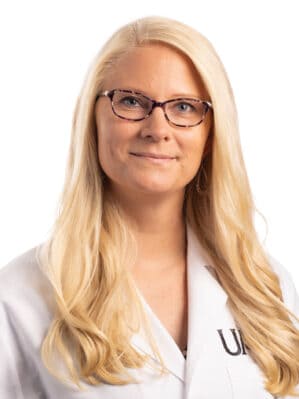
Hanna Jensen, M.D., Ph.D.

Dr. Jensen is an Assistant Professor in the Division of Trauma and Acute Care Surgery, in the Department of Surgery, based at the UAMS Northwest Regional Campus in Fayetteville. She is the course director for the Cardiovascular Module at the College of Medicine, and coordinates research in the departments of Surgery, Radiology, and the Northwest Regional Program. She earned her medical degree in 2007 and doctorate in 2008 from the University of Oulu in her native Finland. When approached by the Conversations Team for an interview regarding herself, Dr. Jensen prepared this piece, which we hope you will enjoy.

M.D. or not M.D. – That is the Question

“Is there a doctor on the plane?” The crackling intercom pulled me out from a fitful sleep somewhere above Bolivia around 2 a.m. It took a long time to get my bearings – I had traveled from Finland through Copenhagen and Atlanta to board a plane towards Buenos Aires for the World Society of Cardiothoracic Surgeons’ annual meeting. Back then, in 2009, I had recently graduated an eight-year program with my M.D./Ph.D. and was working towards my general surgical residency credits in a small district hospital in Northern Finland.  

“If there is a doctor on the plane, please make your way towards the bathrooms in the back of the aircraft.” I kicked off my tangled blankets, wiped the drool off my cheek, and climbed over my fiancé to the aisle, gaining more purpose with each step as I strode towards the back of the plane. Most people were asleep, the lights were dim, and only the occasional movie-watcher turned their head toward me as I closed the length of the aircraft, shaking tiredness from my sleepy and jet-lagged brain, running through possible scenarios and trying to guess what was waiting for me by the bathrooms. 

I felt pretty confident. I had been taking call in general practice since my fourth year of medical school (in Finland med school lasts for seven years but you are able to practice supervised after the fourth year), and I had been the first call for surgery for almost a year at that point in a remote hospital that served a sparsely inhabited but massive area. I had treated chest pain, infections, skiing accidents, allergic reactions, and the breadth and variety of issues encountered at ERs. I was used to limited resources and trouble-shooting until a patient could get to a more well-equipped healthcare unit. During my rotations, I slept with an on-call phone for obstetrics, and delivered my fair share of babies, so I felt decent about my chances of being able to at least somewhat manage what was needed at the back of the plane.

“How can I help?” I arrived at the cluster of flight attendants and crew members gathered over a young man lying down in front of the bathrooms. I was met with silence and disbelieving stares. “You’re a doctor?” one of the flight attendants questioned. I stand proudly at 5’2”, and I have no doubt that the 28 hours of travel under my belt did not render me the most credible-looking member of the physician community, so I was not entirely surprised by the question. “Yes, I am, I’m a surgical resident in Finland,” I replied, subconsciously trying to tighten my ponytail to look more respectable. “What’s the issue?” I asked.  

The flight attendant stepped towards me, blocking my view of the patient and asked, “Do you have a copy of your license?” I was confused. I had never carried any type of documentation about my profession, and I thought it was a silly thing to ask when I was offering to help. “No, I don’t, I’m sorry,” I said. She continued to ask me whether I practiced in the United States, which I didn’t. She looked at me resignedly and said “I’m going to ask you to go sit back down, Miss.” I can’t lie, after earning my medical degree and my doctorate in cardiothoracic surgery, that “Miss” hurt much more than it probably should have. At this point, a middle-aged American man had arrived from the other side of the plane, and he had apparently convinced the cluster of existing helpers of his medical credentials as he bent over the young man. It looked like the patient was stirring after most likely a regular syncope, so I turned around and walked back to my seat. I probably imagined it, but I felt hot burning stares of other passengers on my back as I made my way back. I felt like a fake, and as a young professional so often riddled with impostor-syndrome, this was a hard one to swallow.

While this US-based airline was simply following their protocol, it was my first experience as “not-quite-a-doctor,” which became my permanent state as we immigrated to the US in 2014 through my husband’s employment. We landed on the shores of the home of the brave with a one-year-old and a three-year-old, during a time in my life where I survived on less sleep than I ever thought possible. I was coming off a two-year postdoc in the cardiac unit of a prestigious children’s hospital in London, UK, and while I dreamt of returning to clinic almost incessantly, I also occasionally, after sleepless nights, sprayed hairspray under my arms thinking it was deodorant. I vividly remember not too many months prior, meeting with the director of the European Tissue Bank and giving a very professional presentation about an EU-sponsored multi-center study, while to my horror realizing that Cheerios were falling out of one of my jacket sleeves every time I let that hand fall to my side. It’s a stage in life every mother of small children recognizes.

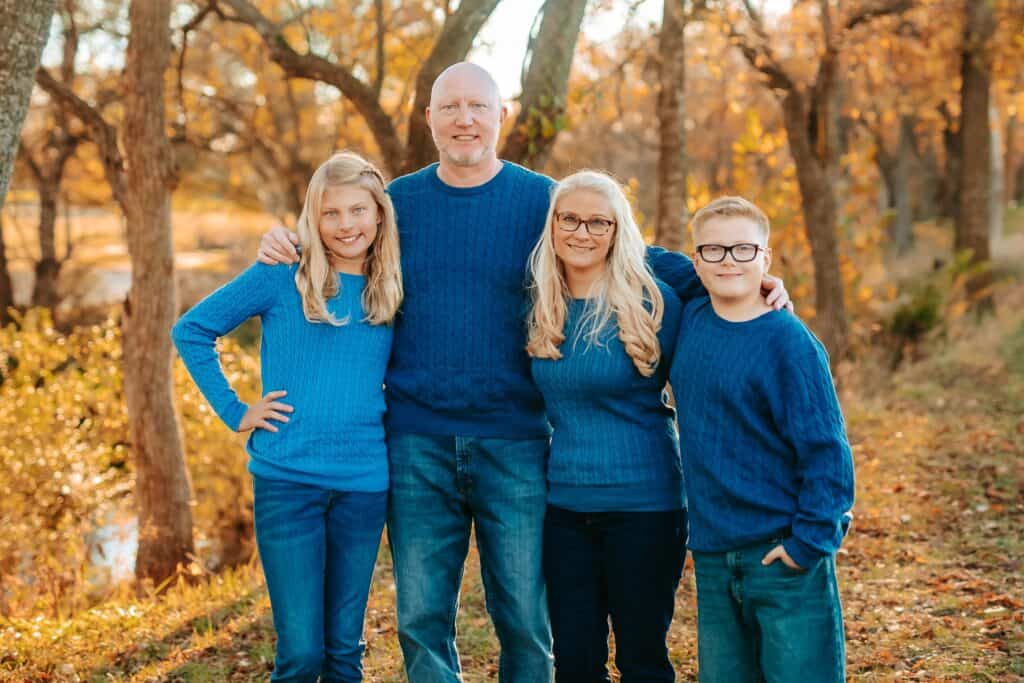
Dr. Jensen and her family posing outside on a fall day

In the tumult of settling into a new country, parenting two small children, and learning a new job (a wonderful one as a clinical research associate in a large metropolitan hospital), the thought of having to study for Step exams, compile a compelling ERAS application, fly the country for interviews (if so lucky as to get any), and commit to a residency training – again – for five years in wherever I happened to match, was unfathomable. I have never been a lazy person, but parenthood had taught me more about my boundaries than anything else in my life combined. My priorities had shifted, and I knew that without a solid network of helpers (such as grandparents, aunts, and uncles), our family had its limits. So, I became one of the estimated 70,000 foreign-educated doctors in the United States who do not practice medicine.

Since then, life began to feel like a square peg and a round hole, especially as we relocated to a much smaller town in a rural state. What do you do with a medical degree when you don’t practice clinically? With every rejection from ill-fitting job searches, my self-respect crumbled a bit more. I had been so proud of my credentials up until this moment; I had worked my tail off for a decade to earn them. Now I was almost apologetic of them – they made me “too-highly qualified” or were simply not a good match for anything else but the one thing that I could not do.

I stopped telling people I had been trained as a surgeon. Just like being turned down from helping on that plane, admitting to my background without a job to go with it made me feel like a failure. I was less-than. It was easier to say “researcher” or “scientist” and hope for no follow-up questions. I was fortunate to be gainfully employed all this time, mostly due to my husband negotiating me in his job packages (his engineering credentials transferred over without issue). But I was always the body in the two-body-problem. I was forever the “spousal hire.” For a strong, stubborn, independent woman, this was slowly adding bricks to the backpack of shame I was carrying professionally. I wasn’t bitter, because I fully understood why the US system wanted all of their physicians trained here. I respected their requirements, and my only sorrow was that there was no clear off-ramp from clinical medicine. It was in a limbo existence that often had me questioning whether there’d ever be a space for me.

Like in so many stories of life, mine turned, thanks to a chance encounter, and an individual who saw something in me I had not even considered. I now work in clinical research in a unique position where I get to interface with med students, residents, fellows, faculty, allied health professionals, scientists, and more. Recently, as a complete surprise, a role that I had secretly coveted but never been brave enough to ask for was offered to me; I now teach medical students about the cardiovascular system. I am fulfilled, and I feel like I was hired for who I am and what I can do. It’s not clinical work, but there have been times, especially over the past pandemic years, when that hasn’t stung as much as it used to. I still feel less-than, and I don’t think that feeling will ever fully go away. But I do feel like I am making a difference, and for any doctor, that is a reward in itself. Whether I’d get out of my seat in an airplane if a doctor is called… I want to think that I would, because the oath I took still compels me to always help if I can, whether my previous training is officially recognized or not.

I still write the M.D. after my name, and I’ve started to share about my clinical background again. Our children say: “mom used to be a doctor, and now she’s a research doctor.” Life is a puzzle, and a job is a big piece, but it’s only one piece. There are tens of thousands of people in the country like me, and I know every one of them carries some pain, some shame, but also various perspectives of value. Many of them will accept jobs that are very distant to the calling they were hoping to answer, and evolve to see elements of medicine and healing in unexpected environments. I was supposed to become a pediatric cardiac surgeon. But like they say: sometimes you need to let go of the life you planned, to be able to live the life that was meant for you. I am finally making my peace with my unique M.D.

Filed Under: 7 - Conversations at UAMS

Edith Irby Jones, M.D., – Understanding the Past and Shaping the Future

This column will focus on people, organizations, and events that have influenced and shaped the UAMS institution over the years. The goal of the History of Medicine column is to share the rich history of UAMS so that we have a deeper appreciation of our past. 

Our inaugural column is written by a familiar face around UAMS, Erick Messias, M.D., MPH, Ph.D. Dr. Messias serves as the Chair of the Department of Psychiatry and Behavioral Neurosciences at St. Louis University School of Medicine. Prior to his current appointment, Dr. Messias was Associate Dean for Faculty Affairs in the College of Medicine at UAMS. He also served as the founding editor-in-chief for Medicine and Meaning. 

Dr. Messias discusses the life and career of UAMS alumnus and trailblazer Dr. Edith Irby Jones.

Timothy G. Nutt
History of Medicine Section Editor


By Erick Messias, M.D., MPH, Ph.D.

Understanding the Past

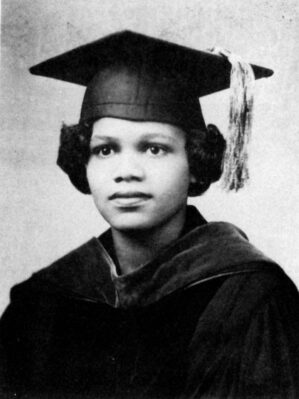
Graduation portrait of Edith Irby Jones

Seventy-five years ago, at the University of Arkansas College of Medicine—today University of Arkansas for Medical Sciences (UAMS)—Edith Irby Jones made history by becoming the first African-American medical student admitted to a public medical school in the South. We celebrate her at UAMS and in academic medicine and, in particular, we marked the 70th anniversary of her admission with her presence in 2018, followed by sadly losing her to her final resting place in 2019 at the age of 91. (Sandomir 2019)

Her journey is now part of UAMS history and she joins a notable group of trailblazers in helping create a more perfect union in America. 

It is important to note that Dr. Jones’ journey did not end upon medical school graduation. She went on and had to persevere to complete her internal medicine training afterwards—according to her entry in the National Library of Medicine’s Changing the Face of Medicine initiative she was determined to complete a residency in internal medicine at Baylor College of Medicine Affiliated Hospitals. The school welcomed her, but the hospital to which she was assigned segregated her and limited her patient rosters. She completed the last months of her residency at Freedman’s Hospital in Washington, D.C. (“Changing the Face of Medicine” n.d.)

She made history again in 1985, by becoming the first woman elected president of the National Medical Association, an organization representing African-American physicians. (“Dr. Edith Irby Jones (1927-2019)” n.d.)

Fundamentally, we—we physicians, we toiling in academic medicine, we who believe in the vision of that more perfect union – have been lucky to have had her among us. We are better for her courage, for her presence, and for opening a door through which so many talented and hard-working African American physicians have crossed and made us better. 

Shaping the Future

As we now live under the ominous arrival of Artificial Intelligence (AI) engines—and, Dr. Jones was always leading us towards a better future—I was curious to see what ChatGPT had learned about Dr. Jones. The result is below and does contain great information but also some inaccuracies that our section chief and historian of medicine, Tim Nutt, can clarify using this natural intelligence. 

ChatGPT output with the prompt “Write an essay about Edith Irby Jones”

Edith Irby Jones was a trailblazing African American physician who made significant contributions to medicine and civil rights. She was born on December 23, 1927, in Hot Springs, Arkansas, at a time when racism was rampant in the United States. [Editor’s Note: Dr. Jones was born near Conway, in Faulkner County.] Despite facing numerous challenges and obstacles due to her race and gender, she persevered and became the first black student to attend the University of Arkansas Medical School in 1948.

Jones’s journey to becoming a physician was not easy. She grew up in a segregated town and attended segregated schools. Her parents, who were both educators, instilled in her the importance of education and encouraged her to pursue her dreams despite the obstacles she faced. Jones was an excellent student and graduated as valedictorian of her high school class.

After graduating from high school, Jones attended Knoxville College in Tennessee, where she earned a degree in biology [and chemistry and physics]. She then applied to medical school but was rejected by all the schools to which she applied. [Editor’s Note: she was not rejected, but applied and was accepted into Northwestern University, the University of Chicago and the University of Arkansas College of Medicine.] Undeterred, she reapplied the following year and was accepted to the University of Arkansas Medical School. [Note: She was accepted into the UA Medical School, but an extra slot was created so that her admission would not take the spot for a white candidate.] Jones faced numerous challenges as the only black student in her class, including being denied housing on campus and being forced to eat in a separate dining room. [Editor’s Note: She was segregated from her white classmates in dining, lodging, and restroom facilities.]

Despite the challenges she faced, Jones persevered and graduated from medical school in 1952. She then went on to complete her internship at Harlem Hospital in New York City and her residency in internal medicine at Meharry Medical College in Nashville, Tennessee. She later became the first black woman to practice medicine in Arkansas. [Editor’s Note: Dr. Jones’ internship was at Baylor College of Medicine Affiliated Hospital and her residency was at Freedman’s Hospital in Washington, DC.]

Jones was a tireless advocate for civil rights and worked to break down barriers for black people in the medical profession. She was active in the Civil Rights Movement and marched alongside Martin Luther King Jr. and other activists. She also served as the president of the Arkansas State Medical Society, becoming the first black person and the first woman to hold the position. [Editor’s Note: Dr. Jones never served as the president of the state medical society.]

Throughout her career, Jones worked to improve healthcare access for underserved communities and was a mentor to many young physicians. She was a member of several medical organizations, including the American Medical Association, and was recognized with numerous awards for her contributions to medicine and civil rights.

Edith Irby Jones was a true pioneer who broke down barriers and paved the way for future generations of black physicians. Her legacy continues to inspire and serve as an example of courage, perseverance, and dedication to social justice.

As you can read, even with its great capabilities, ChatGPT still gets some facts wrong. It is interesting to wonder what Dr. Jones would have thought of the use of Artificial Intelligence and how it would affect the medical profession. Much has changed in the seventy-years since Dr. Jones was admitted to the University of Arkansas School of Medicine, but some societal and cultural prejudices remain. As an AI gains more facts, its knowledge base grows and the out-product evolves, so, too, we must take in information and experiences to change our perspectives. 

Notes

“Changing the Face of Medicine.” n.d. Accessed March 8, 2023. https://cfmedicine.nlm.nih.gov/physicians/biography_175.html

“Dr. Edith Irby Jones (1927-2019).” n.d. Arkansas Women’s Hall of Fame. Accessed March 8, 2023. https://www.arwomenshalloffame.com/edith-jones

Sandomir, Richard. 2019. “Edith Irby Jones, Barrier-Breaking Doctor in the South, Dies at 91.” The New York Times, July 23, 2019. https://www.nytimes.com/2019/07/23/obituaries/dr-edith-irby-jones-dead.html

Filed Under: 7 - History of Medicine

Snow Monkey

By Wendy McCloud

Close up of a snow monkey

Wendy McCloud is an instructor/program manager in the UAMS Office of Interprofessional Education. She took this photo in the Nagano Snow Monkey Park (Jigokudani Yaen Koen) in Japan – with her camera phone. “It was a long, uphill hike in super gross weather, but totally worth it.”

Filed Under: 7 - Images

Yes, She!

By Philomena Mackean

She has toiled, she has wept, 
Mornings of cold and fatigue,
She has bit odds and awoken,
Yet today, she smiles,
Behind the smiles, 
She has amounted a multitude of failures,
She has failed, she has tried again,
And afterwards, 
She has failed, she has succeeded,
Yet, she has pressed on. 

She has fallen, she has arisen,
She has wiped off the dirt, 
She has smiled, again,
She is determined, 
Is she a fool? Is she brave?
I am not her, I can only guess,
Yet, she presses on.


Philomena Mackean is a UAMS medical student in the class of 2025.

Filed Under: 7 - Poetry

There is Nothing to Say

By Vincent Casaregola

There is nothing to say—
this moment, now, with you,
is so fragile, so transient that
it can only be known but
never expressed or spoken . . .

even so, this knowledge, so
pointed, so poignant, must be
rejected, pushed away, if
we are to continue living, so
we look away, walk away

to leave knowledge for some
later day, some latter fate.
We know, nevertheless, that
one of us will, at that time 
unspecified be called to tasks

unwelcome and burdensome—
one of us will, inevitably, cast
down our gaze at the prostrate
other, in a gray room of tubes 
and wires, with scrub-clad nurses

and a physician nodding gravely.
One of us will be called to meet
with officious staff for signatures,
and later with the graciously unctuous
men in funereal suits and quiet smiles

who can wrap and paint us pretty,
and place us boxed, and boxed again,
like a Russian nested doll into
the blank space of dull ground.
Or one of us will watch the other

be shelved like an old, unwanted
volume in the stacks for the rarely
used, or buried like a dead file
in the chambered, basement archives
deep under some nameless structure.

After days of rushing, half awake,
one of us will know the touch
of the front door knob, entering
familiar space without an answering 
voice, merely the scent of the past.

There is nothing to say.


Vincent Casaregola, Ph.D., is a professor in the Department of English and the Director of the Film Studies Program at St. Louis University. He has published and won awards for both literary nonfiction and poetry. Journals include The Examined Life, Natural Bridge, New Letters, Via, and The Iowa Journal of Literary Studies.

Filed Under: 7 - Poetry

  • «Previous Page
  • Page 1
  • Interim pages omitted …
  • Page 15
  • Page 16
  • Page 17
  • Page 18
  • Page 19
  • Interim pages omitted …
  • Page 30
  • Next Page»
University of Arkansas for Medical Sciences LogoUniversity of Arkansas for Medical SciencesUniversity of Arkansas for Medical Sciences
Mailing Address: 4301 West Markham Street, Little Rock, AR 72205
Phone: (501) 686-7000
  • Facebook
  • X
  • Instagram
  • YouTube
  • LinkedIn
  • Disclaimer
  • Terms of Use
  • Privacy Statement
  • Legal Notices

© 2026 University of Arkansas for Medical Sciences