
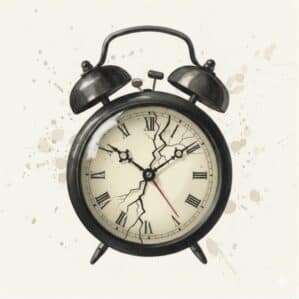
A mother stands at the crossroads of time and loss after her daughters death. This story is her quiet journey through grief – from frozen clocks and hospital corridors to the slow rediscovery of breath, memory, and meaning. Its is not about dying, but about carrying love forward when the world stops.
Dedication:
For every parent who has carried light through darkness – this story walks beside you.
For two weeks the town’s weather could not decide which world it wanted, and Autumn’s small body followed suit—one evening flushed and slow, the next day bright as a coin. A low fever here, a nap that turned into three hours there, a careful way of standing as if gravity had nudged closer. Charlotte called it October. The pediatrician’s office called it a virus. The school nurse called twice—“Just a heads up, she was a little pale after recess”—and Charlotte blamed the wind, the cafeteria milk, the season, herself, then the wind again.
On the last warm Wednesday before Halloween, Autumn woke clear-eyed. “Better,” she announced, as if presenting a report card. She wanted to see the classroom bats and the window paint and Lexi’s witch hat. Charlotte believed her because belief, at a certain point, is also a kind of tenderness.
“Mitten or no mitten?” Charlotte asked at the curb, guarding a paper cup of cinnamon coffee against a light wind.
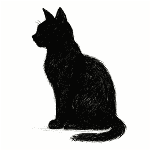
“It’s not cold.” Autumn stared past her at an inflatable witch sprawled on a lawn. “If you plug in the cat, does the cat come alive?”
“Only the witch gets the electricity,” Charlotte said. “The cat gets bad dreams.”
Autumn laughed, hopped to shake her backpack into place, and tugged twice on Charlotte’s hand—their code for stopping. “Wait. What if Lexi wears the hat and I only have the ears?”
“You’ll still be you,” Charlotte said. “Even cats know that.”
At the door Autumn performed her little bow—palms pressed together to please the God of Pencils—and Charlotte bowed back. The bell rang. The child crossed into the day. On her way to the car, Charlotte glanced up at the round gym clock. The second hand sat on the twelve like a sword raised forever. She waited. It did not move.
At 10:11 the vice principal called. “She fainted,” she said too quickly, then softened it. “She didn’t hit her head. The nurse says to come.”
In the nurse’s office Autumn sat swinging her legs, holding a paper cone of water like a prize. “I didn’t faint,” she said. “I was playing a game with the lights.”
“You went white,” the nurse said. “White like paper.”
The forehead under Charlotte’s palm felt ordinary. “I’ll take her home,” she said, and the nurse added, gently, “If you can swing by Dr. Greene’s, just to be safe.”
Autumn narrated the fields on the drive—geese stepping like old men, hay bales like sleeping dinosaurs—because the world still did not know it needed to change. Dr. Greene had white hair cut to the bone and the habit of kneeling to a child’s height, as if gravity were a democracy. He listened, examined, frowned in a way that refused to pretend.
“Sometimes we pass out because the brain yells for attention,” he told Autumn. “The brain is spoiled like a cat. Does your brain think it’s a cat?”
“Cats are not spoiled,” Autumn said.
“Touché.” He smiled, then turned to Charlotte. “Let’s get some blood work. Today. It may be nothing, but I’d like to look.”
That evening the lab called: some counts were off, nothing conclusive. “Come back in the morning?” the nurse asked. The phrase—to be safe—ticked beneath Charlotte’s ribs like a beetle. Autumn fell asleep with the politeness of a hotel guest, and Charlotte lay awake listening to the house prove it still knew how to hold a family.
By noon the next day, the nothings had collected into a shape. Dr. Greene’s voice moved like someone carrying breakables. “I’d like you to go to Children’s,” he said. “Today. They’ll repeat the labs and—more definitively—do a marrow test. We need to be sure.”
“Are you worried?” Charlotte asked, knowing the answer was already in the room.
“I’m concerned,” he said. “I want clarity.”
Children’s of Tulsa rose from the flat like a cruise ship parked by mistake. Inside, the air smelled like soap and a floral that could turn on you. Autumn greeted the bracelets woman with the solemn warmth of a hostess. “What’s your name?”
“Shari,” the woman said, surprised to be the chosen adult.
“I’m Autumn,” the girl replied. “Do you like cats?”
On 7 South, nurses wore scrubs printed with stars. The language shifted around Charlotte: consents for sedation and a bone marrow test, forms about allergies, little checkboxes that pretended to be doors. Autumn, half-drowsy, whispered, “If I build an elevator for the sky, will the cats come?”
The biopsy was quick. The waiting was not. Autumn slept with her fists barely closed, as if the day might try to take itself back. Charlotte walked down to the eighth floor chapel, a sweatered room with four chairs and a cross simple as a cutting board. She did not bargain; she counted tiles. She read the pamphlets with brutal titles—When You Are Not Ready to Say Goodbye. On the low shelf she found a battered Norton Anthology of Poetry and, by accident, Ben Jonson’s twelve lines: On My First Daughter. She read them once, and again, then closed the book with both hands, as if setting down a sleeping thing.
Near dusk, Dr. Greene stood in the doorway the way people stand when floors have started to speak. “The marrow confirms leukemia,” he said, and then—carefully—“it’s AML. Acute myeloid leukemia. The lab also picked up a rare fusion in the leukemia cells. It puts her in what we call an ‘adverse-risk’ group.”
The vowels poured out. Consonants hardened like candy left too long on heat. “What does ‘adverse’ mean,” Charlotte asked, not to argue but to test how much English could bear.
“It means this type is more aggressive,” he said. “Harder to push into remission. Treatment is more intense. Sometimes we consider bone marrow transplant early. I’m not dressing this up. It’s a harder road.”
“Is there a road?” she asked.
“There is,” he said. “We start with induction chemotherapy—tomorrow, realistically—after we place her port and finish staging. We’ll support her through infections, transfusions, side effects. We’ll watch the marrow like hawks. There are families who have walked through this.”
Walked through. Not out of. Not back to. Through.
That night, Autumn slept heavy under IV fluids, her breath a kitten’s. Charlotte opened her phone and did the thing every nurse will tell you not to: searching by flashlight. Pediatric AML rare fusion prognosis. The language was a cliff—“high relapse,” “intensive therapy,” “transplant”—and yet she kept reading because letters make a fence, and a fence, even around a cliff, is still something a person can hold.
She closed her eyes and saw the gym clock, second hand fused to the twelve, refusing—or unable—to move.
In the morning, a surgeon with elegant hands placed the port and said the word “beautiful” as if beauty were a location he could reliably find. Autumn woke woozy and announced, “We live at the hospital now,” and for a full minute Charlotte almost said, Yes, this is our address, because naming a thing makes it less able to argue.
Induction did not begin as an event; it arrived as a schedule—the first bag hung at a precise time, the nurse double-checking the label with the caution of a pilot reading coordinates. Charlotte tried not to stare at the clear line that led like a sentence to her daughter’s body. “It’s a tool,” the day nurse said, matching Charlotte’s breath. “A strong tool. We use it well.”
They drew numbers in the morning: counts that went down, numbers that—when rising—made nurses smile with their eyes. Autumn learned to press the call button for “the beeping,” which the machines did like toddlers showing off. Rosie, a nurse whose kindness looked like competence, showed Charlotte how to swab a port with the reverence of a ritual. “If you forget, ask,” Rosie said. “Ask every time. That’s the brave part.”
Between hospital days, time came with small chores Charlotte performed in silence: rinsing a single coffee mug because there was no one else to leave a ring; changing a porch light bulb with a dining chair instead of calling anyone; writing their last name in Sharpie on a fleece because laundry disappears where illness is strong. Widowhood throbbed under this new grief like a bruise beneath a bruise. She did not say widow. She counted pills. She practiced the math of blankets. She learned that thermostats have a sound.
On better afternoons, Autumn ranked cartoon cats by valor and made the IV pole a co-conspirator in her jokes. On worse evenings, Charlotte learned how to wipe a forehead without waking a child and how to smile for people who were trying to be brave for her. When Autumn’s hair began to fall, it came loose at first in threes, then in a smooth bright harvest. Autumn swiped her palm along her head with pride and held up the brown to her mother like a prize. “I’ll be faster,” she declared. “No ponytail. Less homework.”
Halloween arrived and went. They made it down one hallway of TAKE ONE, PLEASE buckets before Autumn said she was tired, and Charlotte carried her old-baby style to the car, the child’s head finding the hollow where it had learned to live. Thanksgiving practiced itself on the television while Charlotte bought a pie she would not taste. She told a nurse she did not know if she believed in God but she believed in nurses. The nurse said, “We accept coffee,” and tucked a blanket with the exactness of someone laying a cornerstone.
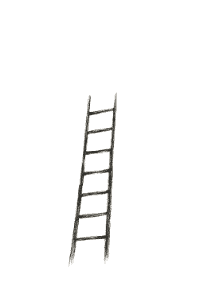
At night, when the ward quieted to a chorus of machines, Charlotte and Autumn played their sky game. If you could build anything up there, what would you build? “A village for stars,” Autumn said, “so nobody is lonely.” Another night: “A museum for cats so they remember where we are.” Charlotte wrote the answers into herself the way you press a leaf into a book and forget which book, trusting the leaf to outlast the page.
Remission was a word other parents on 7 South began to say with the soft hunger of people offering each other half a good rumor. Hope proved contagious. Charlotte wanted like a thief. After the first marrow, Dr. Greene said “improved but not clean,” a phrase that felt like a hallway with the door at the other end closed. “We’ll push,” he said. “Round two. We are still in this.”
Charlotte nodded. She nodded so much in those weeks she sometimes felt the muscles of her neck might forget how not to agree.
There were errands that still existed: cat litter, dish soap, stamps for the envelopes that contained things no one wanted to read. The house obeyed in small ways and refused in others. In the cupboard, his old coffee mug wavered between souvenir and witness; she washed it without deciding which—and set it upside down on a towel to dry. There was no one left to call who knew the sound of Autumn’s first cry. The single porch light learned to come on with the first dark; the water heater remembered its job. Charlotte took the batteries out of the kitchen clock and laid it face-up on the shelf, its hands at anything, everything, nothing.
When Autumn was home between infusions, afternoons were calibrated to the energy of a six-year-old who had learned the language of adult rooms. Autumn spread construction paper on the floor and drew cats with detective hats. “They find lost things,” she explained gravely. “They do not always return them.”
Charlotte laughed before she could stop herself and felt the laugh rattle the wrong places. She held her daughter’s warm wrist—faint pulse under bright skin—and said, “Keep them honest.”
In the quiet after bedtime, Charlotte wandered the online corridors she had been warned not to enter—because warning is a handrail, and a handrail is still a thing you can hold. She read about the rare fusion in pediatric AML that made remission slippery and relapse a shadow that knew your name. The words did not shout; they leaned in. High-risk. Adverse. Early transplant consideration. She tried to unlearn each term as she learned it and discovered that unlearning requires more faith than learning ever has.
Sometimes she closed her eyes and saw the gym clock again, its second hand welded to noon and midnight, forever at the top of itself. She tried to imagine the moment it stuck—was there a tiny effort first, a shiver of the red arm, a last brave tick? Or had it simply decided, in the private way that simple machines decide, that it had lifted enough time for one life?
Round two began the way round one did: a schedule, a consent, a nurse reading dosage aloud to another nurse as if facts are stronger in pairs. Autumn’s mouth turned tender at the edges—little sores that taught them how to live like librarians, quiet and careful with the softest things. Rosie showed Charlotte how to offer ice chips as if she were offering a treaty. “Slow,” Rosie said. “Think slow.”
On a Monday morning, Winter practiced on the windows. The sky seemed to hesitate before letting go of blue, like a polite guest who did not want to leave too early or too late. Charlotte sat by the bed and unscrolled the day in her head the way you unfurl a map you’re not sure you can read. She watched Autumn sleep and practiced the oldest human ritual: counting breaths. When Autumn woke, she asked for pancakes by raising her eyebrows twice.
“I’ll ask,” Charlotte said. “Pancakes are a kind of medicine in some very advanced cultures.”
“Cats invented them,” Autumn said, and smiled the dry-lipped smile of a person who knows how to be brave without announcing it.
Dr. Greene walked in later with an assistant who carried a laptop open like an offering. “We’re watching her marrow closely,” he said, voice precise but not metallic. “Her counts are moving, but they’re moving slowly. That’s not failure. It’s just the kind of AML she has. Fusion-driven leukemias can be stubborn.”
“Stubborn how?” Charlotte asked.
“They’re good at pretending,” he said. “Good at hiding. Sometimes we add different agents; sometimes we change timing; sometimes we go early to transplant if we see the window.” He looked at Autumn. “Some cells don’t read the rules. So we change the rules.”
Autumn, picking at the frayed edge of her blanket, said, “Cats do not read rules. They sleep on them.”
“We will not let the rules sleep,” he promised gently.
When he left, Charlotte stood at the window and did a small thing she had done all her life without naming it: she took inventory of the day’s possible mercies. A sparrow hopped three times on the sill and then remembered it was a bird. A volunteer pushed a cart past the door with paperbacks stacked like small buildings. Somewhere in the hall, a woman laughed in a way that proved the world did not only belong to sorrow.
In the afternoon, Rosie fitted a new bag to the line with the deftness of a person braiding hair. “You’re doing it,” she said to Charlotte.
“Doing what?”
“Walking through,” Rosie said. “That’s the job.”
“And if I stop?”
“You won’t,” Rosie said. “But if you did, the floor would hold you. We would hold you. Then you would walk again.”
Charlotte sat and let the chair know her weight. She thought of the chapel, of Ben Jonson’s small, unarguable lines, of the word ruth—sorrow so old it carries its own candle. She wondered who had written the last underline in that anthology, whose thumb had smudged the corner, who else had looked up from those twelve lines and thought, How can words be this calm at the edge of the world?
That night, the machines breathed their sugarless music and the window drew itself dark. Charlotte lay on the narrow bed beside Autumn and whispered the sky game into the cool air. If you could build anything up there, what would you build? Autumn’s eyes were two small moons. “A lost-and-found for lights,” she said, and closed them again, as if the answer had been waiting behind her lids all day.
Charlotte waited for sleep to take the child and, for once, to take her too. Before it did, she imagined the stopped school clock starting again—not loudly, not with a heroic jerk, but with an almost invisible courtesy, the red hand lowering itself from the twelve and saying to the day, After you.
The ICU had its own weather. The lights stayed low, as if the room understood something sacred was occurring. Machines murmured in careful rhythm, each beep translating what human language could not. Nurses moved like evening shadows—silent, steady, reverent.
Autumn lay folded into linens and wires, her cheeks no longer flushed, but still. Charlotte sat beside her bed, fingers resting near a small wrist, not touching—just close enough to feel warmth drift like a candle fighting wind.
“She’s still here,” Rosie, the nurse, whispered—not as reassurance, but as respect.
Dr. Greene entered without a clipboard. “Her counts have dropped,” he said. “Her body is tired, Charlotte. Everything in her is working so hard.” He paused. “We’re doing all we can.”
Charlotte nodded. Words had become currency—she spent none she couldn’t recover. She didn’t ask how much time. Time no longer existed in minutes. It existed in breaths.
That afternoon, Autumn stirred. Just enough. Her eyelids parted, slow, as if lifting something delicate. Her eyes found Charlotte instantly—clear, unwavering.
“Mom?”
“I’m here.”
A pause as light as a breath.
“It’s okay,” she whispered.
Two words. No tremor. The gift children give: grace without instruction.
Charlotte leaned forward, pressing her lips to the small birthmark under her daughter’s eye—the brown keyhole that never opened. She rested her forehead against Autumn’s, listening for any trace of the hum she once knew. There was none.
No alarm. No cry. Just a silence that did not echo.
Rosie stepped forward, placing a hand on Charlotte’s back. “Take your time,” she said. “There is no rule for leaving.”
Time obeyed.
She walked, finally, not to leave—but to carry. Down the corridor, through halls where other parents sat suspended between prayer and science. She entered the chapel again. The air was dusk-cool. The Norton Anthology of Poetry was exactly where she’d left it, spine cracked, pages tired.
She opened to Ben Jonson without looking. Found the line that had waited for her.
Here lies, to each her parents’ ruth…
She spoke the poem aloud. Not as lament. As witness. As vow.
When she finished, she closed the book carefully, pressing it flat with both palms—as though sealing light inside wood.
Outside, it had begun to snow.
Grief moves differently in houses. It opens drawers you forgot existed; it turns off lights you’re sure you left on.
Charlotte washed the single coffee mug—his mug—and let it dry upside down. She folded Autumn’s pajamas and tucked them, not into a drawer, but into a small box she could not yet name. She pinned the cat drawings to the fridge: detectives, pilots, guardians of ladders. The house, obedient as ever, waited for instruction.
There was no one left to ask, “Do you remember when she—?”
The absence was not loud. It was absolute.
Spring rehearsed itself. Green tried. Birds insisted. Charlotte walked without purpose, sometimes ending at the school without knowing she’d turned that way. She stopped attending grief circles—words felt fraudulent, flimsy. One sentence stayed with her, silent as a psalm:
She was here. She was here.
Some nights, she dreamt of Autumn building ladders in the sky. No illness. No machines. Just small hands hammering stars into place.
In dreams, she never called out. Watching was enough.
One rainy afternoon in May, she sat at a red light near the Methodist church. A farmers’ market was packing up. A little girl—brown hair, purple coat—stepped too close to the road. A truck braked hard. A mother’s hand shot out, grabbing the sleeve. The child flinched, then broke into laughter, startled by how quickly fear can become joy.
Charlotte exhaled sharply, pressing a hand to her chest. Not pain. Recognition.
Rain freckled the windshield. The world was rinsed of sound.
Without deciding, she whispered Jonson’s line:
Here lies, to each her parents’ ruth…
But the poem did not finish there. Something shifted. Words, long buried beneath ribs, rose of their own will:
Little one, descend — the night is only stairs.
Keep your flame cupped — against the careful air.
If the light falters, if you cannot see —
I will be the sky where you remember me.
She did not write it. It was already written. She simply released it.
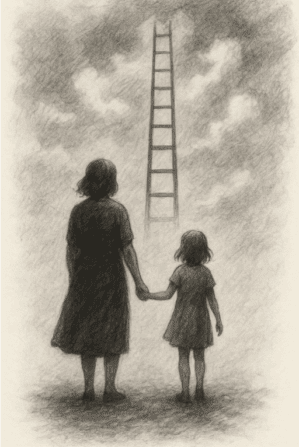
That evening, in the kitchen, she took down the stopped clock. She placed fresh batteries. It hesitated—then began.
Wrong time. Right motion.
She watched the red hand descend from twelve, slow and humble, as if bowing.
She set water to boil. Steam rose, soft as breath finding shape.
She stood very still.
“Autumn,” she said.
Then, after a lifetime:
“I am here.”
In the distance, somewhere beyond streets and fields, a train moved through the dusk, its horn long and low—a sound that did not vanish, but traveled.
And Charlotte, in her kitchen, did not move.
She noticed everything.
Samrat Roy Choudhury, PhD, is an Assistant Professor in the Department of Pediatrics at the University of Arkansas for Medical Sciences and Arkansas Children’s Research Institute. His research focuses on cancer epigenetics, transcriptional regulation, and therapeutic resistance in pediatric leukemia. Outside the laboratory, he is interested in fiction as a way to explore memory, time, displacement, and the emotional lives that continue beneath professional routines. His story, “The Time of the Stopped Clock,” won the Paulette and Jay Mehta Award in Creative Writing in the fiction category.